Sermones Bíblicos
El poder de Cristo y el atraimiento del Padre
John Bunyan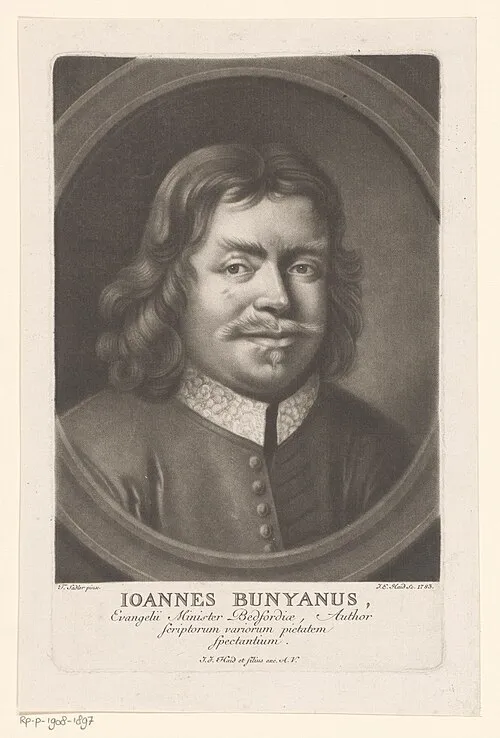
El poder de Cristo para salvar, o para echar fuera
SEGUNDO. Y ahora llegamos a lo segundo que hay que inquirir, a saber: cómo se ve que Cristo tiene poder para salvar, o para echar fuera. Porque con estas palabras, «en ninguna manera le echaré fuera», declara que tiene poder para hacer ambas cosas. Esta investigación nos abre a escudriñar las cosas: primero, cómo se ve que tiene poder para salvar; segundo, cómo se ve que tiene poder para echar fuera.
Primero: que tiene poder para salvar se ve por lo que sigue.
-
Por hablar solo de él en cuanto es mediador: fue autorizado para esta obra bienaventurada por su Padre, antes que el mundo comenzara. De ahí dice el apóstol: «nos escogió en él antes de la fundación del mundo» (Efesios 1:4). Con todas aquellas cosas que producirán nuestra salvación de manera eficaz. Lee el mismo capítulo, junto con 2 Timoteo 1:9.
-
Fue prometido a nuestros primeros padres: que él, en el cumplimiento del tiempo, heriría la cabeza de la serpiente; y, como Pablo lo expone, redimiría a los que estaban bajo la ley. De ahí que, desde entonces, haya sido contado como muerto por nuestros pecados. Por este medio todos los padres bajo el primer pacto quedaron a salvo de la ira venidera; de ahí que se le llame «el Cordero, el cual fué muerto desde el principio del mundo» (Apocalipsis 13:8; Génesis 3:15; Gálatas 4:4,5).
-
Moisés dio testimonio de él por los tipos y las sombras, y los sacrificios de sangre que mandó, de boca de Dios, que estuvieran en uso para sostén de la fe de su pueblo, hasta el tiempo de la corrección; el cual fue el tiempo de la muerte de este Jesús (Hebreos 9, 10).
-
Al tiempo de su nacimiento, el ángel testificó de él «que él salvará á su pueblo de sus pecados» (Mateo 1:21).
-
Se testifica de él, en los días de su carne, que tenía potestad en la tierra para perdonar pecados (Marcos 2:5-12).
-
También testifica de él el apóstol Pedro, que «A éste ha Dios ensalzado con su diestra por Príncipe y Salvador, para dar á Israel arrepentimiento y remisión de pecados» (Hechos 5:31).
-
En una palabra, de esto se testifica de él en todas partes, tanto en el Antiguo Testamento como en el Nuevo. Y hay buena razón para que sea reconocido, y para que se confíe en él, como Salvador.
(1.) Bajó del cielo para ser Salvador (Juan 6:38-40).
(2.) Fue ungido, estando en la tierra, para ser Salvador (Lucas 3:22).
(3.) Hizo las obras de un Salvador. A saber: (a.) Cumplió la ley, y vino a ser el fin de ella para justicia, para los que creen en él (Romanos 10:3,4). (b.) Entregó su vida como Salvador; dio su vida «en rescate por muchos» (Mateo 20:28; Marcos 10:45; 1 Timoteo 2:6). (c.) Ha abolido la muerte, destruido al diablo, quitado el pecado, obtenido las llaves del infierno y de la muerte, y subido al cielo; allí es aceptado de Dios, y se le manda sentarse a la diestra como Salvador; y eso porque su sacrificio por los pecados agradó a Dios (2 Timoteo 1:10; Hebreos 2:14,15; 10:12,13; Efesios 4:7,8; Juan 16:10,11; Hechos 5:30,31).
(4.) Dios lo ha enviado y lo ha proclamado como Salvador, y dice al mundo que tenemos redención por su sangre, que nos justificará si creemos en su sangre, y que puede hacerlo fiel y justamente. Sí, Dios nos ruega que nos reconciliemos con él por su Hijo; lo cual no podría ser si él no lo hubiera ungido para este mismo fin, y también si sus obras y sus empeños no hubieran sido aceptados por él, considerado como Salvador (Romanos 3:24,25; 2 Corintios 5:18-21).
(5.) Dios ha recibido ya millones de almas en su paraíso, porque han recibido a este Jesús por Salvador; y está resuelto a cortar, y a echar de su presencia, a los que no quieran tomarlo por Salvador (Hebreos 12:22-26).
Aquí me propongo ser breve; por tanto, una palabra sobre lo segundo, y así concluyo.
Segundo: cómo se ve que tiene poder para echar fuera. Esto se ve también por lo que sigue.
-
El Padre, por el servicio que le ha hecho como Salvador, lo ha puesto por Señor de todos, Señor aun de vivos y de muertos. «Porque Cristo para esto murió, y resucitó, y volvió á vivir, para ser Señor así de los muertos como de los que viven» (Romanos 14:9).
-
El Padre ha dejado en su mano vivificar a quien quiere, a saber, con gracia salvadora, y echar fuera a quien quiere, por su rebelión contra él (Juan 5:21).
-
El Padre lo ha puesto por juez de vivos y de muertos, ha entregado todo el juicio al Hijo, y ha dispuesto que todos honren al Hijo como honran al Padre (Juan 5:22,23).
-
Dios juzgará al mundo por este varón: el día está señalado para el juicio, y él está señalado por juez. «Ha establecido un día, en el cual ha de juzgar al mundo con justicia, por aquel varón» (Hechos 17:31). Por tanto todos hemos de comparecer ante el tribunal de Cristo, para que cada uno reciba por las cosas hechas en el cuerpo, conforme a lo que haya hecho. Si se han abrazado a él, cielo y salvación; si no, ¡infierno y condenación! Y por estas razones ha de ser juez:
(1.) Por causa de su humillación: por la palabra de su Padre se humilló a sí mismo, y se hizo obediente hasta la muerte, y muerte de cruz. «Por lo cual Dios también le ensalzó á lo sumo, y dióle un nombre que es sobre todo nombre; para que en el nombre de Jesús se doble toda rodilla de los [que están] en los cielos, y de los [que] en la tierra, y de los [que] debajo de la tierra; y toda lengua confiese que Jesucristo es el Señor, á la gloria de Dios Padre.» Esto mira a su ser juez, y a su sentarse en juicio sobre ángeles y hombres (Filipenses 2:7-11; Romanos 14:10,11).
(2.) Para que todos los hombres honren al Hijo como honran al Padre. «Porque el Padre á nadie juzga, mas todo el juicio dió al Hijo; para que todos honren al Hijo como honran al Padre» (Juan 5:22,23).
(3.) Por causa de su juicio justo: esta obra no es apta para ninguna criatura; solo es apta para el Hijo de Dios. Porque él recompensará a cada uno según sus caminos (Apocalipsis 22:12).
(4.) Porque es el Hijo del hombre. «También le dió poder de hacer juicio, en cuanto es el Hijo del hombre» (Juan 5:27).
Segundo, el texto tratado por vía de observación
Así he recorrido en breve este texto por vía de explicaciones. Mi obra siguiente es hablar de él por vía de observación. Pero en eso también seré tan breve como la naturaleza de la cosa lo permita. «Todo lo que el Padre me da, vendrá á mí; y al que á mí viene, no le echo fuera» (Juan 6:37).
Y ahora vengo a algunas observaciones, a hablar de ellas un poco en breve, y luego a concluir el todo. Las palabras, así explicadas, nos dan muchas; algunas son estas. 1. Que Dios el Padre, y Cristo su Hijo, son dos personas distintas en la Deidad. 2. Que por ellos, sin excluir al Espíritu Santo, se concibe y se determina la salvación de la humanidad caída. 3. Que este designio se resolvió en un pacto entre estas personas de la Deidad, el cual consiste en dar, de parte del Padre, y en recibir, de parte del Hijo. «Todo lo que el Padre me da», etc. 4. Que todo aquel a quien el Padre ha dado a Cristo, conforme a la mente de Dios en el texto, ciertamente vendrá a él. 5. Que venir a Jesucristo no es, por tanto, por la voluntad, la sabiduría o el poder del hombre, sino por el don, la promesa y el atraimiento del Padre. «Todo lo que el Padre me da, vendrá». 6. Que Jesucristo tendrá cuidado de recibir, y en ninguna manera desechará, a los que vienen, o están viniendo, a él. «Y al que á mí viene, no le echo fuera.» Hay, además de estas, otras verdades implícitas en las palabras. A saber: 7. Los que vienen a Jesucristo temen muchas veces, de corazón, que él no los reciba. 8. Jesucristo no querría que los que en verdad vienen a él pensaran ni una sola vez que los echará fuera.
Estas observaciones yacen todas en las palabras, y están confirmadas con abundancia por las Escrituras de la verdad; pero no hablaré ahora de todas, sino que pasaré por alto la primera, la segunda, la tercera, la cuarta y la sexta, en parte porque me propongo ser breve, y en parte porque quedan tocadas en la parte explicativa del texto. Comenzaré, pues, por la quinta observación, y así la haré la primera en orden, en el discurso que sigue.
Venir a Cristo no es por el poder del hombre, sino por el atraimiento del Padre
OBSERVACIÓN PRIMERA. Primero, pues: venir a Cristo no es por la voluntad, la sabiduría o el poder del hombre, sino por el don, la promesa y el atraimiento del Padre. Esta observación consta de dos partes. Primera: el venir a Cristo no es por la voluntad, la sabiduría o el poder del hombre. Segunda: sino por el don, la promesa y el atraimiento del Padre.
Que el texto lleva esta verdad en su seno lo hallarán, si miran la explicación de la primera parte de él, más arriba. Seguiré, pues, aquí el método propuesto, a saber, mostrar:
Primero: que venir a Cristo no es por la voluntad, la sabiduría o el poder del hombre. Esto es verdad, porque la Palabra dice positivamente que no lo es.
-
Lo niega del todo, que sea por la voluntad del hombre. «No son engendrados de sangre, ni de voluntad de carne, ni de voluntad de varón» (Juan 1:13). Y otra vez: «No es del que quiere, ni del que corre» (Romanos 9:16).
-
Niega que sea de la sabiduría del hombre, como se ve por estas consideraciones:
(1.) En la sabiduría de Dios le agradó que el mundo, por sabiduría, no lo conociera. Ahora bien, si por su sabiduría no pueden conocerlo, se sigue que por esa sabiduría no pueden venir a él; porque venir a él no es antes, sino después de algún conocimiento de él (1 Corintios 1:21; Hechos 13:27; Salmo 9:10).
(2.) La sabiduría del hombre, a juicio de Dios, en cuanto al conocimiento de Cristo, se cuenta por necedad. «¿No ha enloquecido Dios la sabiduría del mundo?» (1 Corintios 1:20). Y otra vez: la sabiduría de este mundo es necedad para con Dios (1 Corintios 2:14). Si Dios ha hecho necia la sabiduría de este mundo; y otra vez, si la sabiduría de este mundo es necedad para con él, entonces en verdad no es de esperar que por ella un pecador llegue a ser tan prudente como para venir a Jesucristo, sobre todo si consideran
(3.) que la doctrina de un Cristo crucificado, y así la de la salvación por él, es la cosa misma que la sabiduría del mundo tiene por necedad. Ahora bien, si la doctrina misma de un Cristo crucificado es tenida por necedad por la sabiduría de este mundo, no puede ser que, por esa sabiduría, un hombre sea sacado en su alma a venir a él (1 Corintios 3:19; 1:18,23).
(4.) Dios contó la sabiduría de este mundo por uno de sus mayores enemigos; por tanto, por esa sabiduría ningún hombre puede venir a Jesucristo. Porque no es de esperar que uno de los mayores enemigos de Dios atraiga a un hombre a aquello que más agrada a Dios, como lo hace el venir a Cristo. Ahora bien, que Dios cuenta la sabiduría de este mundo por uno de sus mayores enemigos es evidente: (a.) Porque echa el mayor desprecio sobre los empeños de su Hijo, como ya se probó, en que tiene su crucifixión por necedad; aunque esa sea una de las más altas demostraciones de la sabiduría divina (Efesios 1:7,8). (b.) Porque Dios ha amenazado destruirla, reducirla a nada y hacer que perezca; lo cual de cierto no haría si no fuera enemiga, ni si encaminara a los hombres a Jesucristo y los hiciera abrazarse a él (Isaías 29:14; 1 Corintios 1:19). (c.) La ha rechazado para que no ayude en el ministerio de su Palabra, como negocio estéril y cosa que para en nada (1 Corintios 2:4,6,12,13). (d.) Porque hace perecer a los que la buscan y la persiguen (1 Corintios 1:18,19). (e.) Y Dios ha proclamado que, si alguno quiere ser sabio en este mundo, ha de hacerse necio en la sabiduría de este mundo, y ese es el camino de ser sabio en la sabiduría de Dios. «Si alguno entre vosotros parece ser sabio en este siglo, hágase simple, para ser sabio. Porque la sabiduría de este mundo es necedad para con Dios» (1 Corintios 3:18-20).
- Venir a Cristo no es por el poder del hombre. Esto es evidente en parte
(1.) por lo que va antes. Porque el poder del hombre, al ponerlo por obra en este asunto, o lo despierta el amor, o el sentido de la necesidad; pero la sabiduría de este mundo ni da al hombre amor a Jesucristo, ni sentido de que lo necesita; por tanto, en cuanto a eso, su poder se queda quieto.
(2.) ¿Qué poder tiene el que está muerto, como lo está espiritualmente todo hombre natural, muerto en delitos y pecados? Muerto, tan muerto para las cosas del Nuevo Testamento de Dios como el que está en el sepulcro está muerto para las cosas de este mundo. ¿Qué poder tiene, pues, con que venir a Jesucristo? (Juan 5:25; Efesios 2:1; Colosenses 2:13).
(3.) Dios prohíbe que el hombre poderoso se gloríe en su fuerza, y dice positivamente: «Nadie será fuerte por [su] fuerza»; y otra vez: «No con ejército, ni con fuerza, sino con mi espíritu, ha dicho Jehová de los ejércitos» (Jeremías 9:23,24; 1 Samuel 2:9; Zacarías 4:6; 1 Corintios 1:27-31).
(4.) Pablo reconoce que el hombre —es más, el hombre ya convertido—, de sí mismo, no tiene en sí suficiencia de poder para pensar un buen pensamiento. Si no la tiene para hacer lo que es menos —pues pensar es menos que venir—, entonces ningún hombre, por su propio poder, puede venir a Jesucristo (2 Corintios 2:5).
(5.) De ahí se dice que somos hechos de buena voluntad para venir, por el poder de Dios; que somos levantados de un estado de pecado a un estado de gracia, por el poder de Dios; y que creemos, esto es, que venimos, por la operación sobreexcelente de su poder poderoso (Salmo 110:3; Colosenses 2:12; Efesios 1:18,20; Job 23:14). Pero esto no haría falta si el hombre tuviera poder o voluntad para venir, o siquiera para pensar con gracia en querer venir, de sí mismo, a Jesucristo.
Segundo: ahora debería pasar a la prueba de la segunda parte de la observación [a saber, que el venir a Cristo es por el don, la promesa y el atraimiento del Padre], pero eso ya quedó hecho de paso en la parte explicativa del texto, a la cual remito al lector; porque aquí solo te daré un texto o dos más con el mismo propósito, y así vendré al uso y la aplicación.
-
Se dice expresamente: «Ninguno puede venir á mí, si el Padre que me envió no le trajere» (Juan 6:44). Por este texto no solo se da a entender que en el hombre falta poder, sino también voluntad, para venir a Jesucristo: han de ser atraídos; no vienen si no son atraídos. Y observa: no es el hombre, no, ni todos los ángeles del cielo, quien puede atraer a un solo pecador a Jesucristo. Nadie viene a mí, si no lo trae el Padre que me ha enviado.
-
Otra vez: «Ninguno puede venir á mí, si no le fuere dado del Padre» (Juan 6:65). Es un don celestial el que hace venir al hombre a Jesucristo.
-
Otra vez: «Escrito está en los profetas: Y serán todos enseñados de Dios. Así que, todo aquel que oyó del Padre, y aprendió, viene á mí» (Juan 6:45).
No me extenderé, sino que haré algún uso y aplicación, y así pasaré a la observación siguiente.
Ver el original (inglés)
Original en inglés
The Power of Christ to Save, or to Cast Out
SECOND. And now we come to the second thing that is to be inquired into, namely, How it appears that Christ hath power to save, or to cast out. For by these words, “I will in no wise cast out,” he declareth that he hath power to do both. Now this inquiry admits us to search into the things: First, How it appears that he hath power to save; Second, How it appears that he hath power to cast out.
First, That he hath power to save, appears by that which follows: —
-
To speak only of him as he is mediator: he was authorized to this blessed work by his Father, before the world began. Hence the apostle saith, “He hath chosen us in him before the foundation of the world” (Eph 1:4). With all those things that effectually will produce our salvation. Read the same chapter, with 2 Timothy 1:9.
-
He was promised to our first parents, that he should, in the fullness of time, bruise the serpent’s head; and, as Paul expounds it, redeem them that were under the law. Hence, since that time, he hath been reckoned as slain for our sins. By which means all the fathers under the first testament were secured from the wrath to come; hence he is called, “The Lamb slain from the foundation of the world” (Rev 13:8; Gen 3:15; Gal 4:4,5).
-
Moses gave testimony of him by the types and shadows, and bloody sacrifices, that he commanded from the mouth of God to be in use for the support of his people’s faith, until the time of reformation; which was the time of this Jesus his death (Heb 9, 10).
-
At the time of his birth it was testified of him by the angel, “That he should save his people from their sins” (Matt 1:21).
-
It is testified of him in the days of his flesh, that he had power on earth to forgive sins (Mark 2:5-12).
-
It is testified also of him by the apostle Peter, that “God hath exalted him with his own right hand, to be a prince and a Saviour, for to give repentance to Israel, and forgiveness of sins” (Acts 5:31).
-
In a word, this is everywhere testified of him, both in the Old Testament and the New. And good reason that he should be acknowledged and trusted in, as a Saviour.
(1.) He came down from heaven to be a Saviour (John 6:38-40).
(2.) He was anointed when on earth to be a Saviour (Luke 3:22).
(3.) He did the works of a Saviour. As, (a.) He fulfilled the law, and became the end of it for righteousness, for them that believe in him (Rom 10:3,4). (b.) He laid down his life as a Saviour; he gave his life as “a ransom for many” (Matt 20:28; Mark 10:45; 1 Tim 2:6). (c.) He hath abolished death, destroyed the devil, put away sin, got the keys of hell and death, is ascended into heaven; is there accepted of God, and bid sit at the right hand as a Saviour; and that because his sacrifice for sins pleased God (2 Tim 1:10; Heb 2:14,15; 10:12,13; Eph 4:7,8; John 16:10,11; Acts 5:30,31).
(4.) God hath sent out and proclaimed him as a Saviour, and tells the world that we have redemption through his blood, that he will justify us, if we believe in his blood, and that he can faithfully and justly do it. Yea, God doth beseech us to be reconciled to him by his Son; which could not be, if he were not anointed by him to this very end, and also if his works and undertakings were not accepted of him considered as a Saviour (Rom 3:24,25; 2 Cor 5:18-21).
(5.) God hath received already millions of souls into his paradise, because they have received this Jesus for a Saviour; and is resolved to cut them off, and to cast them out of his presence, that will not take him for a Saviour (Heb 12:22-26).
I intend brevity here; therefore a word to the second, and so conclude.
Second, How it appears that he hath power to cast out. This appears also by what follows:
-
The Father, for the service that he hath done him as Saviour, hath made him Lord of all, even Lord of quick and dead. “For to this end Christ both died, and rose, and revived, that he might be Lord both of the dead and living” (Rom 14:9).
-
The Father hath left it with him to quicken whom he will, to wit, with saving grace, and to cast out whom he will, for their rebellion against him (John 5:21).
-
The Father hath made him judge of quick and dead, hath committed all judgment unto the Son, and appointed that all should honour the Son, even as they honour the Father (John 5:22,23).
-
God will judge the world by this man: the day is appointed for judgment, and he is appointed for judge. “He hath appointed a day in the which he will judge the world in righteousness by that man” (Acts 17:31). Therefore we must all appear before the judgment seat of Christ, that every one may receive for the things done in the body, according to what they have done. If they have closed with him, heaven and salvation; if they have not, hell and damnation!And for these reasons he must be judge: —
(1.) Because of his humiliation, because of his Father’s word he humbled himself, and he became obedient unto death, even the death of the cross. “Wherefore God also hath highly exalted him, and given him a name which is above every name: that at the name of Jesus every knee should bow, of things in heaven, and things in earth, and things under the earth; and that every tongue should confess that Jesus Christ is Lord, to the glory of God the Father.” This hath respect to his being judge, and his sitting in judgment upon angels and men (Phil 2:7-11; Rom 14:10,11).
(2.) That all men might honour the Son, even as they honour the Father. “For the Father judgeth no man, but hath committed all judgment unto the Son; that all men should honour the Son, even as they honour the Father” (John 5:22,23).
(3.) Because of his righteous judgment, this work is fit for no creature; it is only fit for the Son of God. For he will reward every man according to his ways (Rev 22:12).
(4.) Because he is the Son of man. He “hath given him authority to execute judgment also, because he is the Son of man” (John 5:27).
Second, the Text Treated by Way of Observation
Thus have I in brief passed through this text by way of explications. My next work is to speak to it by way of observation. But I shall be also as brief in that as the nature of the thing will admit. “All that the Father giveth me shall come to me; and him that cometh to me I will in no wise cast out” (John 6:37).
And now I come to some observations, and a little briefly to speak to them, and then conclude the whole. The words thus explained afford us many, some of which are these. 1. That God the Father, and Christ his Son, are two distinct persons in the Godhead. 2. That by them, not excluding the Holy Ghost, is contrived and determined the salvation of fallen mankind. 3. That this contrivance resolved itself into a covenant between these persons in the Godhead, which standeth in giving on the Father’s part, and receiving on the Son’s. “All that the Father giveth me,” &c. 4. That every one that the Father hath given to Christ, according to the mind of God in the text, shall certainly come to him. 5. That coming to Jesus Christ is therefore not by the will, wisdom, or power of man; but by the gift, promise, and drawing of the Father. “All that the Father giveth me shall come.” 6. That Jesus Christ will be careful to receive, and will not in any wise reject those that come, or are coming to him. “And him that cometh to me I will in no wise cast out.” There are, besides these, some other truths implied in the words. As, 7. They that are coming to Jesus Christ are ofttimes heartily afraid that he will not receive them. 8. Jesus Christ would not have them that in truth are coming to him once think that he will cast them out.
These observations lie all of them in the words, and are plentifully confirmed by the Scriptures of truth; but I shall not at this time speak to them all, but shall pass by the first, second, third, fourth, and sixth, partly because I design brevity, and partly because they are touched upon in the explicatory part of the text. I shall therefore begin with the fifth observation, and so make that the first in order, in the following discourse.
Coming to Christ Not by the Power of Man, But by the Drawing of the Father
OBSERVATION FIRST. First, then, coming to Christ is not by the will, wisdom, or power of man, but by the gift, promise, and drawing of the Father. This observation standeth of two parts. First, The coming to Christ is not by the will, wisdom, or power of man; Second, But by the gift, promise, and drawing of the Father.
That the text carrieth this truth in its bosom, you will find if you look into the explication of the first part thereof before. I shall, therefore, here follow the method propounded, viz: show,
First, That coming to Christ is not by the will, wisdom, or power of man. This is true, because the Word doth positively say it is not.
-
It denieth it wholly to be by the will of man. “Not of blood, nor of the will of the flesh, nor of the will of man” (John 1:13). And again, “It is not of him that willeth, nor of him that runneth” (Rom 9:16).
-
It denieth it to be of the wisdom of man, as is manifest from these considerations:
(1.) In the wisdom of God it pleased him, that the world by wisdom should not know him. Now, if by their wisdom they cannot know him, it follows, by that wisdom, they cannot come unto him; for coming to him is not before, but after some knowledge of him (1 Cor 1:21; Acts 13:27; Psa 9:10).
(2.) The wisdom of man, in God’s account, as to the knowledge of Christ, is reckoned foolishness. “Hath not God made foolish the wisdom of this world?” (1 Cor 1:20). And again, The wisdom of this world is foolishness with God (2:14). If God hath made foolish the wisdom of this world; and again, if the wisdom of this world is foolishness with him, then verily it is not likely, that by that a sinner should become so prudent as to come to Jesus Christ, especially if you consider,
(3.) That the doctrine of a crucified Christ, and so of salvation by him, is the very thing that is counted foolishness to the wisdom of the world. Now, if the very doctrine of a crucified Christ be counted foolishness by the wisdom of this world, it cannot be that, by that wisdom, a man should be drawn out in his soul to come to him (1 Cor 3:19; 1:18,23).
(4.) God counted the wisdom of this world one of his greatest enemies; therefore, by that wisdom no man can come to Jesus Christ. For it is not likely that one of God’s greatest enemies should draw a man to that which best of all pleaseth God, as coming to Christ doth. Now, that God counteth the wisdom of this world one of his greatest enemies, is evident, (a.) For that it casteth the greatest contempt upon his Son’s undertakings, as afore is proved, in that it counts his crucifixion foolishness; though that be one of the highest demonstrations of Divine wisdom (Eph 1:7,8). (b.) Because God hath threatened to destroy it, and bring it to nought, and cause it to perish; which surely he would not do, was it not an enemy, would it direct men to, and cause them to close with Jesus Christ (Isa 29:14; 1 Cor 1:19). (c.) He hath rejected it from helping in the ministry of his Word, as a fruitless business, and a thing that comes to nought (1 Cor 2:4,6,12,13). (d.) Because it causeth to perish, those that seek it, and pursue it (1 Cor 1:18,19). (e.) And God has proclaimed, that if any man will be wise in this world, he must be a fool in the wisdom of this world, and that is the way to be wise in the wisdom of God. “If any man seemeth to be wise in this world, let him become a fool that he may be wise. For the wisdom of this world is foolishness with God” (1 Cor 3:18-20).
- Coming to Christ is not by the power of man. This is evident partly,
(1.) From that which goeth before. For man’s power in the putting forth of it, in this matter, is either stirred up by love, or sense of necessity; but the wisdom of this world neither gives man love to, or sense of a need of, Jesus Christ; therefore, his power lieth still, as from that.
(2.) What power has he that is dead, as every natural man spiritually is, even dead in trespasses and sins? Dead, even as dead to God’s New Testament things as he that is in his grave is dead to the things of this world. What power hath he, then, whereby to come to Jesus Christ? (John 5:25; Eph 2:1; Col 2:13).
(3.) God forbids the mighty man’s glorying in his strength; and says positively, “By strength shall no man prevail;” and again, “Not by might, nor by power, but by my Spirit, saith the Lord” (Jer 9:23,24; 1 Sam 2:9; Zech 4:6; 1 Cor 1:27-31).
(4.) Paul acknowledgeth that man, nay, converted man, of himself, hath not a sufficiency of power in himself to think a good thought; if not to do that which is least, for to think is less than to come; then no man, by his own power, can come to Jesus Christ (2 Cor 2:5).
(5.) Hence we are said to be made willing to come, by the power of God; to be raised from a state of sin to a state of grace, by the power of God; and to believe, that is to come, through the exceeding working of his mighty power (Psa 110:3; Col 2:12; Eph 1:18,20; Job 23:14). But this needed not, if either man had power or will to come; or so much as graciously to think of being willing to come, of themselves, to Jesus Christ.
Second, I should now come to the proof of the second part of the observation [namely, the coming to Christ is by the gift, promise, and drawing of the Father], but that is occasionally done already, in the explicatory part of the text, to which I refer the reader; for I shall here only give thee a text or two more to the same purpose, and so come to the use and application.
-
It is expressly said, “No man can come to me, except the Father which hath sent me draw him” (John 6:44). By this text, there is not only insinuated that in man is want of power, but also of will, to come to Jesus Christ: they must be drawn; they come not if they be not drawn. And observe, it is not man, no, nor all the angels in heaven, that can draw one sinner to Jesus Christ. No man cometh to me, except the Father which hath sent me draw him.
-
Again, “No man can come unto me, except it were given unto him of my Father” (John 6:65). It is an heavenly gift that maketh man come to Jesus Christ.
-
Again, “It is written in the prophets, And they shall be all taught of God. Every man, therefore, that hath heard, and hath learned of the Father, cometh unto me” (John 6:45).
I shall not enlarge, but shall make some use and application, and so come to the next observation.
https://sermonesbiblicos.org/biblioteca/ven-y-se-bienvenido-a-jesucristo-14-el-poder-de-cristo-y-el-atraimiento/