Sermones Bíblicos
«En ninguna manera», y los estorbos
John Bunyan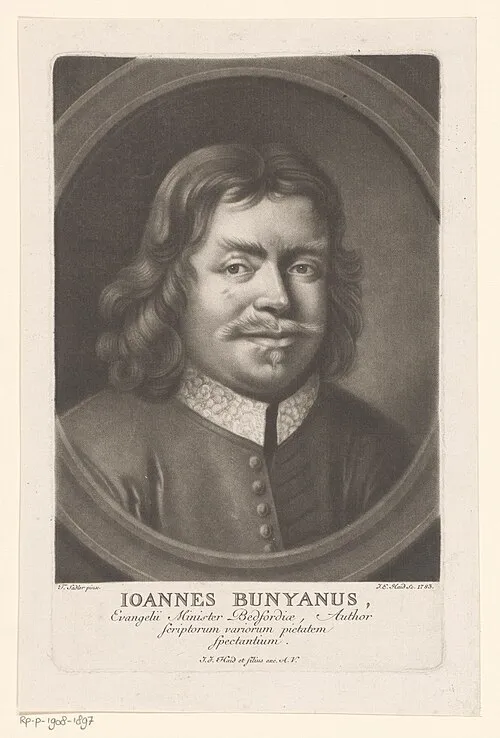
Sentido de las palabras EN NINGUNA MANERA
«Y al que á mí viene, no le echo fuera.» EN NINGUNA MANERA: en estas palabras hay [Primero] algo expresado; y [Segundo] algo implícito.
Primero, lo que se expresa es Jesucristo, su resolución inmutable de salvar al pecador que viene: en ninguna manera lo rechazaré, ni le negaré el beneficio de mi muerte y de mi justicia. Esta palabra, pues, es como aquella que él dice de la condenación eterna del pecador en el fuego del infierno: «no saldrá de allí»; esto es, nunca, nunca volverá a salir, no, ni por toda la eternidad (Mateo 5:26; 25:46). De suerte que, así como el que es condenado al fuego del infierno no tiene fundamento de esperanza de ser librado de allí, así el que viene a Cristo no tiene fundamento para temer que jamás sea echado allá.
«Así ha dicho Jehová: Si los cielos arriba se pueden medir, y buscarse abajo los fundamentos de la tierra, también yo desecharé toda la simiente de Israel por todo lo que hicieron, dice Jehová» (Jeremías 31:37). «Así ha dicho Jehová: Si no [permaneciere] mi concierto con el día y la noche, si yo no he puesto las leyes del cielo y la tierra, también desecharé la simiente de Jacob» (Jeremías 33:25, 26). Pero los cielos no se pueden medir, ni se pueden buscar abajo los fundamentos de la tierra; su pacto está también con el día y la noche, y él ha puesto las leyes del cielo; por tanto, no desechará la simiente de Jacob, que son los que vienen, sino que de cierto los salvará de la ira espantosa que viene (Jeremías 50:4, 5). Por esto, pues, es manifiesto que no fue la grandeza del pecado, ni el largo perseverar en él, no, ni tampoco la recaída, ni la contaminación de tu naturaleza, lo que puede poner una traba contra la salvación del pecador que viene, o serle estorbo. Porque, si en verdad esto pudiera ser, entonces esta determinación solemne y absoluta del Señor Jesús caería por tierra por sí misma, y quedaría sin efecto. Pero su «consejo permanecerá, y hará todo lo que quisiere»; esto es, su voluntad en esto; porque su promesa, en cuanto a esta conclusión irreversible, nace de su voluntad; se mantendrá en ella, y la cumplirá, porque es su voluntad (Isaías 46:10, 11).
Supón que un hombre tuviera los pecados, o tantos pecados como cien, y que otro tuviera cien veces tantos como él; con todo, si vienen, esta palabra, «en ninguna manera le echo fuera», los asegura a ambos por igual.
Supón que un hombre tiene deseo de ser salvo, y que para eso viene de verdad a Jesucristo; pero él, con su vida disoluta, ha condenado a muchos en el infierno. Pues la puerta de la esperanza queda, por estas palabras, tan abierta para él como para el que no tiene la milésima parte de sus transgresiones. «Y al que á mí viene, no le echo fuera.»
Supón que un hombre viene a Cristo para ser salvo, y que no tiene nada que traer consigo sino pecado y una vida malgastada. Pues que venga, y sea bienvenido a Jesucristo: «Y en ninguna manera lo echará fuera» (Lucas 7:42). ¿No es este un amor que excede a todo conocimiento? ¿No es este amor el asombro de los ángeles? ¿Y no es este amor digno de toda aceptación de parte de las manos y de los corazones de todos los pecadores que vienen?
Estorbos al venir a Cristo
Segundo, lo que está implícito en las palabras es: 1. Las almas que vienen tienen quienes sin cesar instan a Jesucristo para que las deseche. 2. Las almas que vienen temen que aquellos prevalezcan con Cristo para que las deseche. Porque estas palabras se dicen para tranquilizarnos, y para sostener nuestro ánimo contra estos dos peligros: «en ninguna manera le echo fuera».
- En cuanto a lo primero: las almas que vienen tienen quienes sin cesar instan a Jesucristo para que las deseche. Y hay tres cosas que así se vuelven contra el pecador que viene.
(1.) Está el diablo, aquel acusador de los hermanos, que los acusa delante de Dios día y noche (Apocalipsis 12:10). Este príncipe de las tinieblas no se cansa en esta obra; la hace, como ustedes ven, día y noche; esto es, sin cesar. Interpone de continuo sus excepciones contra ti, por si acaso prevalece. ¡Con cuánta porfía lo hizo contra aquel hombre bueno, Job, por si podía alcanzar su destrucción en el fuego del infierno! Objetó contra él que no servía a Dios de balde, y tentó a Dios a que extendiera su mano contra él, instando en que, si lo hacía, lo maldeciría en su cara; y todo esto, como Dios lo atestigua, «lo hizo sin causa» (Job 1:9-11; 2:4, 5). ¡Con cuánta porfía lo hizo con Cristo contra Josué, el sumo sacerdote! «Y mostróme á Josué», dijo el profeta, «el gran sacerdote, el cual estaba delante del ángel de Jehová; y Satán estaba á su mano derecha para serle adversario» (Zacarías 3:1).
Para serle adversario; esto es, para prevalecer con el Señor Jesucristo a fin de que le fuera adversario; objetando la inmundicia y el matrimonio ilícito de sus hijos con los gentiles; porque ese fue el crimen que Satanás les imputó (Esdras 10:18). Sí, y que yo sepa, también Josué era culpable del hecho; pero si no de ese, de crímenes en nada inferiores; porque estaba vestido de vestimentas viles, mientras estaba delante del ángel. Ni tuvo una palabra que decir en su propia defensa, contra todo lo que este malvado tenía que decir contra él. Pero, no obstante eso, salió bien librado; mas por ello podía dar gracias a un buen Señor Jesús, porque no le fue adversario, sino que, al contrario, tomó su causa, abogó contra el diablo, disculpó su flaqueza, y le puso ropas de justificación delante de la cara de su adversario.
«Y dijo Jehová á Satán: Jehová te reprenda, oh Satán; Jehová, que ha escogido á Jerusalem, te reprenda. ¿No es éste tizón arrebatado del incendio? Y habló el [ángel], é intimó á los que estaban delante de sí, diciendo: Quitadle esas vestimentas viles. Y á él dijo: Mira que he hecho pasar tu pecado de ti, y te he hecho vestir de ropas de gala» (Zacarías 3:2-4).
Otra vez: ¡con cuánta porfía lo hizo Satanás contra Pedro, cuando deseó tenerlo, para zarandearlo como a trigo! Esto es, si fuera posible, separar toda gracia de su corazón, y no dejarle sino carne e inmundicia, a fin de hacer que el Señor Jesús lo aborreciera y le tuviera asco. «Simón, Simón», dijo Cristo, «he aquí Satanás os ha pedido para zarandaros como á trigo». ¿Pero prevaleció contra él? No: «Mas yo he rogado por ti que tu fe no falte». Como quien dijera: Simón, Satanás me ha pedido que te entregue a él, y no solo a ti, sino a todos los demás de tus hermanos —porque eso da a entender el «os»—, pero no te dejaré en su mano: he rogado por ti; tu fe no faltará; te aseguraré para la heredad celestial (Lucas 22:30-32).
(2.) Como Satanás, así cada pecado del pecador que viene entra con una voz contra él, por si acaso prevalecen con Cristo para desechar el alma. Cuando Israel salía de Egipto hacia Canaán, ¡cuántas veces los habrían arrojado sus pecados fuera de la misericordia de Dios, si Moisés, como tipo de Cristo, no se hubiera puesto en la brecha para apartar de ellos su ira! (Salmo 106:23). Nuestras iniquidades testifican contra nosotros, y de cierto prevalecerían contra nosotros, hasta nuestro rechazo total y nuestra condenación, si no tuviéramos un abogado para con el Padre, a Jesucristo el justo (1 Juan 2:1, 2).
Los pecados del mundo antiguo clamaron hasta hundirlos en el infierno; los pecados de Sodoma trajeron sobre ellos fuego del cielo, que los devoró; los pecados de los egipcios clamaron hasta hundirlos en el infierno, porque no vinieron a Jesucristo por vida. Pecador que vienes, tus pecados no son en nada menores que los de cualquiera; es más, quizá son tan grandes como todos los de ellos juntos. ¿Por qué, pues, vives tú cuando ellos están muertos, y tienes una promesa de perdón cuando ellos no la tuvieron? «Pues, porque tú vienes a Jesucristo»; y por tanto el pecado no será tu ruina.
(3.) Como Satanás y el pecado, así la ley de Moisés, en cuanto es ley perfecta y santa, tiene una voz contra ustedes delante de la faz de Dios. «Hay quien os acusa, Moisés», su ley (Juan 5:45). Sí, acusa de transgresión a todos los hombres que han pecado contra ella; porque, mientras el pecado sea pecado, habrá una ley que acuse por el pecado. Pero esta acusación no prevalecerá contra el pecador que viene; porque Cristo es el que murió, y el que vive siempre, para interceder por los que «por él se allegan á Dios» (Romanos 8; Hebreos 7:25).
Estas cosas, digo, nos acusan delante de Cristo Jesús; sí, y también a nuestra propia cara, por si acaso prevalecieran contra nosotros. Pero estas palabras, «en ninguna manera le echo fuera», aseguran contra todas ellas al pecador que viene.
El pecador que viene no es salvo porque no haya quien entre contra él, sino porque el Señor Jesús no oirá sus acusaciones, no echará fuera al pecador que viene. Cuando Semei bajó al encuentro del rey David, y a pedir perdón por su rebelión, salta Abisai, e interpone su excepción, diciendo: ¿No ha de morir por esto Semei? Este es el caso del que viene a Cristo. Tiene este Abisai, y aquel Abisai, que al punto se le mete en contra, diciendo: ¿No han de destruir en el infierno los pecados de este rebelde? Lee más adelante. Pero David respondió: «¿Qué tenéis vosotros conmigo, hijos de Sarvia, que me habéis de ser hoy adversarios? ¿ha de morir hoy alguno en Israel? ¿no conozco yo que hoy soy rey sobre Israel?» (2 Samuel 19:16-22). Esa es la respuesta de Cristo, por el texto, a todos los que acusan a los Semei que vienen. ¿Qué tengo yo que ver con ustedes, que me acusan a los pecadores que vienen? Los tengo por adversarios, que se oponen a que yo les muestre misericordia. ¿No sé yo que hoy he sido exaltado para ser rey de justicia y rey de paz? «En ninguna manera los echaré fuera.»
- Pero otra vez: estas palabras dan a entender muy de cerca que las almas que vienen temen que estos acusadores prevalezcan contra ellas, como es evidente, porque el texto se dice para alivio y socorro de ellas. Porque eso no haría falta, si los que vienen no estuvieran sujetos a temor y a desaliento por esta causa. ¡Ay!, hay culpa, y la maldición está sobre la conciencia del pecador que viene.
Además, él sabe en sí mismo qué villano, qué miserable ha sido contra Dios y contra Cristo. También sabe ahora, por dolorosa experiencia, cómo ha estado al mandato de Satanás, y al movimiento de toda concupiscencia. Tiene ahora también pensamientos nuevos de la santidad y de la justicia de Dios. Siente también que no puede dejar de pecar contra él. Porque los afectos de los pecados, que son por la ley, obran todavía en sus miembros, para dar fruto para muerte (Romanos 7:5). Pero nada de esto tiene por qué [ser un desaliento], pues tenemos un Jesús tan bueno, tan tierno de corazón y tan fiel, a quien venir; el cual antes trastornará el cielo y la tierra que sufrir que falte una tilde de este texto. «Y al que á mí viene, no le echo fuera.»
Ver el original (inglés)
Original en inglés
Import of the words IN NO WISE
“And him that cometh to me, I will in no wise cast out.” IN NO WISE: by these words there is [First,] Something expressed; and [Second,] Something implied.
First, That which is expressed is Christ Jesus, his unchangeable resolution to save the coming sinner; I will in no wise reject him, or deny him the benefit of my death and righteousness. This word, therefore, is like that which he speaks of the everlasting damnation of the sinner in hell-fire; “He shall by no means depart thence;” that is, never, never come out again, no, not to all eternity (Matt 5:26; 25:46). So that as he that is condemned into hell-fire hath no ground of hope for his deliverance thence; so him that cometh to Christ, hath no ground to fear he shall ever be cast in thither.
“Thus saith the Lord, If heaven above can be measured, and the foundations of the earth searched out beneath, I will also cast off all the seed of Israel, for all that they have done, saith the Lord” (Jer 31:37). “Thus saith the Lord, If my covenant be not with day and night, and if I have not appointed the ordinances of heaven and earth, then will I cast away the seed of Jacob” (Jer 33:25,26). But heaven cannot be measured, nor the foundations of the earth searched out beneath; his covenant is also with day and night, and he hath appointed the ordinances of heaven; therefore he will not cast away the seed of Jacob, who are the coming ones, but will certainly save them from the dreadful wrath to come (Jer 50:4,5). By this, therefore, it is manifest, that it was not the greatness of sin, nor the long continuance in it, no, nor yet the backsliding, nor the pollution of thy nature, that can put a bar in against, or be an hindrance of, the salvation of the coming sinner. For, if indeed this could be, then would this solemn and absolute determination of the Lord Jesus, of itself, fall to the ground, and be made of none effect. But his “counsel shall stand, and he will do all his pleasure;” that is, his pleasure in this; for his promise, as to this irreversible conclusion, ariseth of his pleasure; he will stand to it, and will fulfil it, because it is his pleasure (Isa 46:10,11).
Suppose that one man had the sins, or as many sins as an hundred, and another should have an hundred times as many as he; yet, if they come, this word, “I will in no wise cast out,” secures them both alike.
Suppose a man hath a desire to be saved, and for that purpose is coming in truth to Jesus Christ; but he, by his debauched life, has damned many in hell; why, the door of hope is by these words set as open for him, as it is for him that hath not the thousandth part of his transgressions. “And him that cometh to me I will in no wise cast out.”
Suppose a man is coming to Christ to be saved, and hath nothing but sin, and an ill-spent life, to bring with him; why, let him come, and welcome to Jesus Christ, “And he will in no wise cast him out” (Luke 7:42). Is not this love that passeth knowledge? Is not this love the wonderment of angels? And is not this love worthy of all acceptation at the hands and hearts of all coming sinners?
Hindrances in coming to Christ
Second, That which is implied in the words is, 1. The coming souls have those that continually lie at Jesus Christ to cast them off. 2. The coming souls are afraid that those will prevail with Christ to cast them off. For these words are spoken to satisfy us, and to stay up our spirits against these two dangers: “I will in no wise cast out.”
- For the first, Coming souls have those that continually lie at Jesus Christ to cast them off. And there are three things that thus bend themselves against the coming sinner.
(1.) There is the devil, that accuser of the brethren, that accuses them before God, day and night (Rev 12:10). This prince of darkness is unwearied in this work; he doth it, as you see, day and night; that is, without ceasing. He continually puts in his caveats against thee, if so be he may prevail. How did he ply it against that good man Job, if possibly he might have obtained his destruction in hell-fire? He objected against him, that he served not God for nought, and tempted God to put forth his hand against him, urging, that if he did it, he would curse him to his face; and all this, as God witnesseth, “he did without a cause” (Job 1:9-11; 2:4,5). How did he ply it with Christ against Joshua the high-priest? “And he showed me Joshua,” said the prophet, “the high-priest, standing before the angel of the Lord, and Satan standing at his right hand to resist him” (Zech 3:1).
To resist him; that is, to prevail with the Lord Jesus Christ to resist him; objecting the uncleanness and unlawful marriage of his sons with the Gentiles; for that was the crime that Satan laid against them (Ezra 10:18). Yea, and for aught I know, Joshua was also guilty of the fact; but if not of that, of crimes no whit inferior; for he was clothed with filthy garments, as he stood before the angel. Neither had he one word to say in vindication of himself, against all that this wicked one had to say against him. But notwithstanding that, he came off well; but he might for it thank a good Lord Jesus, because he did not resist him, but contrariwise, took up his cause, pleaded against the devil, excusing his infirmity, and put justifying robes upon him before his adversary’s face.
“And the Lord said unto Satan, The Lord rebuke thee, O Satan, even the Lord that hath chosen Jerusalem, rebuke thee. Is not this a brand plucked out of the fire? And he answered and spoke to those that stood before him, saying, Take away the filthy garments from him; and unto him he said, Behold, I have caused thine iniquity to pass from thee, and I will clothe thee with change of raiment” (Zech 3:2-4).
Again, how did Satan ply it against Peter, when he desired to have him, that he might sift him as wheat? that is, if possible, sever all grace from his heart, and leave him nothing but flesh and filth, to the end that he might make the Lord Jesus loathe and abhor him. “Simon, Simon,” said Christ, “Satan hath desired to have you, that he may sift you as wheat.” But did he prevail against him? No: “But I have prayed for thee, that thy faith fail not.” As who should say, Simon, Satan hath desired me that I would give thee up to him, and not only thee, but all the rest of thy brethren —for that the word you imports —but I will not leave thee in his hand: I have prayed for thee, thy faith shall not fail; I will secure thee to the heavenly inheritance (Luke 22:30-32).
(2.) As Satan, so every sin of the coming sinner, comes in with a voice against him, if perhaps they may prevail with Christ to cast off the soul. When Israel was coming out of Egypt to Canaan, how many times had their sins thrown them out of the mercy of God, had not Moses, as a type of Christ, stood in the breach to turn away his wrath from them! (Psa 106:23). Our iniquities testify against us, and would certainly prevail against us, to our utter rejection and damnation, had we not an advocate with the Father, Jesus Christ the righteous (1 John 2:1,2).
The sins of the old world cried them down to hell; the sins of Sodom fetched upon them fire from heaven, which devoured them; the sins of the Egyptians cried them down to hell, because they came not to Jesus Christ for life. Coming sinner, thy sins are no whit less than any; nay, perhaps, they are as big as all theirs. Why is it then, that thou livest when they are dead, and that thou hast a promise of pardon when they had not? “Why, thou art coming to Jesus Christ;” and therefore sin shall not be thy ruin.
(3.) As Satan and sin, so the law of Moses, as it is a perfect holy law, hath a voice against you before the face of God. “There is one that accuseth you, even Moses,” his law (John 5:45). Yea, it accuseth all men of transgression that have sinned against it; for as long as sin is sin, there will be a law to accuse for sin. But this accusation shall not prevail against the coming sinner; because it is Christ that died, and that ever lives, to make intercession for them that “come to God by him” (Rom 8; Heb 7:25).
These things, I say, do accuse us before Christ Jesus; yea, and also to our own faces, if perhaps they might prevail against us. But these words, “I will in no wise cast out,” secureth the coming sinner from them all.
The coming sinner is not saved, because there is none that comes in against him; but because the Lord Jesus will not hear their accusations, will not cast out the coming sinner. When Shimei came down to meet king David, and to ask for pardon for his rebellion, up starts Abishai, and puts in his caveat, saying, Shall not Shimei die for this? This is the case of him that comes to Christ. He hath this Abishai, and that Abishai, that presently steps in against him, saying, Shall not this rebel’s sins destroy him in hell? Read further. But David answered, “What have I to do with you, ye sons of Zeruiah, that ye should this day be adversaries unto me? Shall there any man be put to death this day in Israel, for do not I know, that I am king this day over Israel?” (2 Sam 19:16-22). That is Christ’s answer by the text, to all that accuse the coming Shimeis. What have I to do with you, that accuse the coming sinners to me? I count you adversaries, that are against my showing mercy to them. Do not I know that I am exalted this day to be king of righteousness, and king of peace? “I will in no wise cast them out.”
- But again, these words do closely imply, that the coming souls are afraid that these accusers will prevail against them, as is evident, because the text is spoken for their relief and succour. For that need not be, if they that are coming were not subject to fear and despond upon this account. Alas, there is guilt, and the curse lies upon the conscience of the coming sinner!
Besides, he is conscious to himself what a villain, what a wretch he hath been against God and Christ. Also he now knows, by woeful experience, how he hath been at Satan’s beck, and at the motion of every lust. He hath now also new thoughts of the holiness and justice of God. Also he feels, that he cannot forbear sinning against him. For the motions of sins, which are by the law, doth still work in his members, to bring forth fruit unto death (Rom 7:5). But none of this needs be [a discouragement] since we have so good, so tender-hearted, and so faithful a Jesus to come to, who will rather overthrow heaven and earth, than suffer a tittle of this text to fail. “And him that cometh to me I will in no wise cast out.”
https://sermonesbiblicos.org/biblioteca/ven-y-se-bienvenido-a-jesucristo-12-en-ninguna-manera/