Sermones Bíblicos
A quiénes da el Padre
John Bunyan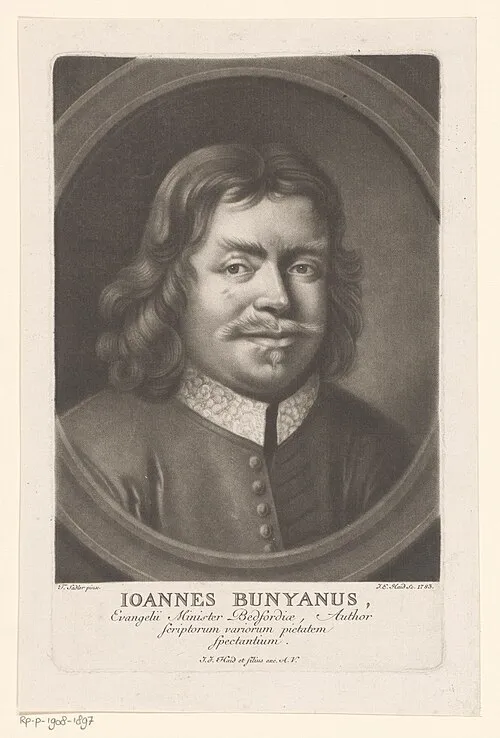
Segundo, los que se entienden como el don
—El don, pues, en el texto, no ha de tomarse en el sentido más amplio, sino tal como las palabras lo soporten, a saber, por un don tal que él lo acepta, y que promete que será un medio eficaz de salvación eterna para ellos. «Todo lo que el Padre me da, vendrá á mí; y al que á mí viene, no le echo fuera.» ¡Fíjate! Vendrán los que me son dados de manera especial; y de ningún modo serán rechazados. Porque esta es la sustancia del texto.
Los que, pues, se entienden como el don en el texto, son los que son dados por pacto al Hijo; los que en otros lugares se llaman «los electos», «los escogidos», «las ovejas» y «los hijos de la promesa», etc. Estos son los que el Padre ha dado a Cristo para que los guarde; aquellos a quienes Cristo ha prometido vida eterna; aquellos a quienes ha dado su palabra, y a quienes querrá tener consigo en su reino para contemplar su gloria.
«Y esta es la voluntad del que me envió, del Padre: Que todo lo que me diere, no pierda de ello, sino que lo resucite en el día postrero» (Juan 6:39). «Y yo les doy vida eterna: y no perecerán para siempre, ni nadie las arrebatará de mi mano. Mi Padre que me [las] dió, mayor que todos es: y nadie [las] puede arrebatar de la mano de mi Padre» (Juan 10:28-29). «Como le has dado la potestad de toda carne, para que dé vida eterna á todos los que le diste. Tuyos eran, y me los diste, y guardaron tu palabra. Yo ruego por ellos: no ruego por el mundo, sino por los que me diste; porque tuyos son. Y todas mis cosas son tus cosas, y tus cosas son mis cosas: y he sido glorificado en ellas.» «Á los que me has dado, guárdalos por tu nombre, para que sean una cosa, como también nosotros.» «Padre, aquellos que me has dado, quiero que donde yo estoy, ellos estén también conmigo; para que vean mi gloria que me has dado: por cuanto me has amado desde antes de la constitución del mundo» (Juan 17:2, 6, 9-11, 24). [N. del T.: la edición dice «Juan 17:1, 6, 9, 10, 24».]
Todas estas sentencias son del mismo sentido que el texto; y los «todos» y los «muchos», los «aquellos», los «ellos», etc., en estos varios dichos de Cristo, son lo mismo que todos los dados en el texto. «Todo lo que el Padre da.»
De modo que, como dije antes, la palabra TODO, como también otras palabras, no ha de tomarse del modo a que nos empujen nuestras fantasías necias u opiniones sin fundamento, sino que admite una ampliación o una restricción, según el verdadero sentido e intento del texto. Hemos, pues, de consultar con diligencia el sentido del texto, comparándolo con los demás dichos de Dios; así podremos hallar mejor la mente del Señor, en la palabra que nos ha dado para conocerla.
La persona que da: el Padre
«Todo lo que el Padre da.» Con esta palabra «Padre», Cristo describe a la persona que da; de lo cual podemos aprender varias cosas útiles.
Primero. Que el Señor Dios, y Padre de nuestro Señor Jesucristo, está comprometido con el Hijo en la salvación de su pueblo. Cierto: sus actos, en cuanto a nuestra salvación, son distintos de los del Hijo; él no era capaz de hacer aquello, o aquellas cosas, por nosotros, como las hizo el Hijo; no murió, no derramó sangre por nuestra redención, como el Hijo; pero con todo tiene una mano, una gran mano, también en nuestra salvación. Como dice Cristo: «el mismo Padre os ama», y su amor se manifiesta en escogernos, en entregarnos a su Hijo; sí, y también en dar a su Hijo para que sea rescate por nosotros. De ahí que se le llame «el Padre de misericordias, y el Dios de toda consolación». Porque aquí el Padre mismo ha hallado, y ha abierto camino para que su gracia venga a nosotros por el costado y por la sangre del corazón de su Hijo amado (Colosenses 1:12-14). El Padre, pues, ha de ser recordado y adorado, como quien tiene una mano principal en la salvación de los pecadores. Debemos dar «gracias al Padre que nos hizo aptos para participar de la suerte de los santos en luz» (Colosenses 1:12). Porque «el Padre ha enviado al Hijo [para ser] Salvador del mundo» (1 Juan 4:14). [N. del T.: la edición dice «Juan 4:14»; se lee «1 Juan 4:14».] Como también vemos en el texto, el «Padre da» al pecador a Cristo para que lo salve.
Segundo. Cristo Jesús el Señor, con esta palabra «Padre», quiere hacernos familiar a este dador. Por naturaleza el nombre de Dios nos es temible, sobre todo cuando se nos descubre por aquellos nombres que declaran su justicia, su santidad, su poder y su gloria; pero ahora esta palabra «Padre» es una palabra familiar: no espanta al pecador, sino que más bien inclina su corazón a amar, y a complacerse en el recuerdo de él. De ahí que Cristo también, cuando quiere que oremos con denuedo piadoso, ponga esta palabra «Padre» en nuestra boca, diciendo: «Cuando orareis, decid: Padre nuestro que estás en los cielos»; concluyendo con ello que, por la familiaridad que tal palabra da a entender, los hijos de Dios pueden tomar más denuedo para orar por cosas grandes, y pedirlas. Yo mismo he hallado muchas veces que, cuando puedo decir tan solo esta palabra Padre, me hace más bien que cuando lo llamo por cualquier otro nombre de la Escritura. Vale la pena que ustedes lo noten: llamar a Dios por su título de relación era raro entre los santos en los tiempos del Antiguo Testamento. Rara vez lo hallan ustedes llamado por este nombre; no, a veces ni en tres o cuatro libros; pero ahora, en los tiempos del Nuevo Testamento, no se le llama por ningún nombre tan a menudo como por este, tanto por el Señor Jesús mismo como por los apóstoles después. A la verdad, el Señor Jesús fue quien primero hizo común este nombre entre los santos, y quien les enseñó, tanto en sus discursos, como en sus oraciones y en sus escritos, a usarlo tanto; por ser más agradable, y por descubrir con más claridad nuestra parte en Dios, que cualquier otra expresión; porque por este solo nombre se nos hace entender que todas nuestras misericordias son prole de Dios, y que nosotros también, los que somos llamados, somos sus hijos por adopción.
Sentido de la palabra «da»
—«Todo lo que el Padre da.» Esta palabra «da» se sale del modo ordinario de hablar de Cristo, y parece dar a entender, a primera oída, como si el don del Padre al Hijo no fuera un acto que ya pasó, sino uno que es presente y que continúa; cuando, a la verdad, este don fue otorgado a Cristo cuando el pacto, el pacto eterno, fue hecho entre ellos antes de todos los mundos. Por lo cual, en aquellos otros lugares, cuando se menciona este don, todavía se habla de él como de un acto que ya pasó; como: «Todo lo que él me ha dado; a cuantos tú me has dado; me los diste; y aquellos que me has dado.» Por tanto, de necesidad, este ha de ser el sentido primero y principal del texto; quiero decir, de esta palabra «da»; de otro modo la doctrina de la elección, y del pacto eterno que fue hecho entre el Padre y el Hijo, pacto en el cual este don del Padre está comprendido con toda certeza, será sacudida, o al menos puesta en duda, por hombres errados y malvados: porque pueden decir que el Padre no dio a Cristo, antes de que el mundo fuera hecho, a todos aquellos que han de ser salvos; porque este acto de dar es un acto de continuación. Pero otra vez: esta palabra «da» no ha de desecharse, porque tiene su uso propio, y puede significarnos:
-
Que aunque el acto de dar entre los hombres admite el tiempo pasado, o el tiempo por venir, y ha de hablarse de él con referencia a tal tiempo, con Dios no es así. Las cosas pasadas, o las cosas por venir, están siempre presentes para Dios, y para su Hijo Jesucristo: él «llama las cosas que no son», esto es, para nosotros, «como las que son» (Romanos 4:17). Y otra vez: «Conocidas son á Dios desde el siglo todas sus obras.» Todas las cosas son presentes para Dios, y así el don del Padre al Hijo, aunque para nosotros, como se manifiesta por la palabra, es un acto que ya pasó (Hechos 15:18). [N. del T.: la edición dice «Acts 15:16»; se lee «Hechos 15:18».]
-
Cristo puede expresarse así para mostrar que el Padre no solo le ha dado esta porción en bloque, antes de que el mundo fuera, sino que a aquellos que así le había dado, se los dará otra vez; esto es, los traerá a él al tiempo de su conversión; porque el Padre los trae a Cristo (Juan 6:44). Como está dicho: «Con [vestidos] bordados será llevada al rey»; esto es, en la justicia de Cristo; porque es Dios quien imputa eso a los que son salvos (Salmo 45:14; 1 Corintios 1). Un hombre da su hija a tal hombre, primero con miras al matrimonio, y esto mira al tiempo pasado, y la da otra vez el día señalado, en el matrimonio. Y en este último sentido, quizá, el texto pueda tener un significado; esto es, que a todos los que el Padre, antes de que el mundo fuera, ha dado a Jesucristo, se los da otra vez a él en el día de sus desposorios.
Las cosas que se dan entre los hombres son muchas veces mejores al principio, a saber, cuando son nuevas; y la razón es que todas las cosas terrenales envejecen; pero con Cristo no es así. Este don del Padre no es viejo, ni deforme, ni desagradable a sus ojos; y por tanto para él es siempre nuevo. Cuando el Señor habló de dar la tierra de Canaán a los israelitas, no dice que la había dado, o que la daría, sino así: «Jehová tu Dios te da esta buena tierra» (Deuteronomio 9:6). No es que no se la hubiera dado, cuando aún estaban en los lomos de sus padres, cientos de años antes. Con todo, dice ahora que se la da; como si ellos estuvieran ahora también en el acto mismo de tomar posesión, cuando todavía estaban al otro lado del Jordán. ¿Cuál ha de ser, pues, el sentido? Pues, yo lo tomo por este: que la tierra había de serles siempre como nueva; tan nueva como si apenas ahora tomaran posesión de ella. Y así es el don del Padre, mencionado en el texto, para el Hijo; es siempre nuevo, como si siempre fuera nuevo.
«Todo lo que el Padre me da.» En estas palabras hallan ustedes mención de dos personas, el Padre y el Hijo; el Padre dando, y el Hijo recibiendo o aceptando este don. Esto, pues, en primer lugar, demuestra con claridad que el Padre y el Hijo, aunque ellos, con el Espíritu Santo, son uno y el mismo Dios eterno, con todo, en cuanto a su personalidad, son distintos. El Padre es uno, el Hijo es uno, el Espíritu Santo es uno. Pero porque en este texto se hace mención solo de dos de los tres, por tanto una palabra acerca de estos dos. El que da y el que recibe no pueden ser la misma persona en sentido propio, en el mismo acto de dar y de recibir. El que da, no da a sí mismo, sino a otro; el Padre no da al Padre, a saber, a sí mismo, sino al Hijo; el Hijo no recibe del Hijo, a saber, de sí mismo, sino del Padre; así, cuando el Padre da mandamiento, no lo da a sí mismo, sino a otro; como dice Cristo: «Él me dió mandamiento» (Juan 12:49). Así otra vez: «Yo soy el que doy testimonio de mí mismo: y da testimonio de mí el que me envió, el Padre» (Juan 8:18).
Además, aquí hay algo implícito que no está expresado, a saber, que el Padre no ha dado a todos los hombres a Cristo; esto es, en aquel sentido en que se entiende en este texto, aunque en uno más amplio, como se dijo antes, le ha dado a cada uno de ellos; porque entonces todos serían salvos: ha dispuesto, pues, de algunos de otra manera. Entrega a algunos a la idolatría; entrega a algunos a la inmundicia, a afectos viles y a una mente réproba. A estos los dispone en su ira, para destrucción de ellos, a fin de que cosechen el fruto de sus hechos y se harten de la paga de sus propios caminos (Hechos 7:42; Romanos 1:24, 26, 28). Pero tampoco ha dispuesto así de todos los hombres; aun por misericordia ha reservado a algunos de estos juicios, y esos son los que él perdonará, como dice: «Porque perdonaré á los que yo hubiere dejado» (Jeremías 50:20). A estos los ha dado a Jesucristo, por testamento, como legado y porción. De ahí que el Señor Jesús diga: «Y esta es la voluntad del que me envió, del Padre: Que todo lo que me diere, no pierda de ello, sino que lo resucite en el día postrero» (Juan 6:39).
Ver el original (inglés)
Original en inglés
Second, Those intended as the gift
—The gift, therefore, in the text, must not be taken in the largest sense, but even as the words will bear, to wit, for such a gift as he accepteth, and promiseth to be an effectual means of eternal salvation to. “All that the Father giveth me shall come to me; and him that cometh to me I will in no wise cast out.” Mark! they shall come that are in special given to me; and they shall by no means be rejected. For this is the substance of the text.
Those, therefore, intended as the gift in the text, are those that are given by covenant to the Son; those that in other places are called “the elect,” “the chosen,” “the sheep,” and “the children of the promise,” &c. These be they that the Father hath given to Christ to keep them; those that Christ hath promised eternal life unto; those to whom he hath given his word, and that he will have with him in his kingdom to behold his glory.
“This is the Father’s will which hath sent me, that of all which he hath given me I should lose nothing, but should raise it up again at the last day” (John 6:39). “And I give unto them eternal life; and they shall never perish, neither shall any man pluck them out of my hand. My Father which gave them me, is greater than all; and no man is able to pluck them out of my Father’s hand” (John 10:28). “As thou hast given him power over all flesh, that he should give eternal life to as many as thou hast given him. Thine they were, and thou gavest them me, and they have kept thy word; I pray for them: I pray not for the world, but for them which thou hast given me; for they are thine. And all mine are thine, and thine are mine; and I am glorified in them.” “Keep through thine own name those whom thou hast given me, that they may be one, as we are.” “Father, I will that they also, whom thou hast given me, be with me where I am; that they may behold my glory, which thou hast given me: for thou lovedst me before the foundation of the world” (John 17:1,6,9,10,24).
All these sentences are of the same import with the text; and the alls and manies, those, they, &c., in these several sayings of Christ, are the same with all the given in the text. “All that the Father giveth.”
So that, as I said before, the word ALL, as also other words, must not be taken in such sort as our foolish fancies or groundless opinions will prompt us to, but do admit of an enlargement or a restriction, according to the true meaning and intent of the text. We must therefore diligently consult the meaning of the text, by comparing it with other the sayings of God; so shall we be better able to find out the mind of the Lord, in the word which he has given us to know it by.
The Person Giving, the Father
“All that the Father giveth.” By this word “Father,” Christ describeth the person giving; by which we may learn several useful things.
First, That the Lord God, and Father of our Lord Jesus Christ, is concerned with the Son in the salvation of his people. True, his acts, as to our salvation, are diverse from those of the Son; he was not capable of doing that, or those things for us, as did the Son; he died not, he spilt not blood for our redemption, as the Son; but yet he hath a hand, a great hand, in our salvation too. As Christ saith, “The Father himself loveth you,” and his love is manifest in choosing of us, in giving of us to his Son; yea, and in giving his Son also to be a ransom for us. Hence he is called, “The Father of mercies, and the God of all comfort.” For here even the Father hath himself found out, and made way for his grace to come to us through the sides and the heart-blood of his well-beloved Son (Col 1:12-14). The Father, therefore, is to be remembered and adored, as one having a chief hand in the salvation of sinners. We ought to give “thanks unto the Father, which hath made us meet to be partakers of the inheritance of the saints in light” (Col 1:12). For “the Father sent the Son to be the Saviour of the world” (John 4:14). As also we see in the text, the “Father giveth” the sinner to Christ to save him.
Second, Christ Jesus the Lord, by this word “Father,” would familiarize this giver to us. Naturally the name of God is dreadful to us, especially when he is discovered to us by those names that declare his justice, holiness, power, and glory; but now this word “Father” is a familiar word, it frighteth not the sinner, but rather inclineth his heart to love, and be pleased with the remembrance of him. Hence Christ also, when he would have us to pray with godly boldness, puts this word “Father” into our mouths; saying, “When ye pray, say, Our Father which art in heaven;” concluding thereby, that by the familiarity that by such a word is intimated, the children of God may take more boldness to pray for, and ask great things. I myself have often found, that when I can say but this word Father, it doth me more good than when I call him by any other Scripture name. It is worth your noting, that to call God by his relative title was rare among the saints in Old Testament times. Seldom do you find him called by this name; no, sometimes not in three or four books: but now in New Testament times, he is called by no name so often as this, both by the Lord Jesus himself, and by the apostles afterwards. Indeed, the Lord Jesus was he that first made this name common among the saints, and that taught them, both in their discourses, their prayers, and in their writings, so much to use it; it being more pleasing to, and discovering more plainly our interest in, God, than any other expression; for by this one name we are made to understand that all our mercies are the offspring of God, and that we also that are called are his children by adoption.
Import of the word GIVETH
—”All that the Father giveth.” This word “giveth” is out of Christ’s ordinary dialect, and seemeth to intimate, at the first sound, as if the Father’s gift to the Son was not an act that is past, but one that is present and continuing; when, indeed, this gift was bestowed upon Christ when the covenant, the eternal covenant, was made between them before all worlds. Wherefore, in those other places, when this gift is mentioned, it is still spoken of, as of an act that is past; as, “All that he hath give me; to as many as thou hast given me; thou gavest them me; and those which thou hast given me.” Therefore, of necessity, this must be the first and chief sense of the text; I mean of this word “giveth,” otherwise the doctrine of election, and of the eternal covenant which was made between the Father and the Son, in which covenant this gift of the Father is most certainly comprised, will be shaken, or at leastwise questionable, by erroneous and wicked men: for they may say, That the Father gave not all those to Christ that shall be saved, before the world was made; for that this act of giving is an act of continuation. But again, this word “giveth” is not to be rejected, for it hath its proper use, and may signify to us —
-
That though the act of giving among men doth admit of the time past, or the time to come, and is to be spoken of with reference to such time; yet with God it is not so. Things past, or things to come, are always present with God, and with his Son Jesus Christ: He “calleth those things which be not,” that is, to us, “as though they were” (Rom 4:17). And again, “Known unto God are all his works from the beginning of the world.” All things to God are present, and so the gift of the Father to the Son, although to us, as is manifest by the word, it is an act that is past (Acts 15:16).
-
Christ may express himself thus, to show, that the Father hath not only given him this portion in the lump, before the world was, but that those that he had so given, he will give him again; that is, will bring them to him at the time of their conversion; for the Father bringeth them to Christ (John 6:44). As it is said, “She shall be brought unto the king in raiment of needle-work;” that is, in the righteousness of Christ; for it is God that imputeth that to those that are saved (Psa 45:14; 1 Cor 1). A man giveth his daughter to such a man, first in order to marriage, and this respects the time past, and he giveth her again at the day appointed in marriage. And in this last sense, perhaps, the text may have a meaning; that is, that all that the Father hath, before the world was, given to Jesus Christ, he giveth them again to him in the day of their espousals.
Things that are given among men, are ofttimes best at first; to wit, when they are new; and the reason is, because all earthly things wax old; but with Christ it is not so. This gift of the Father is not old and deformed, and unpleasant in his eyes; and therefore to him it is always new. When the Lord spake of giving the land of Canaan to the Israelites, he saith not, that he had given, or would give it to them, but thus: “The Lord thy God giveth thee -this good land” (Deut 9:6). Not but that he had given it to them, while they were in the loins of their fathers, hundreds of years before. Yet he saith now he giveth it to them; as if they were now also in the very act of taking possession, when as yet they were on the other side Jordan. What then should be the meaning? Why, I take it to be this. That the land should be to them always as new; as new as if they were taking possession thereof but now. And so is the gift of the Father, mentioned in the text, to the Son; it is always new, as if it were always new.
“All that the Father giveth me.” In these words you find mention made of two persons, the Father and the Son; the Father giving, and the Son receiving or accepting of this gift. This, then, in the first place, clearly demonstrateth, that the Father and the Son, though they, with the Holy Ghost, are one and the same eternal God; yet, as to their personality, are distinct. The Father is one, the Son is one, the Holy Spirit is one. But because there is in this text mention made but of two of the three, therefore a word about these two. The giver and receiver cannot be the same person in a proper sense, in the same act of giving and receiving. He that giveth, giveth not to himself, but to another; the Father giveth not to the Father, to wit, to himself, but to the Son: the Son receiveth not of the Son, to wit, of himself, but of the Father: so when the Father giveth commandment, he giveth it not to himself, but to another; as Christ saith, “He gave me a commandment” (John 12:49). So again, “I am one that bear witness of myself, and the Father that sent me beareth witness of me” (John 8:18).
Further, here is something implied that is not expressed, to wit, that the Father hath not given all men to Christ; that is, in that sense as it is intended in this text, though in a larger, as was said before, he hath given him every one of them; for then all should be saved: he hath, therefore, disposed of some another way. He gives some up to idolatry; he gives some up to uncleanness, to vile affections, and to a reprobate mind. Now these he disposeth of in his anger, for their destruction, that they may reap the fruit of their doings, and be filled with the reward of their own ways (Acts 7:42; Rom 1:24,26,28). But neither hath he thus disposed of all men; he hath even of mercy reserved some from these judgments, and those are they that he will pardon, as he saith, “For I will pardon them whom I reserve” (Jer 50:20). Now these he hath given to Jesus Christ, by will, as a legacy and portion. Hence the Lord Jesus says, “This is the Father’s will which hath sent me, that of all which he hath given me I should lose nothing, but should raise it up again at the last day” (John 6:39).
https://sermonesbiblicos.org/biblioteca/ven-y-se-bienvenido-a-jesucristo-02-a-quienes-da-el-padre/