Sermones Bíblicos
El texto y la extensión del don
John Bunyan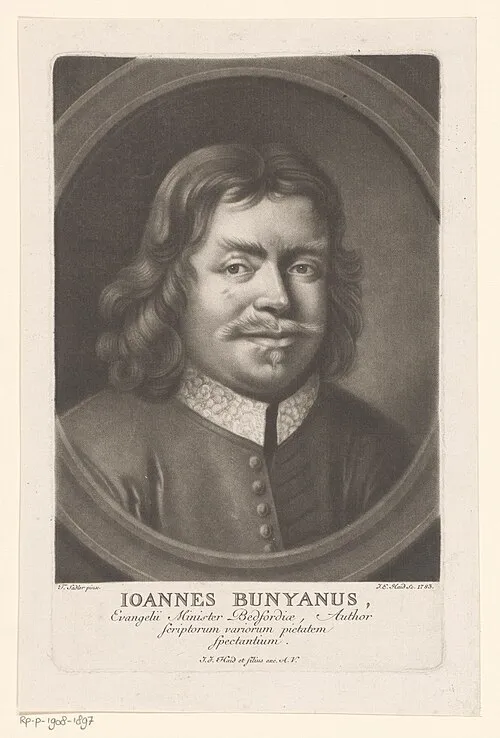
Ven y sé bienvenido a Jesucristo
«TODO LO QUE EL PADRE ME DA, VENDRÁ Á MÍ; Y AL QUE Á MÍ VIENE, NO LE ECHO FUERA.» — JUAN 6:37.
Poco antes, en este capítulo, pueden ustedes leer que el Señor Jesús anduvo sobre el mar para ir a Capernaum, habiendo enviado delante a sus discípulos en un barco; pero el viento era contrario, y por este medio el barco fue estorbado en su paso. Ahora bien, cerca de la cuarta vigilia de la noche, Jesús vino andando sobre el mar y los alcanzó; a cuya vista ellos tuvieron miedo.
Nota. Cuando las providencias son negras y terribles para el pueblo de Dios, el Señor Jesús se les muestra de un modo admirable; lo cual a veces pueden ellos soportar tan poco como las cosas que antes les eran terribles. Tuvieron miedo del viento y del agua; tuvieron miedo también de su Señor y Salvador, cuando se les apareció en aquel estado.
Pero él dijo: «Yo soy; no tengáis miedo.»
Nota. Que el fin del aparecérseles el Señor Jesús a los suyos, por terrible que sea el modo de su aparición, es aquietar sus temores y sus perplejidades.
Entonces lo recibieron en el barco, y al momento el barco estuvo en la tierra adonde iba.
Nota. Cuando Cristo está ausente de los suyos, ellos avanzan despacio y con gran dificultad; pero cuando él se les junta, ¡oh!, ¡qué pronto enderezan su curso! ¡qué pronto están al fin de su viaje!
El pueblo entre el cual había predicado por último, cuando vio que tanto Jesús como sus discípulos se habían ido, también se embarcó y vino a Capernaum, buscando a Jesús. Y cuando lo hubieron hallado, le preguntaron maravillados: «Rabbí, ¿cuándo llegaste acá?». Pero el Señor Jesús, haciendo poco caso de su cumplido, respondió: «De cierto, de cierto os digo, que me buscáis, no porque habéis visto las señales, sino porque comisteis el pan y os hartasteis.»
Nota. Un pueblo puede seguir a Cristo muy lejos por fines bajos, como estos fueron tras él al otro lado del mar por los panes. El vientre de un hombre lo llevará un gran trecho en la religión; sí, el vientre de un hombre lo hará aventurarse lejos por Cristo.
Nota otra vez. No son los cumplidos fingidos, sino las intenciones de gracia, las que coronan la obra a los ojos de Cristo; o así: no es el afán y el negocio de los profesantes, sino el amor de ellos hacia él, lo que hace que él los apruebe.
Nota otra vez. Cuando los hombres busquen acogida amistosa de la mano de Cristo, si sus corazones están podridos, aun entonces se toparán con un freno y una reprensión. «Me buscáis, no porque habéis visto las señales, sino porque comisteis el pan y os hartasteis.»
Observa todavía. No rehúsa dar, aun a estos, buen consejo: les manda trabajar por la comida que permanece para vida eterna. ¡Oh! ¡con qué gusto querría Jesucristo que aun aquellos profesantes que vienen a él solo con pretextos vinieran a él con sinceridad, para que sean salvos!
El texto, hallarán ustedes, está después de mucho más discurso con este pueblo y acerca de él, y lo pronuncia el Señor Jesús como la conclusión del todo, y da a entender que, puesto que eran profesantes solo de pretexto, y por tanto tales que su alma no podía deleitarse en ellos, en cuanto tales, él se contentaría con un remanente que su Padre le había otorgado. Como si dijera: No es probable que yo sea honrado en la salvación de ustedes; pero el Padre me ha otorgado un pueblo, y ellos vendrán a mí de veras, y en ellos quedaré satisfecho. El texto, pues, puede llamarse el reposo de Cristo; en cuyo cumplimiento él descansa contento, después de mucho trabajo y de muchos sermones gastados, por así decirlo, en vano. Como dice por el profeta: «Por demás he trabajado, en vano y sin provecho he consumido mi fortaleza» (Isaías 49:4).
Pero así como allí dice: «Mi juicio está delante de Jehová, y mi recompensa con mi Dios», así en el texto dice: «Todo lo que el Padre me da, vendrá á mí; y al que á mí viene, no le echo fuera.» Con estas palabras, pues, el Señor Jesús se consuela al considerar el disimulo de algunos de sus seguidores. También así se recogió a descansar al considerar el poco efecto que su ministerio había tenido en Capernaum, Corazín y Betsaida: «Yo te alabo, oh Padre», dijo, «Señor del cielo y de la tierra, que escondiste estas cosas á los sabios y entendidos, y las has revelado á los pequeños: así, Padre, porque así te agradó» (Mateo 11:25; Lucas 10:21).
El texto, en general, consta de DOS PARTES, y mira de modo especial al Padre y al Hijo; como también a la administración conjunta que ellos hacen de la salvación del pueblo: «Todo lo que el Padre me da, vendrá á mí; y al que á mí viene, no le echo fuera.» La primera parte del texto, como es evidente, mira al Padre y a su don; la otra parte, al Hijo y a su recepción de ese don.
PRIMERO. En cuanto al don del Padre hay esto que considerar, a saber, el don mismo; y este es el don de ciertas personas al Hijo. El Padre da, y ese don vendrá: «Y al que viene». El don, pues, es de personas; el Padre da personas a Jesucristo.
SEGUNDO. Luego tienen ustedes la recepción de este don por el Hijo, y ella se muestra en estos particulares: 1. En su reconocimiento cordial de que es un don: «El Padre me da». 2. En que toma nota, de un modo solemne, de todo y de cada parte del don: «Todo lo que el Padre me da». 3. En su resolución de traerlos a sí mismo: «Todo lo que el Padre me da, vendrá á mí». 4. Y en su determinación de que ninguna cosa le hará desagradarse de ellos en su venida: «Y al que á mí viene, no le echo fuera.»
De estas cosas se podría hablar por extenso, tal como en este método se presentan a la vista; pero escogeré hablar de las palabras, PRIMERO, POR VÍA DE EXPLICACIÓN. SEGUNDO, POR VÍA DE OBSERVACIÓN.
Primero, el texto tratado por vía de explicación
La extensión del don
«Todo lo que el Padre me da.» Esta palabra «todo» se usa a menudo en la Escritura, y ha de tomarse más ampliamente, o más estrictamente, según lo soporte la verdad o el argumento por cuya causa se emplea. Por tanto, para entender mejor la mente de Cristo en el uso que aquí le da, hemos de considerar que está limitada y restringida solo a los que han de ser salvos, a saber, a los que han de venir a Cristo; aun a aquellos a quienes él en ninguna manera echará fuera. Así también las palabras «todo Israel» a veces han de tomarse en sentido restringido, aunque otras veces se toman por toda la familia de Jacob. «Y luego todo Israel será salvo» (Romanos 11:26). Por todo Israel aquí no entiende a todo Israel, en el sentido más amplio; «porque no todos los que son de Israel son Israelitas»; «Ni por ser simiente de Abraham, son todos hijos; mas: En Isaac te será llamada simiente. Quiere decir: No los que son hijos de la carne, éstos son los hijos de Dios; mas los que son hijos de la promesa, son contados en la generación» (Romanos 9:6-8).
Esta palabra TODO, pues, ha de limitarse y ampliarse según lo soporte la verdad y el argumento por cuya causa se usa; de otro modo abusaremos de la Escritura, de los lectores, de nosotros mismos y de todos. «Y yo, si fuere levantado de la tierra», dijo Cristo, «á todos traeré á mí mismo» (Juan 12:32). ¿Puede alguien imaginar que por TODOS, en este lugar, haya de entender a todos y cada uno de los hombres del mundo, y no más bien a todo aquello que es conforme al propósito del pasaje? Y si por ser «levantado de la tierra» entiende, como parece, su ser llevado al cielo; y si por «traer en pos de él a TODOS los hombres» entendió un traerlos a aquel lugar de gloria, entonces por TODOS los hombres ha de entender a aquellos, y solo a aquellos, que en verdad han de ser salvos eternamente de la ira venidera. «Porque Dios encerró á todos en incredulidad, para tener misericordia de todos» (Romanos 11:32). Aquí otra vez tienen ustedes todo y todo, dos todos; pero con todo hay una disparidad mayor entre el todo mencionado en primer lugar y aquel todo mencionado en segundo. Los que se entienden en este texto son los judíos, todos ellos, por el primer «todo» que ustedes hallan en las palabras. El segundo «todo» entiende también al mismo pueblo; pero solo a aquellos de ellos de quienes Dios tendrá misericordia. «Encerró á todos en incredulidad, para tener misericordia de todos.» El «todo» del texto, asimismo, ha de limitarse y restringirse a los salvos, y solo a ellos. Pero otra vez:
La palabra «da», o «ha dado», ha de restringirse, del mismo modo, al mismo número limitado. «Todo lo que el Padre me da.» No todos los que son dados, si ustedes toman el don del Padre al Hijo en el sentido más amplio; porque en ese sentido hay muchos dados a él que nunca vendrán a él; sí, muchos le son dados a los cuales él «echará fuera». Mostraré, pues, primero a ustedes la verdad de esto; y luego, en qué sentido ha de tomarse el don del texto.
Primero, [TODO no puede entenderse en su sentido más amplio.] Que TODOS los que son dados a Cristo, si ustedes toman el don del Padre a él en el sentido más amplio, no pueden ser los que se entienden en el texto, es evidente:
-
Porque entonces todos los hombres, sí, todas las cosas del mundo, tendrían que ser salvos. «Todas las cosas», dice, «me son entregadas de mi Padre» (Mateo 11:27). Esto, pienso, ningún hombre racional del mundo lo concluirá. Por tanto, el don que se entiende en el texto ha de restringirse a algunos, a un don que es dado por vía de especialidad por el Padre al Hijo.
-
No ha de tomarse por TODOS los que en cualquier sentido son dados por el Padre a él, porque el Padre le ha dado algunos, sí, muchos, para que él los desmenuce. «Pídeme», dijo el Padre a él, «y te daré por heredad las gentes, y por posesión tuya los términos de la tierra.» Pero ¿qué ha de hacerse con ellos? ¿Ha de salvarlos a todos? No. «Quebrantarlos has con vara de hierro: como vaso de alfarero los desmenuzarás» (Salmo 2). Este modo no lo usa con los que salva por su gracia, sino con aquellos sobre los cuales él mismo y los santos han de regir con justicia y severidad (Apocalipsis 2:26-27). Con todo, como ustedes ven, «le son dados». Por tanto, el don que se entiende en el texto ha de restringirse a algunos, a un don que es dado por vía de especialidad por el Padre al Hijo.
En el Salmo 18 dice llanamente que algunos le son dados para que él los destruya. «Y dísteme la cerviz de mis enemigos, y destruí á los que me aborrecían» (versículo 40). Estos, pues, no pueden ser del número de los que se dice que son dados en el texto; porque aquellos, TODOS ellos, vendrán a él, «y él en ninguna manera los echará fuera».
- Algunos son dados a Cristo para que por medio de ellos él lleve a cabo algunos de sus designios altos y profundos en el mundo. Así Judas fue dado a Cristo, a saber, para que por él, según estaba determinado de antemano, llevara a cabo su muerte, y así la salvación de sus escogidos por su sangre. Sí, y Judas ha de manejar este negocio de tal modo que ha de perderse para siempre al llevarlo a cabo. Por tanto el Señor Jesús, aun al perder a Judas, se remite al juicio de su Padre acerca de si en aquello no había hecho lo que era justo, esto es, en permitir que Judas llevara así a cabo la muerte de su Maestro, de modo que, al hacerlo, trajera también su propia condenación eterna.
«Á los que me diste», dijo, «yo los guardé, y ninguno de ellos se perdió, sino el hijo de perdición; para que la Escritura se cumpliese» (Juan 17:12). Concedamos, pues, que Judas fue dado a Cristo, pero no como los otros le son dados, no como los que se mencionan en el texto; porque entonces habría faltado el que Cristo lo recibiera así y lo guardara para vida eterna. A la verdad, fue dado a Cristo; pero le fue dado para que lo perdiera, del modo que he mencionado antes; fue dado a Cristo para que él, por medio de él, llevara a cabo su propia muerte, según estaba determinado de antemano; y eso en la ruina del que lo hizo. Sí, ha de llevar a cabo su propia muerte, según estaba determinado de antemano, y eso en la ruina del que lo hizo. Sí, ha de llevar a cabo su morir por nosotros en la pérdida del instrumento que lo entregó, para cumplir la Escritura en la destrucción de aquel, tanto como en la salvación de los demás. «Y ninguno de ellos se perdió, sino el hijo de perdición; para que la Escritura se cumpliese.»
Ver el original (inglés)
Original en inglés
Come and Welcome to Jesus Christ
“ALL THAT THE FATHER GIVETH ME SHALL COME TO ME; AND HIM THAT COMETH TO ME I WILL IN NO WISE CAST OUT.” — JOHN 6:37.
A little before, in this chapter, you may read that the Lord Jesus walked on the sea to go to Capernaum, having sent his disciples before in a ship, but the wind was contrary; by which means the ship was hindered in her passage. Now, about the fourth watch of the night, Jesus came walking upon the sea, and overtook them; at the sight of whom they were afraid.
Note, When providences are black and terrible to God’s people, the Lord Jesus shows himself to them in wonderful manner; the which sometimes they can as little bear, as they can the things that were before terrible to them. They were afraid of the wind and the water; they were also afraid of their Lord and Saviour, when he appeared to them in that state.
But he said, “Be not afraid, it is I.”
Note, That the end of the appearing of the Lord Jesus unto his people, though the manner of his appearing be never so terrible, is to allay their fears and perplexities.
Then they received him into the ship, and immediately the ship was at land whither it went.
Note, When Christ is absent from his people, they go on but slowly, and with great difficulty; but when he joineth himself unto them, oh! how fast they steer their course! how soon are they at their journey’s end!
The people now among whom he last preached, when they saw that both Jesus was gone and his disciples, they also took shipping, and came to Capernaum, seeking for Jesus. And when they had found him, they wonderingly asked him, “Rabbi, when camest thou hither?” but the Lord Jesus, slighting their compliment, answered, “Verily, verily, ye seek me, not because ye saw the miracles, but because ye did eat of the loaves, and were filled.”
Note, A people may follow Christ far for base ends, as these went after him beyond sea for loaves. A man’s belly will carry him a great way in religion; yea, a man’s belly will make him venture far for Christ.
Note again, They are not feigning compliments, but gracious intentions, that crown the work in the eye of Christ; or thus, it is not the toil and business of professors, but their love to him, that makes him approve of them.
Note again, When men shall look for friendly entertainment at Christ’s hand, if their hearts be rotten, even then will they meet with a check and rebuke. “Ye seek me, not because ye saw the miracles, but because ye did eat of the loaves, and were filled.”
Yet observe again, He doth not refuse to give, even to these, good counsel: he bids them labour for the meat that endureth to eternal life. Oh! how willingly would Jesus Christ have even those professors that come to him with pretences only, come to him sincerely, that they may be saved.
The text, you will find, is, after much more discourse with and about this people, and it is uttered by the Lord Jesus as the conclusion of the whole, and intimateth that, since they were professors in pretence only, and therefore such as his soul could not delight in, as such, that he would content himself with a remnant that his Father had bestowed upon him. As who should say, I am not like to be honoured in your salvation; but the Father hath bestowed upon me a people, and they shall come to me in truth, and in them will I be satisfied. The text, therefore, may be called Christ’s repose; in the fulfilling whereof he resteth himself content, after much labour and many sermons spent, as it were, in vain. As he saith by the prophet, “I have laboured in vain, I have spent my strength for nought, and in vain” (Isa 49:4).
But as there he saith, “My judgment is with the LORD, and my work with my God;” so in the text he saith, “All that the Father giveth me shall come to me; and him that cometh to me I will in no wise cast out.” By these words, therefore, the Lord Jesus comforteth himself under the consideration of the dissimulation of some of his followers. He also thus betook himself to rest under the consideration of the little effect that his ministry had in Capernaum, Chorazin, and Bethsaida: “I thank thee, O Father,” said he, “Lord of heaven and earth, because thou has hid these things from the wise and prudent, and hast revealed them unto babes; even so, Father, for so it seemed good in thy sight” (Matt 11:25; Luke 10:21).
The text, in the general, standeth of TWO PARTS, and hath special respect to the Father and the Son; as also to their joint management of the salvation of the people: “All that the Father giveth me shall come to me; and him that cometh to me I will in no wise cast out.” The first part of the text, as is evident, respecteth the Father and his gift; the other part the Son and his reception of that gift.
FIRST, For the gift of the Father there is this to be considered, to wit, the gift itself; and that is the gift of certain persons to the Son. The Father giveth, and that gift shall come: “And him that cometh.” The gift, then, is of persons; the Father giveth persons to Jesus Christ.
SECOND, Next you have the Son’s reception of this gift, and that showeth itself in these particulars: —1. In his hearty acknowledgement of it to be a gift: “The Father giveth me.” 2. In his taking notice, after a solemn manner, of all and every part of the gift: “All that the Father giveth me.” 3. In his resolution to bring them to himself: “All that the Father giveth me shall come to me.” 4. And in his determining that not anything shall make him dislike them in their coming: “And him that cometh to me I will in no wise cast out.”
These things might be spoken to at large, as they are in this method presented to view: but I shall choose to speak to the words, FIRST, BY WAY OF EXPLICATION. SECOND, BY WAY OF OBSERVATION.
First, the Text Treated by Way of Explication
The Extent of the Gift
“All that the Father giveth me.” This word all, is often used in Scripture, and is to be taken more largely, or more strictly, even as the truth or argument, for the sake of which it is made use of, will bear. Wherefore, that we may the better understand the mind of Christ in the use of it here, we must consider, that it is limited and restrained only to those that shall be saved, to wit, to those that shall come to Christ; even to those whom he will “in no wise cast out.” Thus, also, the words all Israel, is sometimes to be taken, although sometimes it is taken for the whole family of Jacob. “And so all Israel shall be saved” (Rom 11:26). By all Israel here, he intendeth not all of Israel, in the largest sense; “for they are not all Israel which are of Israel;” “neither because they are of the seed of Abraham, are they all children; but, In Isaac shall thy seed be called. That is, they which are the children of the flesh, these are not the children of God; but the children of the promise are counted for the seed” (Rom 9:6-8).
This word ALL, therefore, must be limited and enlarged, as the truth and argument, for the sake of which it is used, will bear; else we shall abuse Scripture, and readers, and ourselves, and all. “And I, if I be lifted up from the earth,” said Christ, “will draw ALL men unto me” (John 12:32). Can any man imagine, that by ALL, in this place, he should mean all and every individual man in the world, and not rather that all that is consonant to the scope of the place? And if, by being “lifted up from the earth,” he means, as he should seem, his being taken up into heaven; and if, by “drawing ALL men after him,” he meant a drawing them unto that place of glory; then must he mean by ALL men, those, and only those, that shall in truth be eternally saved from the wrath to come. “For God hath concluded them all in unbelief, that he might have mercy upon all” (Rom 11:32). Here again you have all and all, two alls; but yet a greater disparity between the all made mention of in the first place, and that all made mention of the second. Those intended in this text are the Jews, even all of them, by the first all that you find in the words. The second all doth also intend the same people; but yet only so many of them as God will have mercy upon. “He hath concluded them all in unbelief, that he might have mercy upon all.” The all also in the text, is likewise to be limited and restrained to the saved, and to them only. But again; —
The word “giveth,” or “hath given,” must be restrained, after the same manner, to the same limited number. “All that the Father giveth me.” Not all that are given, if you take the gift of the Father to the Son in the largest sense; for in that sense there are many given to him that shall never come unto him; yea, many are given unto him that he will “cast out.” I shall, therefore, first show you the truth of this; and then in what sense the gift in the text must be taken.
First, [ALL cannot be intended in its largest sense.] That ALL that are given to Christ, if you take the gift of the Father to him in the largest sense, cannot be intended in the text, is evident:
-
Because, then, all the men, yea, all the things in the world, must be saved. “All things,” saith he, “are delivered unto me of my Father” (Matt 11:27). This, I think, no rational man in the world will conclude. Therefore, the gift intended in the text must be restrained to some, to a gift that is given by way of speciality by the Father to the Son.
-
It must not be taken for ALL, that in any sense are given by the Father to him, because the Father hath given some, yea, many to him, to be dashed in pieces by him. “Ask of me,” said the Father to him, “and I shall give thee the heathen for thine inheritance, and the uttermost parts of the earth for thy possession.” But what must be done with them? must he save them all? No. “Thou shalt break them with a rod of iron; thou shalt dash them in pieces like a potter’s vessel” (Psa 2). This method he useth not with them that he saveth by his grace, but with those that himself and saints shall rule over in justice and severity (Rev 2:26,27). Yet, as you see, “they are given to him.” Therefore, the gift intended in the text must be restrained to some, to a gift that is given by way of speciality by the Father to the Son.
In Psalm 18 he saith plainly, that some are given to him that he might destroy them. “Thou hast given me the necks of mine enemies; that I might destroy them that hate me” (verse 40). These, therefore, cannot be of the number of those that are said to be given in the text; for those, even ALL of them, shall come to him, “and he will in no wise cast them out.”
- Some are given to Christ, that he by them might bring about some of his high and deep designs in the world. Thus Judas was given to Christ, to wit, that by him, even as was determined before, he might bring about his death, and so the salvation of his elect by his blood. Yea, and Judas must so manage this business, as that he must lose himself for ever in bringing it to pass. Therefore the Lord Jesus, even in his losing of Judas, applies himself to the judgment of his Father, if he had not in that thing done that which was right, even in suffering of Judas so to bring about his Master’s death, as that he might, by so doing, bring about his own eternal damnation also.
“Those,” said he, “that thou gavest me, I have kept, and none of them is lost, but the son of perdition; that the Scripture might be fulfilled” (John 17:12). Let us, then, grant that Judas was given to Christ, but not as others are given to him, not as those made mention of in the text; for then he should have failed to have been so received by Christ, and kept to eternal life. Indeed, he was given to Christ; but he was given to him to lose him, in the way that I have mentioned before; he was given to Christ, that he by him might bring about his own death, as was before determined; and that in the overthrow of him that did it. Yea, he must bring about his own death, as was before determined, and that in the overthrow of him that did it. Yea, he must bring about his dying for us in the loss of the instrument that betrayed him, that he might even fulfil the Scripture in his destruction, as well as in the salvation of the rest. “And none of them is lost, but the son of perdition; that the Scripture might be fulfilled.”
https://sermonesbiblicos.org/biblioteca/ven-y-se-bienvenido-a-jesucristo-01-el-texto-y-la-extension-del-don/