Sermones Bíblicos
Capítulo I. El fundamento del discurso en Romanos 8:13
John Owen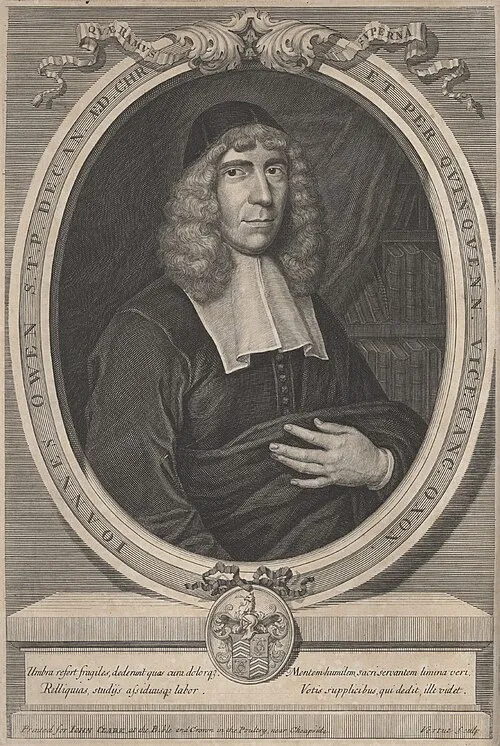
Capítulo I.
El fundamento de todo el discurso que sigue, puesto en Romanos 8:13 — Se exponen las palabras del apóstol — La conexión cierta entre la verdadera mortificación y la salvación — La mortificación, obra de los creyentes — El Espíritu, causa eficiente principal de ella — Qué se entiende por «el cuerpo» en las palabras del apóstol — Qué por «las obras del cuerpo» — La vida, en qué sentido se promete a este deber.
Para que lo que tengo que aportar en materia de orientación para llevar adelante la obra de mortificación en los creyentes reciba orden y claridad, pondré el fundamento de ello en aquellas palabras del apóstol, Romanos 8:13, «mas si por el espíritu mortificáis las obras de la carne, viviréis» [N. del T.: Owen cita «las obras del cuerpo», conforme al griego σώματος y a la versión inglesa; la RV1909 dice «carne». En su comentario se conserva «cuerpo».], y reduciré el todo a un aprovechamiento de la gran verdad y misterio evangélicos contenidos en ellas.
Habiendo el apóstol hecho una recapitulación de su doctrina de la justificación por la fe, y del estado y condición bienaventurados de aquellos que por gracia son hechos participantes de ella, versículos 1–3 de este capítulo, pasa a aprovecharla para la santidad y el consuelo de los creyentes.
Entre sus argumentos y motivos para la santidad, el versículo mencionado contiene uno sacado de los sucesos y efectos contrarios de la santidad y del pecado: «si viviereis conforme á la carne, moriréis». Qué sea «vivir conforme á la carne», y qué sea «morir», no siendo ese mi propósito ni mi asunto presentes, no lo explicaré de otro modo sino en cuanto vengan a caer dentro del sentido de las últimas palabras del versículo, tal como antes se propuso.
En las palabras destinadas de manera particular a ser el fundamento del discurso que sigue, hay, —
Primero, Un deber prescrito: «Mortifiquen las obras del cuerpo».
En segundo lugar, Se designan las personas a quienes se prescribe: «Ustedes», — «si ustedes mortifican».
En tercer lugar, Hay en ellas una promesa anexa a ese deber: «viviréis».
En cuarto lugar, La causa o medio del cumplimiento de este deber, — el Espíritu: «Si ustedes por el Espíritu».
En quinto lugar, La condicionalidad de la proposición entera, en la cual se contienen el deber, el medio y la promesa: «Si ustedes», etc.
- Lo primero que se presenta en las palabras, tal como están en la proposición entera, es la nota condicional, Εἰ δὲ, «Pero si». Los condicionales en tales proposiciones pueden denotar dos cosas:
(1.) La incertidumbre del suceso o de la cosa prometida, respecto de aquellos a quienes se prescribe el deber. Y esto tiene lugar donde la condición es absolutamente necesaria para el desenlace, y ella misma no depende de ninguna causa determinada conocida por aquel a quien se prescribe. Así decimos: «Si vivimos, haremos tal cosa». Esta no puede ser la intención de la expresión condicional en este lugar. De las personas a quienes se dirigen estas palabras se dice, en el versículo 1 del mismo capítulo: «ninguna condenación hay para ellos».
(2.) La certeza de la coherencia y conexión que hay entre las cosas de que se habla; como decimos a un enfermo: «Si tomas tal poción, o usas tal remedio, estarás bien». Lo único que pretendemos expresar es la certeza de la conexión que hay entre la poción o el remedio y la salud. Y este es el uso que aquí tiene. La conexión cierta que hay entre el mortificar las obras del cuerpo y el vivir se insinúa en esta partícula condicional.
Ahora bien, siendo múltiple la conexión y la coherencia de las cosas, como la de causa y efecto, la del camino y los medios con el fin, esta que hay entre la mortificación y la vida no es de causa y efecto propia y estrictamente, — porque «la dádiva de Dios es vida eterna en Cristo Jesús Señor nuestro», Romanos 6:23, — sino de medios y fin. Dios ha establecido este medio para alcanzar aquel fin, que él ha prometido libremente. Los medios, aunque necesarios, tienen una justa subordinación a un fin de promesa libre. Un don y una causa que lo procure en aquel a quien se da son incompatibles. La intención, pues, de esta proposición en cuanto condicional es que hay una conexión y coherencia cierta e infalible entre la verdadera mortificación y la vida eterna: si ustedes usan este medio, alcanzarán ese fin; si mortifican, vivirán. Y en esto reside el principal motivo y el apremio del deber prescrito.
- Lo siguiente con que nos encontramos en las palabras son las personas a quienes se prescribe este deber, y ello se expresa en la palabra «Ustedes», en el original incluida en el verbo θανατοῦτε «si ustedes mortifican»; — esto es, ustedes los creyentes; ustedes, para quienes «ninguna condenación hay», versículo 1; ustedes que «no estáis en la carne, sino en el espíritu», versículo 9; que son «vivificados por el Espíritu de Cristo», versículos 10 y 11; a ustedes se prescribe este deber. El urgir este deber directamente a cualquier otro es un fruto notable de esa superstición y justicia propia de que está lleno el mundo, — la gran obra y el designio de hombres devotos ignorantes del evangelio, Romanos 10:3, 4; Juan 15:5. Ahora bien, esta descripción de las personas, en conjunción con la prescripción del deber, es el fundamento principal del discurso que sigue, según queda en esta tesis o proposición:
Los creyentes más excelentes, que están ciertamente libres del poder condenatorio del pecado, deben todavía hacer de ello su tarea todos sus días: mortificar el poder del pecado que mora dentro.
-
La principal causa eficiente del cumplimiento de este deber es el Espíritu: Εἰ δὲ Πνεύματι, — «Si por el Espíritu». El Espíritu es aquí el Espíritu mencionado en el versículo 11, el Espíritu de Cristo, el Espíritu de Dios, que «mora en nosotros», versículo 9, que «nos vivifica», versículo 11; «el Espíritu Santo», versículo 14; el «espíritu de adopción», versículo 15; el Espíritu «que pide por nosotros», versículo 26. Todos los demás caminos de mortificación son vanos; toda ayuda nos deja sin ayuda; ha de hacerse por el Espíritu. Los hombres, como da a entender el apóstol, Romanos 9:30–32, pueden intentar esta obra sobre otros principios, por medios y ventajas que se proveen por otras razones, como siempre lo han hecho y lo hacen; pero, dice él: «Esta es la obra del Espíritu; solo por él ha de obrarse, y por ningún otro poder ha de llevarse a cabo». La mortificación desde una fuerza propia, llevada adelante por caminos de invención propia, hacia el fin de una justicia propia, es el alma y la sustancia de toda religión falsa en el mundo. Y este es un segundo principio del discurso que sigue.
-
El deber mismo, «Mortifiquen las obras del cuerpo», es lo que ha de observarse enseguida.
Tres cosas han de inquirirse aquí: (1.) Qué se entiende por el cuerpo; (2.) Qué por las obras del cuerpo; (3.) Qué por el mortificarlas.
(1.) El cuerpo, al cierre del versículo, es lo mismo que la carne al comienzo: «si viviereis conforme á la carne, moriréis; mas si ustedes … mortifican las obras del cuerpo», — esto es, de la carne. Es aquello de lo cual el apóstol ha venido tratando todo el tiempo bajo el nombre de la carne; lo cual es evidente por la prosecución de la antítesis entre el Espíritu y la carne, antes y después. El cuerpo, pues, se toma aquí por aquella corrupción y depravación de nuestras naturalezas de la cual el cuerpo, en gran parte, es el asiento y el instrumento, siendo los mismos miembros del cuerpo hechos por ella siervos de la injusticia, Romanos 6:19. Lo que se tiene en vista es el pecado que mora dentro, la carne corrompida o la concupiscencia. Podrían darse muchas razones de esta expresión metonímica, en las cuales no insistiré ahora. El «cuerpo» es aquí lo mismo que παλαιὸς ἄνθρωπος y σῶμα τῆς ἁμαρτίας, el «viejo hombre» y el «cuerpo del pecado», Romanos 6:6; o puede expresar por sinécdoque a la persona entera, considerada como corrompida y como asiento de concupiscencias y de afectos desordenados.
(2.) Las obras del cuerpo. La palabra es πράξεις, la cual denota, en efecto, principalmente las acciones exteriores, «las obras de la carne», como se las llama, τὰ ἔργα τῆς σαρκός, Gálatas 5:19; de las cuales se dice allí que son «manifiestas», y están enumeradas. Ahora bien, aunque aquí solo se expresan las obras exteriores, se tienen en vista sobre todo las causas interiores y próximas; «el hacha ha de ponerse a la raíz del árbol», — las obras de la carne han de mortificarse en sus causas, de donde brotan. El apóstol las llama obras, como aquello a lo que tiende toda concupiscencia; aunque no haga sino concebir y resulte abortiva, apunta a dar a luz un pecado perfecto.
Habiendo tratado, tanto en el capítulo séptimo como al comienzo de este, de la concupiscencia y del pecado que moran dentro como fuente y principio de todas las acciones pecaminosas, menciona aquí la destrucción de ello bajo el nombre de los efectos que produce. Πράξεις τοῦ σώματος son tanto como φρόνημα τῆς σαρκός, Romanos 8:6, la «sabiduría de la carne», por una metonimia de la misma naturaleza que la anterior; o como los παθήματα y las ἐπιθυμίαι, las «pasiones y concupiscencias de la carne», Gálatas 5:24, de donde brotan las obras y los frutos de ella; y en este sentido se usa el cuerpo, Romanos 8:10: «el cuerpo á la verdad está muerto á causa del pecado».
(3.) Mortificar. Εἰ θανατοῦτε, — «Si ustedes dan muerte»; expresión metafórica, tomada del dar muerte a cualquier ser vivo. Matar a un hombre, o a cualquier otro ser vivo, es quitarle el principio de toda su fuerza, vigor y poder, de suerte que no pueda obrar, ni ejercer, ni producir ninguna acción propia suya; así sucede en este caso. El pecado que mora dentro se compara a una persona, una persona viva, llamada «el viejo hombre», con sus facultades y propiedades, su sabiduría, su astucia, su sutileza, su fuerza; esto, dice el apóstol, ha de ser muerto, dado a muerte, mortificado, — esto es, que el Espíritu le quite el poder, la vida, el vigor y la fuerza para producir sus efectos. Está, en verdad, meritoriamente y por vía de ejemplo, del todo mortificado y muerto por la cruz de Cristo; y de ahí se dice que el «viejo hombre» «crucificado con Cristo», Romanos 6:6, y que nosotros «morimos» con él, versículo 8, y de modo real e inicial en la regeneración, Romanos 6:3–5, cuando un principio contrario a él y destructor de él, Gálatas 5:17, es plantado en nuestros corazones; pero toda la obra ha de llevarse adelante por grados hacia la perfección todos nuestros días. De esto habrá más en el curso de nuestro discurso. La intención del apóstol en esta prescripción del deber mencionado es que la mortificación del pecado que mora dentro, que permanece en nuestros cuerpos mortales, para que no tenga vida ni poder de producir las obras o los hechos de la carne, es el deber constante de los creyentes.
- La promesa unida a este deber es la vida: «viviréis». La vida prometida se opone a la muerte con que se amenaza en la cláusula precedente, «si viviereis conforme á la carne, moriréis»; la cual expresa el mismo apóstol: «de la carne segaréis corrupción», Gálatas 6:8, o destrucción de parte de Dios. Ahora bien, quizá la palabra no indique solo la vida eterna, sino también la vida espiritual en Cristo que aquí tenemos; no en cuanto a la esencia y el ser de ella, de la cual ya gozan los creyentes, sino en cuanto al gozo, el consuelo y el vigor de ella: como dice el apóstol en otro caso, «ahora vivo, si vosotros estáis firmes», 1 Tesalonicenses 3:8; — «Ahora mi vida me hará bien; tendré gozo y consuelo con mi vida»; — «viviréis, lleven una vida buena, vigorosa, consolada y espiritual mientras estén aquí, y obtengan la vida eterna después».
Supuesto lo que antes se dijo de la conexión entre la mortificación y la vida eterna, como de medios y fin, añadiré solamente, como segundo motivo para el deber prescrito, que, —
El vigor, y el poder, y el consuelo de nuestra vida espiritual dependen de la mortificación de las obras de la carne.
Ver el original (inglés)
Original en inglés
Chapter I.
The foundation of the whole ensuing discourse laid in Rom. viii. 13 — The words of the apostle opened — The certain connection between true mortification and salvation — Mortification the work of believers — The Spirit the principal efficient cause of it — What meant by “the body” in the words of the apostle — What by “the deeds of the body” — Life, in what sense promised to this duty.
That what I have of direction to contribute to the carrying on of the work of mortification in believers may receive order and perspicuity, I shall lay the foundation of it in those words of the apostle, Rom. viii. 13, “If ye through the Spirit do mortify the deeds of the body ye shall live;” and reduce the whole to an improvement of the great evangelical truth and mystery contained in them.
The apostle having made a recapitulation of his doctrine of justification by faith, and the blessed estate and condition of them who are made by grace partakers thereof, verses 1–3 of this chapter, proceeds to improve it to the holiness and consolation of believers.
Among his arguments and motives unto holiness, the verse mentioned containeth one from the contrary events and effects of holiness and sin: “If ye live after the flesh, ye shall die.” What it is to “live after the flesh,” and what it is to “die,” that being not my present aim and business, I shall no otherwise explain than as they will fall in with the sense of the latter words of the verse, as before proposed.
In the words peculiarly designed for the foundation of the ensuing discourse, there is, —
First, A duty prescribed: “Mortify the deeds of the body.”
Secondly, The persons are denoted to whom it is prescribed: “Ye,” — “if ye mortify.”
Thirdly, There is in them a promise annexed to that duty: “Ye shall live.”
Fourthly, The cause or means of the performance of this duty, — the Spirit: “If ye through the Spirit.”
Fifthly, The conditionality of the whole proposition, wherein duty, means, and promise are contained: “If ye,” etc.
- The first thing occurring in the words as they lie in the entire proposition is the conditional note, Εἰ δὲ, “But if.” Conditionals in such propositions may denote two things:—
(1.) The uncertainty of the event or thing promised, in respect of them to whom the duty is prescribed. And this takes place where the condition is absolutely necessary unto the issue, and depends not itself on any determinate cause known to him to whom it is prescribed. So we say, “If we live, we will do such a thing.” This cannot be the intendment of the conditional expression in this place. Of the persons to whom these words are spoken, it is said, verse 1 of the same chapter, “There is no condemnation to them.”
(2.) The certainty of the coherence and connection that is between the things spoken of; as we say to a sick man, “If you will take such a potion, or use such a remedy, you will be well.” The thing we solely intend to express is the certainty of the connection that is between the potion or remedy and health. And this is the use of it here. The certain connection that is between the mortifying of the deeds of the body and living is intimated in this conditional particle.
Now, the connection and coherence of things being manifold, as of cause and effect, of way and means and the end, this between mortification and life is not of cause and effect properly and strictly, — for “eternal life is the gift of God through Jesus Christ,” Rom. vi. 23, — but of means and end. God hath appointed this means for the attaining that end, which he hath freely promised. Means, though necessary, have a fair subordination to an end of free promise. A gift, and procuring cause in him to whom it is given, are inconsistent. The intendment, then, of this proposition as conditional is, that there is a certain infallible connection and coherence between true mortification and eternal life: if you use this means, you shall obtain that end; if you do mortify, you shall live. And herein lies the main motive unto and enforcement of the duty prescribed.
- The next thing we meet withal in the words is the persons to whom this duty is prescribed, and that is expressed in the word “Ye,” in the original included in the verb, θανατοῦτε “if ye mortify;” — that is, ye believers; ye to whom “there is no condemnation,” verse 1; ye that are “not in the flesh, but in the Spirit,” verse 9; who are “quickened by the Spirit of Christ,” verses 10, 11; to you is this duty prescribed. The pressing of this duty immediately on any other is a notable fruit of that superstition and self-righteousness that the world is full of, — the great work and design of devout men ignorant of the gospel, Rom. x. 3, 4; John xv. 5. Now, this description of the persons, in conjunction with the prescription of the duty, is the main foundation of the ensuing discourse, as it lies in this thesis or proposition:—
The choicest believers, who are assuredly freed from the condemning power of sin, ought yet to make it their business all their days to mortify the indwelling power of sin.
-
The principal efficient cause of the performance of this duty is the Spirit: Εἰ δὲ Πνεύματι, — “ If by the Spirit.” The Spirit here is the Spirit mentioned verse 11, the Spirit of Christ, the Spirit of God, that “dwells in us,” verse 9, that “quickens us,” verse 11; “the Holy Ghost,” verse 14; the “Spirit of adoption,” verse 15; the Spirit “that maketh intercession for us,” verse 26. All other ways of mortification are vain, all helps leave us helpless; it must be done by the Spirit. Men, as the apostle intimates, Rom. ix. 30–32, may attempt this work on other principles, by means and advantages administered on other accounts, as they always have done, and do: but, saith he, “This is the work of the Spirit; by him alone is it to be wrought, and by no other power is it to be brought about.” Mortification from a self-strength, carried on by ways of self-invention, unto the end of a self-righteousness, is the soul and substance of all false religion in the world. And this is a second principle of my ensuing discourse.
-
The duty itself, “Mortify the deeds of the body,” is nextly to be remarked.
Three things are here to be inquired into:— (1.) What is meant by the body; (2.) What by the deeds of the body; (3.) What by mortifying of them.
(1.) The body in the close of the verse is the same with the flesh in the beginning: “If ye live after the flesh ye shall die; but if ye … mortify the deeds of the body,” — that is, of the flesh. It is that which the apostle hath all along discoursed of under the name of the flesh; which is evident from the prosecution of the antithesis between the Spirit and the flesh, before and after. The body, then, here is taken for that corruption and depravity of our natures whereof the body, in a great part, is the seat and instrument, the very members of the body being made servants unto unrighteousness thereby, Rom. vi. 19. It is indwelling sin, the corrupted flesh or lust, that is intended. Many reasons might be given of this metonymical expression, that I shall not now insist on. The “body” here is the same with παλαιὸς ἄνθρωπος, and σῶμα τῆς ἁμαρτίας, the “old man,” and the “body of sin,” Rom. vi. 6; or it may synecdochically express the whole person considered as corrupted, and the seat of lusts and distempered affections.
(2.) The deeds of the body. The word is πράξεις, which, indeed, denoteth the outward actions chiefly, “the works of the flesh,” as they are called, τὰ ἔργα τῆς σαρκός, Gal. v. 19; which are there said to be “manifest,” and are enumerated. Now, though the outward deeds are here only expressed, yet the inward and next causes are chiefly intended; the “axe is to be laid to the root of the tree,” — the deeds of the flesh are to be mortified in their causes, from whence they spring. The apostle calls them deeds, as that which every lust tends unto; though it do but conceive and prove abortive, it aims to bring forth a perfect sin.
Having, both in the seventh and the beginning of this chapter, treated of indwelling lust and sin as the fountain and principle of all sinful actions, he here mentions its destruction under the name of the effects which it doth produce. Πράξεις τοῦ σώματος are, as much as φρόνημα τῆς σαρκός, Rom. viii. 6, the “wisdom of the flesh,” by a metonymy of the same nature with the former; or as the παθήματα and ἐπιθυμίαι, the “passions and lusts of the flesh,” Gal. v. 24, whence the deeds and fruits of it do arise; and in this sense is the body used, Rom. viii. 10: “The body is dead because of sin.”
(3.) To mortify. Εἰ θανατοῦτε, — “If ye put to death;” a metaphorical expression, taken from the putting of any living thing to death. To kill a man, or any other living thing, is to take away the principle of all his strength, vigour, and power, so that he cannot act or exert, or put forth any proper actings of his own; so it is in this case. Indwelling sin is compared to a person, a living person, called “the old man,” with his faculties, and properties, his wisdom, craft, subtlety, strength; this, says the apostle, must be killed, put to death, mortified, — that is, have its power, life, vigour, and strength, to produce its effects, taken away by the Spirit. It is, indeed, meritoriously, and by way of example, utterly mortified and slain by the cross of Christ; and the “old man” is thence said to be “crucified with Christ,” Rom. vi. 6, and ourselves to be “dead” with him, verse 8, and really initially in regeneration, Rom. vi. 3–5, when a principle contrary to it, and destructive of it, Gal. v. 17, is planted in our hearts; but the whole work is by degrees to be carried on towards perfection all our days. Of this more in the process of our discourse. The intendment of the apostle in this prescription of the duty mentioned is, — that the mortification of indwelling sin remaining in our mortal bodies, that it may not have life and power to bring forth the works or deeds of the flesh is the constant duty of believers.
- The promise unto this duty is life: “Ye shall live.” The life promised is opposed to the death threatened in the clause foregoing, “If ye live after the flesh, ye shall die;” which the same apostle expresseth, “Ye shall of the flesh reap corruption,” Gal. vi. 8, or destruction from God. Now, perhaps the word may not only intend eternal life, but also the spiritual life in Christ, which here we have; not as to the essence and being of it, which is already enjoyed by believers, but as to the joy, comfort, and vigour of it: as the apostle says in another case, “Now I live, if ye stand fast,” 1 Thess. iii. 8; — “Now my life will do me good; I shall have joy and comfort with my life;” — “Ye shall live, lead a good, vigorous, comfortable, spiritual life whilst you are here, and obtain eternal life hereafter.”
Supposing what was said before of the connection between mortification and eternal life, as of means and end, I shall add only, as a second motive to the duty prescribed, that, —
The vigour, and power, and comfort of our spiritual life depends on the mortification of the deeds of the flesh.
https://sermonesbiblicos.org/biblioteca/la-mortificacion-del-pecado-01-el-fundamento-en-romanos-8-13/