Sermones Bíblicos
El temor de caer al final
Charles H. Spurgeon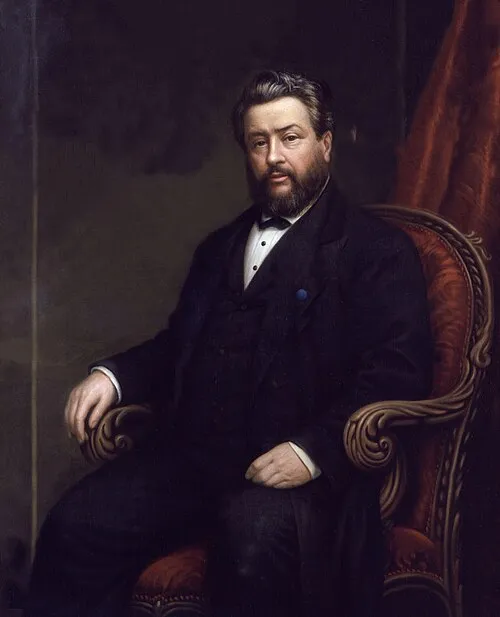
El temor de caer al final
Un temor oscuro ronda la mente de muchos que vienen a Cristo: tienen miedo de no perseverar hasta el fin. He oído decir al que busca: «Si yo echara mi alma sobre Jesús, quizá, después de todo, me retirara para perdición. Ya antes he tenido buenos sentimientos, y se han muerto. Mi bondad ha sido como la nube de la mañana, y como el rocío que de madrugada viene. Ha llegado de pronto, ha durado una temporada, ha prometido mucho, y luego se ha desvanecido.»
Creo que este temor es a menudo el padre del hecho; y que algunos que han tenido miedo de confiar en Cristo para todo tiempo y para toda la eternidad han fracasado, porque tenían una fe temporal, que nunca llegó lo bastante lejos para salvarlos. Salieron confiando en Jesús en cierta medida, pero mirándose a sí mismos para la continuación y la perseverancia en el camino del cielo; y así salieron con un defecto de origen y, como consecuencia natural, se volvieron atrás al poco tiempo. Si confiamos en nosotros mismos para seguir asidos, no seguiremos asidos. Aunque descansemos en Jesús para una parte de nuestra salvación, fracasaremos si confiamos en el yo para cualquier cosa. Ninguna cadena es más fuerte que su eslabón más débil: si Jesús es nuestra esperanza para todo, excepto una cosa, fracasaremos por completo, porque en ese único punto vendremos a nada. No me cabe duda alguna de que un error acerca de la perseverancia de los santos ha impedido la perseverancia de muchos que corrían bien. ¿Qué les estorbó para que no siguieran corriendo? Confiaron en sí mismos para esa carrera, y así se detuvieron a medio camino. Cuídate de mezclar siquiera un poco del yo con el mortero con que edificas, o lo harás mortero sin templar, y las piedras no se sostendrán juntas. Si miras a Cristo para tus comienzos, cuídate de mirarte a ti mismo para tus finales. Él es el Alfa. Procura que sea también tu Omega. Si comienzas por el Espíritu, no has de esperar ser perfeccionado por la carne. Comienza como piensas seguir, y sigue como comenzaste, y sea el Señor el todo en todo para ti. ¡Oh, que Dios, el Espíritu Santo, nos dé una idea muy clara de dónde ha de venir la fuerza por la cual seremos guardados hasta el día de la aparición de nuestro Señor!
He aquí lo que Pablo dijo una vez sobre este asunto, cuando escribía a los corintios:
«Nuestro Señor Jesucristo, el cual también os confirmará hasta el fin, [para que seáis] sin falta en el día de nuestro Señor Jesucristo. Fiel es Dios, por el cual sois llamados á la participación de su Hijo Jesucristo nuestro Señor (1 Corintios 1:8-9)».
Este lenguaje admite en silencio una gran necesidad, al decirnos cómo se provee para ella. Dondequiera que el Señor hace una provisión, estamos bien seguros de que había necesidad de ella, pues ninguna superfluidad estorba el pacto de gracia. En los atrios de Salomón colgaban escudos de oro que nunca se usaron, pero no hay nada semejante en la armería de Dios. Lo que Dios ha provisto, de cierto lo necesitaremos. Entre esta hora y la consumación de todas las cosas, toda promesa de Dios y toda provisión del pacto de gracia serán puestas en uso. La necesidad urgente del alma creyente es la confirmación, la continuación, la perseverancia final, la preservación hasta el fin. Esta es la gran necesidad de los creyentes más adelantados, porque Pablo escribía a santos en Corinto, que eran hombres de un orden elevado, de quienes podía decir: «Gracias doy á mi Dios siempre por vosotros, por la gracia de Dios que os es dada en Cristo Jesús.» Tales hombres son precisamente las personas que con más certeza sienten que tienen necesidad diaria de nueva gracia, si han de mantenerse firmes, resistir hasta el fin y salir vencedores al último. Si ustedes no fueran santos, no tendrían gracia, y no sentirían necesidad de más gracia; pero, porque son hombres de Dios, sienten las demandas diarias de la vida espiritual. La estatua de mármol no requiere alimento; pero el hombre vivo tiene hambre y sed, y se goza de que su pan y su agua le estén asegurados, pues de otro modo sin duda desfallecería en el camino. Las necesidades personales del creyente hacen inevitable que cada día saque de la gran fuente de todos los abastecimientos; porque ¿qué podría hacer si no pudiera acudir a su Dios?
Esto es cierto de los santos más dotados: de aquellos hombres de Corinto que estaban enriquecidos en toda lengua y en toda ciencia. Necesitaban ser confirmados hasta el fin, o de lo contrario sus dones y sus logros serían su ruina. Si tuviéramos lenguas de hombres y de ángeles, y no recibiéramos gracia fresca, ¿dónde estaríamos? Si tuviéramos toda la experiencia, hasta ser padres en la iglesia; si hubiéramos sido enseñados de Dios de modo que entendiéramos todos los misterios, aun así no podríamos vivir un solo día sin que la vida divina fluyera hacia nosotros desde nuestra Cabeza del pacto. ¿Cómo podríamos esperar sostenernos una sola hora, por no decir una vida entera, a menos que el Señor nos sostuviera? Quien comenzó en nosotros la buena obra ha de perfeccionarla hasta el día de Jesucristo, o resultará un fracaso doloroso.
Esta gran necesidad nace en muy gran parte de nosotros mismos. En algunos hay un temor doloroso de no perseverar en la gracia, porque conocen su propia inconstancia. Ciertas personas son inestables por constitución. Algunos hombres son por naturaleza conservadores, por no decir obstinados; pero otros son, con igual naturalidad, variables y volátiles. Como mariposas, revolotean de flor en flor, hasta visitar todas las bellezas del jardín, y no se posan en ninguna. Nunca permanecen el tiempo suficiente en un lugar para hacer algún bien; ni siquiera en sus negocios ni en sus empeños intelectuales. Tales personas bien pueden temer que diez, veinte, treinta, cuarenta, quizá cincuenta años de vigilancia religiosa continua sean demasiado para ellas. Vemos hombres que se unen primero a una iglesia y luego a otra, hasta recorrer toda la rosa de los vientos. Son cada cosa por turnos, y nada por mucho tiempo. Estos tienen doble necesidad de orar para que sean confirmados por Dios, y sean hechos no solo firmes, sino inconmovibles; de otro modo no se los hallará «creciendo en la obra del Señor siempre».
Todos nosotros, aunque no tengamos una tentación constitucional a la inconstancia, hemos de sentir nuestra propia debilidad si de veras hemos sido vivificados de Dios. Querido lector, ¿no hallas en un solo día lo bastante para hacerte tropezar? Tú, que deseas andar en perfecta santidad, como confío que deseas; tú, que te has puesto delante una norma alta de lo que un cristiano debe ser: ¿no hallas que, antes de que se recoja de la mesa lo del desayuno, has mostrado bastante necedad para avergonzarte de ti mismo? Si nos encerráramos en la celda solitaria de un ermitaño, la tentación nos seguiría; porque, mientras no podamos escapar de nosotros mismos, no podemos escapar de los incentivos al pecado. Hay dentro de nuestro corazón aquello que debe hacernos vigilantes y humildes delante de Dios. Si él no nos confirma, somos tan débiles que tropezaremos y caeremos; no derribados por un enemigo, sino por nuestro propio descuido. Señor, sé tú nuestra fortaleza. Somos la debilidad misma.
Además de eso, está el cansancio que viene de una vida larga. Cuando comenzamos nuestra profesión cristiana, nos levantamos con alas como águilas; más adelante corremos, y no nos cansamos; pero en nuestros días mejores y más verdaderos caminamos, y no nos fatigamos. Nuestro paso parece más lento, pero es más útil y mejor sostenido. Ruego a Dios que la energía de nuestra juventud continúe con nosotros, en cuanto es energía del Espíritu y no la mera fermentación de la carne soberbia. Quien lleva mucho tiempo en el camino del cielo halla que había buena razón para que se prometiera que su calzado sería de hierro y metal, porque el camino es áspero. Ha descubierto que hay Colinas de la Dificultad y Valles de la Humillación; que hay un Valle de Sombra de Muerte y, peor todavía, la Feria de las Vanidades —y todo esto ha de atravesarse. Si hay Montes Deleitosos (y, gracias a Dios, los hay), también hay Castillos de la Desesperación, cuyo interior los peregrinos han visto con demasiada frecuencia. Considerándolo todo, quienes se mantengan hasta el fin en el camino de la santidad serán «hombres de quienes hay que maravillarse».
«Oh, mundo de maravillas, no puedo decir menos.» Los días de la vida de un cristiano son como otros tantos Koh-i-noor [N. del T.: famoso diamante] de misericordia, ensartados en el hilo de oro de la fidelidad divina. En el cielo contaremos a los ángeles, a los principados y a las potestades las inescrutables riquezas de Cristo que se gastaron en nosotros y de las cuales gozamos mientras estábamos aquí abajo. Hemos sido guardados con vida al borde de la muerte. Nuestra vida espiritual ha sido una llama que sigue ardiendo en medio del mar, una piedra que ha permanecido suspendida en el aire. Asombrará al universo vernos entrar por la puerta de perla, sin falta en el día de nuestro Señor Jesucristo. Deberíamos estar llenos de asombro agradecido si se nos guarda por una hora; y confío en que lo estamos.
Si esto fuera todo, habría causa bastante para la ansiedad; pero hay mucho más. Hemos de pensar en el lugar donde vivimos. El mundo es un desierto que aúlla para muchos del pueblo de Dios. A algunos de nosotros la providencia de Dios nos favorece mucho, pero otros tienen una lucha dura. Comenzamos el día con oración, y oímos muy a menudo en nuestras casas la voz del cántico santo; pero muchas personas buenas apenas se han levantado de sus rodillas por la mañana cuando ya las saludan con blasfemia. Salen al trabajo, y todo el día las acosa la conducta nefanda, como al justo Lot en Sodoma. ¿Puedes siquiera andar por las calles abiertas sin que el lenguaje sucio aflija tus oídos? El mundo no es amigo de la gracia. Lo mejor que podemos hacer con este mundo es atravesarlo tan pronto como podamos, porque habitamos en país enemigo. En cada matorral acecha un ladrón. Por todas partes necesitamos viajar con una «espada desnuda» en la mano, o al menos con esa arma que se llama toda oración, siempre a nuestro lado; porque hemos de contender por cada pulgada de nuestro camino. No te equivoques en esto, o se te sacudirá con rudeza de tu ilusión querida. Oh Dios, ayúdanos y confírmanos hasta el fin, o ¿dónde estaremos?
La religión verdadera es sobrenatural en su comienzo, sobrenatural en su continuación y sobrenatural en su cierre. Es obra de Dios de principio a fin. Hay gran necesidad de que la mano del Señor siga extendida: esa necesidad la siente ahora mi lector, y me alegro de que la sienta; porque ahora buscará su propia preservación en el Señor, el único que puede guardarnos de caer y glorificarnos con su Hijo.
Ver el original (inglés)
Original en inglés
The Fear of Final Falling
A DARK FEAR haunts the minds of many who are coming to Christ; they are afraid that they shall not persevere to the end. I have heard the seeker say: “If I were to cast my soul upon Jesus, yet peradventure I should after all draw back into perdition. I have had good feelings before now, and they have died away. My goodness has been as the morning cloud, and as the early dew. It has come on a sudden, lasted for a season, promised much, and then vanished away.”
I believe that this fear is often the father of the fact; and that some who have been afraid to trust Christ for all time, and for all eternity, have failed because they had a temporary faith, which never went far enough to save them. They set out trusting to Jesus in a measure, but looking to themselves for continuance and perseverance in the heavenward way; and so they set out faultily, and, as a natural consequence, turned back before long. If we trust to ourselves for our holding on we shall not hold on. Even though we rest in Jesus for a part of our salvation, we shall fail if we trust to self for anything. No chain is stronger than its weakest link: if Jesus be our hope for everything, except one thing, we shall utterly fail, because in that one point we shall come to nought. I have no doubt whatever that a mistake about the perseverance of the saints has prevented the perseverance of many who did run well. What did hinder them that they should not continue to run? They trusted to themselves for that running, and so they stopped short. Beware of mixing even a little of self with the mortar with which you build, or you will make it untempered mortar, and the stones will not hold together. If you look to Christ for your beginnings, beware of looking to yourself for your endings. He is Alpha. See to it that you make Him Omega also. If you begin in the Spirit you must not hope to be made perfect by the flesh. Begin as you mean to go on, and go on as you began, and let the Lord be all in all to you. Oh, that God, the Holy Spirit, may give us a very clear idea of where the strength must come from by which we shall be preserved until the day of our Lord’s appearing!
Here is what Paul once said upon this subject when he was writing to the Corinthians:
Our Lord Jesus Christ, who shall also confirm you unto the end, that ye may be blameless in the day of our Lord Jesus Christ. God is faithful, by whom ye were called unto the fellowship of his Son Jesus Christ our Lord (1 Cor. 1:8, 9).
This language silently admits a great need, by telling us how it is provided for. Wherever the Lord makes a provision, we are quite sure that there was a need for it, since no superfluities encumber the covenant of grace. Golden shields hung in Solomon’s courts which were never used, but there are none such in the armory of God. What God has provided we shall surely need. Between this hour and the consummation of all things every promise of God and every provision of the covenant of grace will be brought into requisition. The urgent need of the believing soul is confirmation, continuance, final perseverance, preservation to the end. This is the great necessity of the most advanced believers, for Paul was writing to saints at Corinth, who were men of a high order, of whom he could say, “I thank my God always on your behalf, for the grace of God which is given you by Jesus Christ.” Such men are the very persons who most assuredly feel that they have daily need of new grace if they are to hold on, and hold out, and come off conquerors at the last. If you were not saints you would have no grace, and you would feel no need of more grace; but because you are men of God, therefore you feel the daily demands of the spiritual life. The marble statue requires no food; but the living man hungers and thirsts, and he rejoices that his bread and his water are made sure to him, for else he would certainly faint by the way. The believer’s personal wants make it inevitable that he should daily draw from the great source of all supplies; for what could he do if he could not resort to his God?
This is true of the most gifted of the saints—of those men at Corinth who were enriched with all utterance and with all knowledge. They needed to be confirmed to the end, or else their gifts and attainments would prove their ruin. If we had the tongues of men and of angels, if we did not receive fresh grace, where should we be? If we had all experience till we were fathers in the church—if we had been taught of God so as to understand all mysteries—yet we could not live a single day without the divine life flowing into us from our Covenant Head. How could we hope to hold on for a single hour, to say nothing of a lifetime, unless the Lord should hold us on? He who began the good work in us must perform it unto the day of Christ, or it will prove a painful failure.
This great necessity arises very much from our own selves. In some there is a painful fear that they shall not persevere in grace because they know their own fickleness. Certain persons are constitutionally unstable. Some men are by nature conservative, not to say obstinate; but others are as naturally variable and volatile. Like butterflies they flit from flower to flower, till they visit all the beauties of the garden, and settle upon none of them. They are never long enough in one place to do any good; not even in their business nor in their intellectual pursuits. Such persons may well be afraid that ten, twenty, thirty, forty, perhaps fifty years of continuous religious watchfulness will be a great deal too much for them. We see men joining first one church and then another, till they box the compass. They are everything by turns and nothing long. Such have double need to pray that they may be divinely confirmed, and may be made not only steadfast but unmoveable, or otherwise they will not be found “always abounding in the work of the Lord.”
All of us, even if we have no constitutional temptation to fickleness, must feel our own weakness if we are really quickened of God. Dear reader, do you not find enough in any one single day to make you stumble? You that desire to walk in perfect holiness, as I trust you do; you that have set before you a high standard of what a Christian should be—do you not find that before the breakfast things are cleared away from the table, you have displayed enough folly to make you ashamed of yourselves? If we were to shut ourselves up in the lone cell of a hermit, temptation would follow us; for as long as we cannot escape from ourselves we cannot escape from incitements to sin. There is that within our hearts which should make us watchful and humble before God. If he does not confirm us, we are so weak that we shall stumble and fall; not overturned by an enemy, but by our own carelessness. Lord, be thou our strength. We are weakness itself.
Besides that, there is the weariness which comes of a long life. When we begin our Christian profession we mount up with wings as eagles, further on we run without weariness; but in our best and truest days we walk without fainting. Our pace seems slower, but it is more serviceable and better sustained. I pray God that the energy of our youth may continue with us so far as it is the energy of the Spirit and not the mere fermentation of proud flesh. He that has long been on the road to Heaven finds that there was good reason why it was promised that his shoes should be iron and brass, for the road is rough. He has discovered that there are Hills of Difficulty and Valleys of Humiliation; that there is a Vale of Deathshade, and, worse still, a Vanity Fair—and all these are to be traversed. If there be Delectable Mountains (and, thank God, there are,) there are also Castles of Despair, the inside of which pilgrims have too often seen. Considering all things, those who hold out to the end in the way of holiness will be “men wondered at.”
“O world of wonders, I can say no less.” The days of a Christian’s life are like so many Koh-i-noors of mercy threaded upon the golden string of divine faithfulness. In Heaven we shall tell to angels, and principalities, and powers, the unsearchable riches of Christ which were spent upon us, and enjoyed by us while we were here below. We have been kept alive on the brink of death. Our spiritual life has been a flame burning on in the midst of the sea, a stone that has remained suspended in the air. It will amaze the universe to see us enter the pearly gate, blameless in the day of our Lord Jesus Christ. We ought to be full of grateful wonder if kept for an hour; and I trust we are.
If this were all, there would be enough cause for anxiety; but there is far more. We have to think of what a place we live in. The world is a howling wilderness to many of God’s people. Some of us are greatly indulged in the providence of God, but others have a stern fight of it. We begin our day with prayer, and we hear the voice of holy song full often in our houses; but many good people have scarcely risen from their knees in the morning before they are saluted with blasphemy. They go out to work, and all day long they are vexed with filthy conversation like righteous Lot in Sodom. Can you even walk the open streets without your ears being afflicted with foul language? The world is no friend to grace. The best we can do with this world is to get through it as quickly as we can, for we dwell in an enemy’s country. A robber lurks in every bush. Everywhere we need to travel with a “drawn sword” in our hand, or at least with that weapon which is called all-prayer ever at our side; for we have to contend for every inch of our way. Make no mistake about this, or you will be rudely shaken out of your fond delusion. O God, help us, and confirm us to the end, or where shall we be?
True religion is supernatural at its beginning, supernatural in its continuance, and supernatural in its close. It is the work of God from first to last. There is great need that the hand of the Lord should be stretched out still: that need my reader is feeling now, and I am glad that he should feel it; for now he will look for his own preservation to the Lord who alone is able to keep us from failing, and glorify us with His Son.
https://sermonesbiblicos.org/biblioteca/todo-por-gracia-17-el-temor-de-caer-al-final/