Sermones Bíblicos
¿Por qué somos salvos por la fe?
Charles H. Spurgeon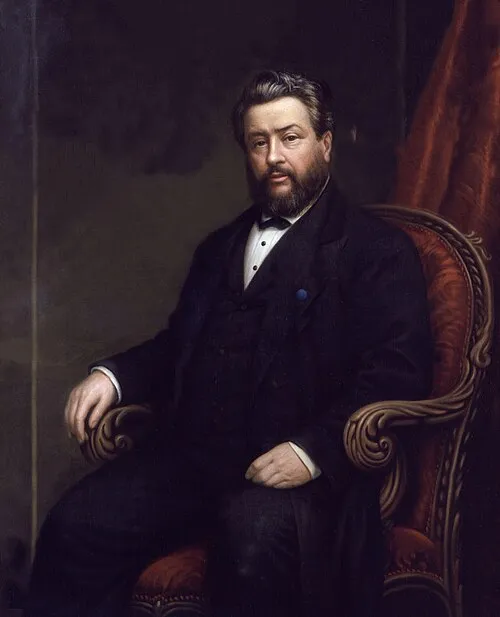
¿Por qué somos salvos por la fe?
¿Por qué se escoge la fe como canal de la salvación? Sin duda esta pregunta se hace a menudo. «Por gracia sois salvos por la fe» es, a ciencia cierta, la doctrina de la Sagrada Escritura y la ordenanza de Dios; pero ¿por qué es así? ¿Por qué se escoge la fe antes que la esperanza, o el amor, o la paciencia?
Conviene que seamos modestos al responder tal pregunta, porque los caminos de Dios no siempre se dejan comprender; ni se nos permite cuestionarlos con presunción. Con humildad responderíamos que, hasta donde alcanzamos a ver, la fe ha sido escogida como canal de la gracia porque hay en la fe una adaptación natural para servir de receptora. Supongamos que voy a dar una limosna a un pobre: se la pongo en la mano —¿por qué? Pues bien, apenas convendría ponérsela en la oreja, o dejársela sobre el pie; la mano parece hecha a propósito para recibir. Así, en nuestra constitución mental, la fe está creada a propósito para ser receptora: es la mano del hombre, y hay una aptitud para recibir la gracia por medio de ella.
Permíteme decirlo con toda llaneza. La fe que recibe a Cristo es un acto tan sencillo como cuando tu hijo recibe de ti una manzana, porque se la tiendes y prometes darle la manzana si viene por ella. El creer y el recibir se refieren solo a una manzana; pero componen precisamente el mismo acto que la fe que trata con la salvación eterna. Lo que la mano del niño es para la manzana, eso es tu fe para la salvación perfecta de Cristo. La mano del niño no hace la manzana, ni mejora la manzana, ni merece la manzana; solo la toma; y Dios escoge la fe para que sea la receptora de la salvación, porque no pretende crear la salvación, ni ayudar en ella, sino que se contenta con recibirla humildemente. «La fe es la lengua que pide perdón, la mano que lo recibe y el ojo que lo ve; pero no es el precio que lo compra». La fe nunca hace de sí misma su propio alegato; apoya todo su argumento en la sangre de Cristo. Llega a ser una buena sierva para traer al alma las riquezas del Señor Jesús, porque reconoce de dónde las sacó, y confiesa que solo la gracia se las encomendó.
La fe, además, es sin duda escogida porque da toda la gloria a Dios. Es por la fe, para que sea por gracia, y es por gracia, para que no haya jactancia; porque Dios no puede soportar el orgullo. «Al altivo mira de lejos», y él no desea acercarse más a ellos. No dará la salvación de un modo que sugiera o fomente el orgullo. Pablo dice: «No por obras, para que nadie se gloríe». Ahora bien, la fe excluye toda jactancia. La mano que recibe la caridad no dice: «Hay que darme las gracias por aceptar el don»; eso sería absurdo. Cuando la mano lleva el pan a la boca, no le dice al cuerpo: «Dame las gracias, porque yo te alimento». Es cosa muy sencilla lo que hace la mano, aunque cosa muy necesaria; y nunca se arroga gloria por lo que hace. Así Dios ha escogido la fe para recibir el don inefable de su gracia, porque ella no puede atribuirse crédito alguno, sino que ha de adorar al Dios bondadoso, que es el dador de todo bien. La fe pone la corona sobre la cabeza que corresponde, y por eso el Señor Jesús acostumbraba poner la corona sobre la cabeza de la fe, diciendo: «Tu fe te ha salvado, ve en paz».
Luego, Dios escoge la fe como canal de la salvación porque es un método seguro, que enlaza al hombre con Dios. Cuando el hombre confía en Dios, hay un punto de unión entre ellos, y esa unión garantiza la bendición. La fe nos salva porque nos hace aferrarnos a Dios, y así nos pone en conexión con él. A menudo he usado la ilustración que sigue, pero he de repetirla, porque no se me ocurre una mejor. Me han dicho que hace años una barca zozobró arriba de las cataratas del Niágara, y dos hombres eran arrastrados por la corriente, cuando unas personas en la orilla lograron hacerles llegar a flote una cuerda, y ambos la asieron. Uno de ellos se aferró a ella y fue llevado a salvo hasta la ribera; pero el otro, al ver venir flotando un gran tronco, soltó imprudentemente la cuerda y se aferró al tronco, porque era lo más grande de los dos, y al parecer mejor para asirse. ¡Ay! El tronco, con el hombre encima, se fue derecho al vasto abismo, porque no había unión entre el tronco y la orilla. El tamaño del tronco no sirvió de nada a quien lo asió; hacía falta una conexión con la orilla para producir seguridad. Así, cuando un hombre confía en sus obras, o en los sacramentos, o en cualquier cosa de esa clase, no será salvo, porque no hay enlace entre él y Cristo; pero la fe, aunque parezca un cordel delgado, está en las manos del gran Dios, del lado de la orilla; un poder infinito tira de la línea que une, y así saca al hombre de la destrucción. ¡Oh, la bienaventuranza de la fe, porque nos une a Dios!
La fe es escogida otra vez porque toca los resortes de la acción. Aun en las cosas comunes, una fe de cierta clase está en la raíz de todo. Me pregunto si erraré al decir que nunca hacemos nada sino por alguna clase de fe. Si cruzo mi estudio, es porque creo que las piernas me llevarán. Un hombre come porque cree en la necesidad del alimento; va a sus negocios porque cree en el valor del dinero; acepta un cheque porque cree que el banco lo pagará. Colón descubrió América porque creyó que había otro continente más allá del océano; y los Padres Peregrinos la colonizaron porque creyeron que Dios estaría con ellos en aquellas costas rocosas. Las hazañas más grandiosas han nacido de la fe; para bien o para mal, la fe obra prodigios por medio del hombre en quien mora. La fe, en su forma natural, es una fuerza que prevalece en todo, y entra en toda suerte de acciones humanas. Posiblemente quien se burla de la fe en Dios sea el hombre que, en una forma mala, tiene más fe; en verdad, suele caer en una credulidad que sería ridícula, si no fuese vergonzosa. Dios da la salvación a la fe porque, al crear en nosotros la fe, toca así el verdadero resorte principal de nuestras emociones y de nuestras acciones. Ha tomado, por decirlo así, posesión de la batería, y ahora puede enviar la corriente sagrada a cada parte de nuestra naturaleza. Cuando creemos en Cristo, y el corazón ha pasado a posesión de Dios, entonces somos salvos del pecado, y somos movidos hacia el arrepentimiento, la santidad, el celo, la oración, la consagración y toda otra cosa de gracia. «Lo que el aceite es para las ruedas, lo que las pesas son para un reloj, lo que las alas son para un ave, lo que las velas son para un barco, eso es la fe para todos los deberes y servicios santos». Ten fe, y todas las demás gracias seguirán y continuarán en su curso.
La fe, además, tiene el poder de obrar por el amor; influye en los afectos hacia Dios, y atrae el corazón tras las mejores cosas. El que cree en Dios amará a Dios, sin duda alguna. La fe es un acto del entendimiento; pero también procede del corazón. «Con el corazón se cree para justicia»; y de ahí que Dios dé la salvación a la fe, porque ella mora puerta con puerta con los afectos, y es pariente cercana del amor; y el amor es el padre y la nodriza de todo sentimiento y de todo acto santo. El amor a Dios es obediencia; el amor a Dios es santidad. Amar a Dios y amar al hombre es ser conformado a la imagen de Cristo; y esto es salvación.
Además, la fe crea paz y gozo; quien la tiene descansa y está tranquilo, está alegre y gozoso, y esto es una preparación para el cielo. Dios da a la fe todos los dones celestiales, por esta razón entre otras: que la fe obra en nosotros la vida y el espíritu que han de manifestarse eternamente en el mundo superior y mejor. La fe nos provee de armadura para esta vida, y de educación para la vida por venir. Capacita al hombre tanto para vivir como para morir sin temor; lo prepara tanto para la acción como para el sufrimiento; y de ahí que el Señor la escoja como medio muy adecuado para comunicarnos la gracia, y así asegurarnos para la gloria.
Ciertamente la fe hace por nosotros lo que ninguna otra cosa puede hacer; nos da gozo y paz, y nos hace entrar en el reposo. ¿Por qué intentan los hombres ganar la salvación por otros medios? Un predicador antiguo dice: «Un criado necio, a quien se manda abrir una puerta, le arrima el hombro y empuja con todas sus fuerzas; pero la puerta no se mueve, y él no puede entrar, use la fuerza que use. Otro llega con una llave, abre la puerta con facilidad y entra sin tropiezo. Los que querrían ser salvos por las obras empujan la puerta del cielo sin resultado; pero la fe es la llave que abre la puerta al instante». Lector, ¿no usarás esa llave? El Señor te manda creer en su Hijo amado; por tanto, puedes hacerlo; y, al hacerlo, vivirás. ¿No es esta la promesa del evangelio: «El que creyere y fuere bautizado, será salvo»? (Marcos 16:16). ¿Qué objeción puedes tener contra un camino de salvación que se recomienda a sí mismo a la misericordia y a la sabiduría de nuestro Dios bondadoso?
Ver el original (inglés)
Original en inglés
Why Are We Saved By Faith?
WHY IS FAITH SELECTED as the channel of salvation? No doubt this inquiry is often made. “By grace are ye saved through faith,” is assuredly the doctrine of Holy Scripture, and the ordinance of God; but why is it so? Why is faith selected rather than hope, or love, or patience?
It becomes us to be modest in answering such a question, for God’s ways are not always to be understood; nor are we allowed presumptuously to question them. Humbly we would reply that, as far as we can tell, faith has been selected as the channel of grace, because there is a natural adaptation in faith to be used as the receiver. Suppose that I am about to give a poor man an alms: I put it into his hand—why? Well, it would hardly be fitting to put it into his ear, or to lay it upon his foot; the hand seems made on purpose to receive. So, in our mental frame, faith is created on purpose to be a receiver: it is the hand of the man, and there is a fitness in receiving grace by its means.
Do let me put this very plainly. Faith which receives Christ is as simple an act as when your child receives an apple from you, because you hold it out and promise to give him the apple if he comes for it. The belief and the receiving relate only to an apple; but they make up precisely the same act as the faith which deals with eternal salvation. What the child’s hand is to the apple, that your faith is to the perfect salvation of Christ. The child’s hand does not make the apple, nor improve the apple, nor deserve the apple; it only takes it; and faith is chosen by God to be the receiver of salvation, because it does not pretend to create salvation, nor to help in it, but it is content humbly to receive it. “Faith is the tongue that begs pardon, the hand which receives it, and the eye which sees it; but it is not the price which buys it.” Faith never makes herself her own plea, she rests all her argument upon the blood of Christ. She becomes a good servant to bring the riches of the Lord Jesus to the soul, because she acknowledges whence she drew them, and owns that grace alone entrusted her with them.
Faith, again, is doubtless selected because it gives all the glory to God. It is of faith that it might be by grace, and it is of grace that there might be no boasting; for God cannot endure pride. “The proud he knoweth afar off,” and He has no wish to come nearer to them. He will not give salvation in a way which will suggest or foster pride. Paul saith, “Not of works, lest any man should boast.” Now, faith excludes all boasting. The hand which receives charity does not say, “I am to be thanked for accepting the gift”; that would be absurd. When the hand conveys bread to the mouth it does not say to the body, “Thank me; for I feed you.” It is a very simple thing that the hand does though a very necessary thing; and it never arrogates glory to itself for what it does. So God has selected faith to receive the unspeakable gift of His grace, because it cannot take to itself any credit, but must adore the gracious God who is the giver of all good. Faith sets the crown upon the right head, and therefore the Lord Jesus was wont to put the crown upon the head of faith, saying, “Thy faith hath saved thee; go in peace.”
Next, God selects faith as the channel of salvation because it is a sure method, linking man with God. When man confides in God, there is a point of union between them, and that union guarantees blessing. Faith saves us because it makes us cling to God, and so brings us into connection with Him. I have often used the following illustration, but I must repeat it, because I cannot think of a better. I am told that years ago a boat was upset above the falls of Niagara, and two men were being carried down the current, when persons on the shore managed to float a rope out to them, which rope was seized by them both. One of them held fast to it and was safely drawn to the bank; but the other, seeing a great log come floating by, unwisely let go the rope and clung to the log, for it was the bigger thing of the two, and apparently better to cling to. Alas! the log with the man on it went right over the vast abyss, because there was no union between the log and the shore. The size of the log was no benefit to him who grasped it; it needed a connection with the shore to produce safety. So when a man trusts to his works, or to sacraments, or to anything of that sort, he will not be saved, because there is no junction between him and Christ; but faith, though it may seem to be like a slender cord, is in the hands of the great God on the shore side; infinite power pulls in the connecting line, and thus draws the man from destruction. Oh the blessedness of faith, because it unites us to God!
Faith is chosen again, because it touches the springs of action. Even in common things faith of a certain sort lies at the root of all. I wonder whether I shall be wrong if I say that we never do anything except through faith of some sort. If I walk across my study it is because I believe my legs will carry me. A man eats because he believes in the necessity of food; he goes to business because he believes in the value of money; he accepts a check because he believes that the bank will honor it. Columbus discovered America because he believed that there was another continent beyond the ocean; and the Pilgrim Fathers colonized it because they believed that God would be with them on those rocky shores. Most grand deeds have been born of faith; for good or for evil, faith works wonders by the man in whom it dwells. Faith in its natural form is an all-prevailing force, which enters into all manner of human actions. Possibly he who derides faith in God is the man who in an evil form has the most of faith; indeed, he usually falls into a credulity which would be ridiculous, if it were not disgraceful. God gives salvation to faith, because by creating faith in us He thus touches the real mainspring of our emotions and actions. He has, so to speak, taken possession of the battery and now He can send the sacred current to every part of our nature. When we believe in Christ, and the heart has come into the possession of God, then we are saved from sin, and are moved toward repentance, holiness, zeal, prayer, consecration, and every other gracious thing. “What oil is to the wheels, what weights are to a clock, what wings are to a bird, what sails are to a ship, that faith is to all holy duties and services.” Have faith, and all other graces will follow and continue to hold their course.
Faith, again, has the power of working by love; it influences the affections toward God, and draws the heart after the best things. He that believes in God will beyond all question love God. Faith is an act of the understanding; but it also proceeds from the heart. “With the heart man believeth unto righteousness”; and hence God gives salvation to faith because it resides next door to the affections, and is near akin to love; and love is the parent and the nurse of every holy feeling and act. Love to God is obedience, love to God is holiness. To love God and to love man is to be conformed to the image of Christ; and this is salvation.
Moreover, faith creates peace and joy; he that hath it rests, and is tranquil, is glad and joyous, and this is a preparation for heaven. God gives all heavenly gifts to faith, for this reason among others, that faith worketh in us the life and spirit which are to be eternally manifested in the upper and better world. Faith furnishes us with armor for this life, and education for the life to come. It enables a man both to live and to die without fear; it prepares both for action and for suffering; and hence the Lord selects it as a most convenient medium for conveying grace to us, and thereby securing us for glory.
Certainly faith does for us what nothing else can do; it gives us joy and peace, and causes us to enter into rest. Why do men attempt to gain salvation by other means? An old preacher says, “A silly servant who is bidden to open a door, sets his shoulder to it and pushes with all his might; but the door stirs not, and he cannot enter, use what strength he may. Another comes with a key, and easily unlocks the door, and enters right readily. Those who would be saved by works are pushing at heaven’s gate without result; but faith is the key which opens the gate at once.” Reader, will you not use that key? The Lord commands you to believe in His dear Son, therefore you may do so; and doing so you shall live. Is not this the promise of the gospel, “He that believeth and is baptized shall be saved”? (Mark 16:16). What can be your objection to a way of salvation which commends itself to the mercy and the wisdom of our gracious God?
https://sermonesbiblicos.org/biblioteca/todo-por-gracia-10-por-que-somos-salvos-por-la-fe/