Sermones Bíblicos
¿Cómo puede ilustrarse la fe?
Charles H. Spurgeon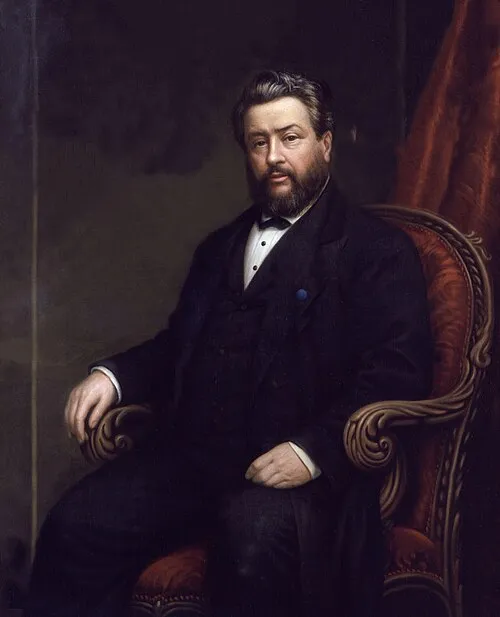
¿Cómo puede ilustrarse la fe?
Para aclarar todavía más el asunto de la fe, te daré unas pocas ilustraciones. Aunque solo el Espíritu Santo puede hacer ver a mi lector, es mi deber y mi gozo dar toda la luz que pueda, y rogar al Señor divino que abra los ojos ciegos. ¡Ojalá mi lector eleve la misma oración por sí mismo!
La fe que salva tiene sus analogías en el cuerpo humano. Es el ojo que mira. Por el ojo traemos a la mente lo que está lejos; podemos traer el sol y las estrellas lejanas a la mente con una mirada del ojo. Así, por la confianza, traemos cerca de nosotros al Señor Jesús; y aunque él esté lejos, en el cielo, entra en nuestro corazón. Solo mira a Jesús, porque el himno es estrictamente verdadero— Hay vida en una mirada al Crucificado, Hay vida en este momento para ti.
La fe es la mano que ase. Cuando nuestra mano toma algo para sí misma, hace precisamente lo que hace la fe cuando se apropia de Cristo y de las bendiciones de su redención. La fe dice: «Jesús es mío». La fe oye de la sangre que perdona, y clama: «La acepto para que me perdone». La fe llama suyos los legados del Jesús moribundo; y suyos son, porque la fe es heredera de Cristo; él se ha dado a sí mismo, y todo lo que tiene, a la fe. Toma, amigo, lo que la gracia ha provisto para ti. No serás ladrón, porque tienes un permiso divino: «el que quiere, tome del agua de la vida de balde». Quien puede tener un tesoro con solo asirlo será necio de veras si permanece pobre.
La fe es la boca que se alimenta de Cristo. Antes de que el alimento pueda nutrirnos, tiene que ser recibido dentro de nosotros. Esto es cosa sencilla —este comer y beber. Recibimos de buena gana en la boca aquello que es nuestro alimento, y luego consentimos en que pase hacia nuestras partes interiores, donde es tomado y absorbido en nuestro cuerpo. Pablo dice, en su epístola a los Romanos, en el capítulo diez: «Cercana está la palabra, en tu boca». Ahora, pues, todo lo que hay que hacer es tragarla, dejar que descienda al alma. ¡Ojalá los hombres tuvieran apetito! Porque el que tiene hambre y ve la comida delante de sí no necesita que le enseñen a comer. «Dame», dijo uno, «un cuchillo, un tenedor y una oportunidad». Estaba del todo preparado para hacer el resto. En verdad, un corazón que tiene hambre y sed de Cristo solo tiene que saber que él es dado gratuitamente, y al punto lo recibirá. Si mi lector está en tal caso, que no vacile en recibir a Jesús; porque puede estar seguro de que nunca se le culpará por hacerlo: pues «a todos los que le recibieron, dióles potestad de ser hechos hijos de Dios». Él nunca repele a uno, sino que autoriza a todos los que vienen a permanecer hijos para siempre.
Las ocupaciones de la vida ilustran la fe de muchas maneras. El labrador entierra buena semilla en la tierra, y espera que no solo viva, sino que se multiplique. Tiene fe en la disposición del pacto, de que «la sementera y la siega no cesarán», y es recompensado por su fe.
El comerciante pone su dinero al cuidado de un banquero, y confía por entero en la honradez y la solidez del banco. Entrega su capital a manos ajenas, y se siente mucho más tranquilo que si tuviera el oro macizo encerrado en una caja fuerte de hierro.
El marinero se confía al mar. Cuando nada, quita el pie del fondo y descansa sobre el océano que lo sostiene a flote. No podría nadar si no se echara por completo sobre el agua.
El orfebre mete el metal precioso en el fuego, que parece ansioso de consumirlo, pero lo recibe de nuevo del horno, purificado por el calor.
No puedes volverte a ninguna parte de la vida sin ver la fe en acción entre hombre y hombre, o entre el hombre y la ley natural. Ahora bien, así como confiamos en la vida diaria, así hemos de confiar en Dios tal como él se revela en Cristo Jesús.
La fe existe en distintas personas en grados diversos, según la medida de su conocimiento o de su crecimiento en la gracia. A veces la fe es poco más que un simple aferrarse a Cristo: un sentido de dependencia y la disposición a depender así. Cuando estás a la orilla del mar verás lapas pegadas a la roca. Caminas con paso suave hasta la roca; das al molusco un golpe rápido con el bastón, y se suelta. Prueba del mismo modo con la lapa siguiente. Le has dado aviso; oyó el golpe con que heriste a su vecina, y se aferra con todas sus fuerzas. Nunca la desprenderás; ¡tú no! Golpea, y vuelve a golpear, pero lo mismo daría romper la roca. Nuestra pequeña amiga, la lapa, no sabe mucho, pero se aferra. No conoce la formación geológica de la roca, pero se aferra. Sabe aferrarse, y ha hallado algo a qué aferrarse: este es todo su caudal de conocimiento, y lo emplea para su seguridad y su salvación. Aferrarse a la roca es la vida de la lapa, y aferrarse a Jesús es la vida del pecador. Miles del pueblo de Dios no tienen más fe que esta; saben lo bastante para aferrarse a Jesús con todo el corazón y toda el alma, y esto basta para la paz presente y la seguridad eterna. Jesucristo es para ellos un Salvador fuerte y poderoso, una Roca inamovible e inmutable; se aferran a él a vida o muerte, y este aferrarse los salva. Lector, ¿no puedes aferrarte? Hazlo enseguida.
La fe se ve cuando un hombre se apoya en otro porque conoce la superioridad del otro. Esta es una fe más alta: la fe que conoce la razón de su dependencia, y obra conforme a ella. No creo que la lapa sepa mucho acerca de la roca; pero, conforme la fe crece, se vuelve cada vez más inteligente. Un ciego se confía a su guía porque sabe que su amigo puede ver y, confiando, camina adonde su guía lo conduce. Si el pobre nació ciego, no sabe qué es la vista; pero sabe que existe tal cosa como la vista, y que la posee su amigo, y por eso pone libremente su mano en la mano del que ve, y sigue su dirección. «Por fe andamos, no por vista». «Bienaventurados los que no vieron y creyeron». Esta es una imagen de la fe tan buena como puede darse; sabemos que Jesús tiene en sí mérito, y poder, y bendición, que nosotros no poseemos, y por eso nos confiamos a él con gusto, para que sea para nosotros lo que no podemos ser para nosotros mismos. Confiamos en él como el ciego confía en su guía. Él nunca traiciona nuestra confianza, sino que «nos ha sido hecho por Dios sabiduría, y justificación, y santificación, y redención».
Todo niño que va a la escuela tiene que ejercer la fe mientras aprende. Su maestro le enseña geografía, y lo instruye acerca de la forma de la tierra y de la existencia de ciertas grandes ciudades e imperios. El niño no sabe por sí mismo que estas cosas sean ciertas, sino en cuanto cree a su maestro y a los libros puestos en sus manos. Eso es lo que tendrás que hacer con Cristo, si has de ser salvo: has de saber sencillamente porque él te lo dice, creer porque él te asegura que así es, y confiarte a él porque te promete que la salvación será el resultado. Casi todo lo que tú y yo sabemos nos ha llegado por la fe. Se ha hecho un descubrimiento científico, y estamos seguros de él. ¿Con qué fundamento lo creemos? Por la autoridad de ciertos hombres de saber bien conocidos, cuya reputación está establecida. Nunca hemos hecho ni visto sus experimentos, pero creemos su testimonio. Has de hacer otro tanto respecto de Jesús: porque él te enseña ciertas verdades, has de ser su discípulo y creer sus palabras; porque ha realizado ciertos actos, has de ser su cliente y confiarte a él. Él es infinitamente superior a ti, y se presenta a tu confianza como tu Maestro y Señor. Si lo recibes a él y a sus palabras, serás salvo.
Otra forma de fe, y más alta, es aquella fe que nace del amor. ¿Por qué confía un niño en su padre? La razón por la que el hijo confía en su padre es que lo ama. Dichosos y felices quienes tienen una fe dulce en Jesús, entrelazada con un afecto profundo hacia él, porque esta es una confianza que da descanso. Estos amantes de Jesús están prendados de su carácter y deleitados con su misión; los arrebata la misericordia que él ha manifestado, y por eso no pueden dejar de confiar en él, porque tanto lo admiran, lo reverencian y lo aman.
El camino de la confianza amorosa en el Salvador puede ilustrarse así. Una señora es la esposa del médico más eminente de su tiempo. La acomete una enfermedad peligrosa, y queda postrada por la fuerza de esta; y, con todo, está admirablemente serena y tranquila, porque su esposo ha hecho de esta enfermedad su estudio especial, y ha sanado a miles que padecían de modo semejante. No está turbada en lo más mínimo, porque se siente perfectamente segura en las manos de alguien tan querido para ella, y en quien la pericia y el amor se unen en su forma más alta. Su fe es razonable y natural; su esposo, desde todo punto de vista, la merece de parte de ella. Esta es la clase de fe que los creyentes más felices ejercen hacia Cristo. No hay médico como él; nadie puede salvar como él puede; lo amamos, y él nos ama, y por eso nos ponemos en sus manos, aceptamos cuanto él prescribe y hacemos cuanto él manda. Sentimos que nada puede estar mal dispuesto mientras él dirige nuestros asuntos; porque nos ama demasiado para dejarnos perecer, o sufrir una sola punzada innecesaria.
La fe es la raíz de la obediencia, y esto puede verse con claridad en los asuntos de la vida. Cuando un capitán confía a un piloto el llevar su nave hasta el puerto, maneja la nave según la dirección de este. Cuando un viajero confía en un guía para que lo conduzca por un paso difícil, sigue la senda que su guía le señala. Cuando un enfermo cree en un médico, sigue con cuidado sus recetas y sus indicaciones. La fe que rehúsa obedecer los mandatos del Salvador es un mero fingimiento, y nunca salvará el alma. Confiamos en Jesús para que nos salve; él nos da indicaciones acerca del camino de la salvación; seguimos esas indicaciones y somos salvos. Que mi lector no olvide esto. Confía en Jesús, y prueba tu confianza haciendo todo lo que él te manda.
Una forma notable de fe nace del conocimiento seguro; esto viene del crecimiento en la gracia, y es la fe que cree a Cristo porque lo conoce, y confía en él porque lo ha comprobado infaliblemente fiel. Una cristiana anciana acostumbraba escribir P y C al margen de su Biblia cada vez que había probado y comprobado una promesa. ¡Qué fácil es confiar en un Salvador probado y comprobado! Tú no puedes hacer esto todavía, pero lo harás. Todo ha de tener un principio. A su debido tiempo llegarás a una fe fuerte. Esta fe madura no pide señales ni indicios, sino que cree con denuedo. Mira la fe del capitán de altura —a menudo me he maravillado de ella. Larga el cable, se aleja de tierra a vapor. Durante días, semanas o aun meses, no ve vela ni costa; y, sin embargo, sigue día y noche sin temor, hasta que una mañana se halla exactamente frente al puerto deseado hacia el cual ha estado gobernando. ¿Cómo ha hallado su camino por el mar sin sendas? Ha confiado en su brújula, su almanaque náutico, su catalejo y los cuerpos celestes; y, obedeciendo su guía, sin avistar tierra, ha gobernado con tal exactitud que no tiene que cambiar un punto para entrar en el puerto. Es cosa maravillosa —ese navegar a vela o a vapor sin ver. En lo espiritual es cosa bendita dejar por completo las orillas de la vista y del sentimiento, y decir «adiós» a los sentimientos interiores, a las providencias que animan, a las señales, a los indicios y demás. Es glorioso estar muy adentro, en el océano del amor divino, creyendo en Dios y gobernando derecho hacia el cielo, según la dirección de la Palabra de Dios. «Bienaventurados los que no vieron y creyeron»; a ellos se les administrará al final una entrada abundante, y una travesía segura en el camino. ¿No pondrá mi lector su confianza en Dios en Cristo Jesús? Ahí descanso, con gozosa confianza. Hermano, ven conmigo, y cree en nuestro Padre y nuestro Salvador. Ven enseguida.
Ver el original (inglés)
Original en inglés
How May Faith Be Illustrated?
TO MAKE THE MATTER Of faith clearer still, I will give you a few illustrations. Though the Holy Spirit alone can make my reader see, it is my duty and my joy to furnish all the light I can, and to pray the divine Lord to open blind eyes. Oh that my reader would pray the same prayer for himself!
The faith which saves has its analogies in the human frame. It is the eye which looks. By the eye we bring into the mind that which is far away; we can bring the sun and the far-off stars into the mind by a glance of the eye. So by trust we bring the Lord Jesus near to us; and though He be far away in Heaven, He enters into our heart. Only look to Jesus; for the hymn is strictly true— There is life in a look at the Crucified One, There is life at this moment for thee.
Faith is the hand which grasps. When our hand takes hold of anything for itself, it does precisely what faith does when it appropriates Christ and the blessings of His redemption. Faith says, “Jesus is mine.” Faith hears of the pardoning blood, and cries, “I accept it to pardon me.” Faith calls the legacies of the dying Jesus her own; and they are her own, for faith is Christ’s heir; He has given Himself and all that He has to faith. Take, O friend, that which grace has provided for thee. You will not be a thief, for you have a divine permit: “Whosoever will, let him take the water of life freely.” He who may have a treasure simply by his grasping it will be foolish indeed if he remains poor.
Faith is the mouth which feeds upon Christ. Before food can nourish us, it must be received into us. This is a simple matter—this eating and drinking. We willingly receive into the mouth that which is our food, and then we consent that it should pass down into our inward parts, wherein it is taken up and absorbed into our bodily frame. Paul says, in his Epistle to the Romans, in the tenth chapter, “The word is nigh thee, even in thy mouth.” Now then, all that is to be done is to swallow it, to suffer it to go down into the soul. Oh that men had an appetite! For he who is hungry and sees meat before him does not need to be taught how to eat. “Give me,” said one, “a knife and a fork and a chance.” He was fully prepared to do the rest. Truly, a heart which hungers and thirsts after Christ has but to know that He is freely given, and at once it will receive Him. If my reader is in such a case, let him not hesitate to receive Jesus; for he may be sure that he will never be blamed for doing so: for unto “as many as received him, to them gave he power to become the sons of God.” He never repulses one, but He authorizes all who come to remain sons for ever.
The pursuits of life illustrate faith in many ways. The farmer buries good seed in the earth, and expects it not only to live but to be multiplied. He has faith in the covenant arrangement, that “seed-time and harvest shall not cease,” and he is rewarded for his faith.
The merchant places his money in the care of a banker, and trusts altogether to the honesty and soundness of the bank. He entrusts his capital to another’s hands, and feels far more at ease than if he had the solid gold locked up in an iron safe.
The sailor trusts himself to the sea. When he swims he takes his foot from the bottom and rests upon the buoyant ocean. He could not swim if he did not wholly cast himself upon the water.
The goldsmith puts precious metal into the fire which seems eager to consume it, but he receives it back again from the furnace purified by the heat.
You cannot turn anywhere in life without seeing faith in operation between man and man, or between man and natural law. Now, just as we trust in daily life, even so are we to trust in God as He is revealed in Christ Jesus.
Faith exists in different persons in various degrees, according to the amount of their knowledge or growth in grace. Sometimes faith is little more than a simple clinging to Christ; a sense of dependence and a willingness so to depend. When you are down at the seaside you will see limpets sticking to the rock. You walk with a soft tread up to the rock; you strike the mollusk a rapid blow with your walking-stick and off he comes. Try the next limpet in that way. You have given him warning; he heard the blow with which you struck his neighbor, and he clings with all his might. You will never get him off; not you! Strike, and strike again, but you may as soon break the rock. Our little friend, the limpet, does not know much, but he clings. He is not acquainted with the geological formation of the rock, but he clings. He can cling, and he has found something to cling to: this is all his stock of knowledge, and he uses it for his security and salvation. It is the limpet’s life to cling to the rock, and it is the sinner’s life to cling to Jesus. Thousands of God’s people have no more faith than this; they know enough to cling to Jesus with all their heart and soul, and this suffices for present peace and eternal safety. Jesus Christ is to them a Saviour strong and mighty, a Rock immovable and immutable; they cling to him for dear life, and this clinging saves them. Reader, cannot you cling? Do so at once.
Faith is seen when one man relies upon another from a knowledge of the superiority of the other. This is a higher faith; the faith which knows the reason for its dependence, and acts upon it. I do not think the limpet knows much about the rock: but as faith grows it becomes more and more intelligent. A blind man trusts himself with his guide because he knows that his friend can see, and, trusting, he walks where his guide conducts him. If the poor man is born blind he does not know what sight is; but he knows that there is such a thing as sight, and that it is possessed by his friend and therefore he freely puts his hand into the hand of the seeing one, and follows his leadership. “We walk by faith, not by sight.” “Blessed are they which have not seen, and yet have believed.” This is as good an image of faith as well can be; we know that Jesus has about Him merit, and power, and blessing, which we do not possess, and therefore we gladly trust ourselves to Him to be to us what we cannot be to ourselves. We trust Him as the blind man trusts his guide. He never betrays our confidence; but He “is made of God unto us wisdom, and righteousness, and sanctification, and redemption.”
Every boy that goes to school has to exert faith while learning. His schoolmaster teaches him geography, and instructs him as to the form of the earth, and the existence of certain great cities and empires. The boy does not himself know that these things are true, except that he believes his teacher, and the books put into his hands. That is what you will have to do with Christ, if you are to be saved; you must simply know because He tells you, believe because He assures you it is even so, and trust yourself with Him because He promises you that salvation will be the result. Almost all that you and I know has come to us by faith. A scientific discovery has been made, and we are sure of it. On what grounds do we believe it? On the authority of certain well-known men of learning, whose reputations are established. We have never made or seen their experiments, but we believe their witness. You must do the like with regard to Jesus: because He teaches you certain truths you are to be His disciple, and believe His words; because He has performed certain acts you are to be His client, and trust yourself with Him. He is infinitely superior to you, and presents himself to your confidence as your Master and Lord. If you will receive Him and His words you shall be saved.
Another and a higher form of faith is that faith which grows out of love. Why does a boy trust his father? The reason why the child trusts his father is because he loves him. Blessed and happy are they who have a sweet faith in Jesus, intertwined with deep affection for Him, for this is a restful confidence. These lovers of Jesus are charmed with His character, and delighted with His mission, they are carried away by the lovingkindness that He has manifested, and therefore they cannot help trusting Him, because they so much admire, revere, and love Him.
The way of loving trust in the Saviour may thus be illustrated. A lady is the wife of the most eminent physician of the day. She is seized with a dangerous illness, and is smitten down by its power; yet she is wonderfully calm and quiet, for her husband has made this disease his special study, and has healed thousands who were similarly afflicted. She is not in the least troubled, for she feels perfectly safe in the hands of one so dear to her, and in whom skill and love are blended in their highest forms. Her faith is reasonable and natural; her husband, from every point of view, deserves it of her. This is the kind of faith which the happiest of believers exercise toward Christ. There is no physician like Him, none can save as He can; we love Him, and He loves us, and therefore we put ourselves into His hands, accept whatever He prescribes, and do whatever He bids. We feel that nothing can be wrongly ordered while He is the director of our affairs; for He loves us too well to let us perish, or suffer a single needless pang.
Faith is the root of obedience, and this may be clearly seen in the affairs of life. When a captain trusts a pilot to steer his vessel into port he manages the vessel according to his direction. When a traveler trusts a guide to conduct him over a difficult pass, he follows the track which his guide points out. When a patient believes in a physician, he carefully follows his prescriptions and directions. Faith which refuses to obey the commands of the Saviour is a mere pretence, and will never save the soul. We trust Jesus to save us; He gives us directions as to the way of salvation; we follow those directions and are saved. Let not my reader forget this. Trust Jesus, and prove your trust by doing whatever He bids you.
A notable form of faith arises out of assured knowledge; this comes of growth in grace, and is the faith which believes Christ because it knows Him, and trusts Him because it has proved Him to be infallibly faithful. An old Christian was in the habit of writing T and P in the margin of her Bible whenever she had tried and proved a promise. How easy it is to trust a tried and proved Saviour! You cannot do this as yet, but you will do so. Everything must have a beginning. You will rise to strong faith in due time. This matured faith asks not for signs and tokens, but bravely believes. Look at the faith of the master mariner—I have often wondered at it. He looses his cable, he steams away from the land. For days, weeks, or even months, he never sees sail or shore; yet on he goes day and night without fear, till one morning he finds himself exactly opposite to the desired haven toward which he has been steering. How has he found his way over the trackless deep? He has trusted in his compass, his nautical almanac, his glass, and the heavenly bodies; and obeying their guidance, without sighting land, he has steered so accurately that he has not to change a point to enter into port. It is a wonderful thing—that sailing or steaming without sight. Spiritually it is a blessed thing to leave altogether the shores of sight and feeling, and to say, “Good-by” to inward feelings, cheering providences, signs, tokens, and so forth. It is glorious to be far out on the ocean of divine love, believing in God, and steering for Heaven straight away by the direction of the Word of God. “Blessed are they that have not seen, and yet have believed”; to them shall be administered an abundant entrance at the last, and a safe voyage on the way. Will not my reader put his trust in God in Christ Jesus. There I rest with joyous confidence. Brother, come with me, and believe our Father and our Saviour. Come at once.
https://sermonesbiblicos.org/biblioteca/todo-por-gracia-09-como-puede-ilustrarse-la-fe/