Sermones Bíblicos
Considerar la obra de Dios
Thomas Boston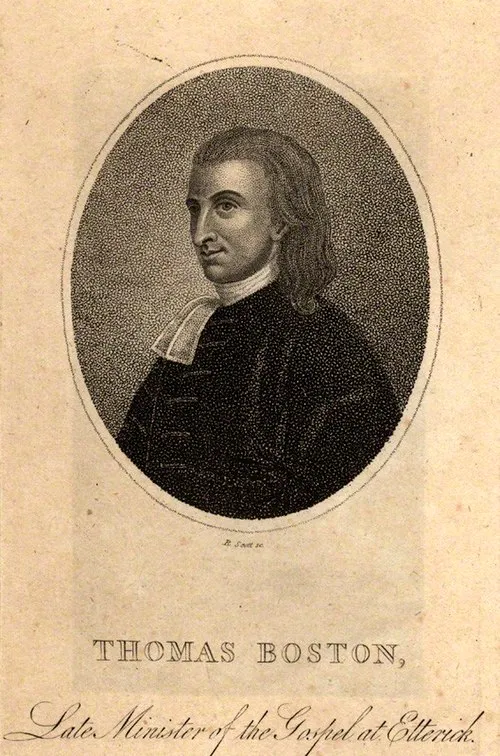
Proposición III. El considerar la torcedura en la suerte como la obra de Dios es un medio apropiado para llevar a uno a conducirse rectamente bajo ella.
- Qué es considerar la torcedura como la obra de Dios. Lo tomamos en estas cinco cosas:
Primero, una indagación en el manantial de donde nace. Génesis 25:22. La razón y la religión nos enseñan ambas, no solo a notar la torcedura, que no podemos evitar, sino a considerarla e inquirir en el manantial de ella. Ciertamente no es nuestra elección, ni la hacemos de propósito para nosotros mismos; y atribuirla a la fortuna es atribuirla a nada: no ha brotado de sí misma, sino que ha sido sembrada para nosotros por una mano u otra. Job 5:6. Y hemos de notar la mano de donde viene.
Segundo, un percibir la mano de Dios en ella. Cualquiera que sea la mano que las criaturas tengan en ella, no debemos hacer terminar nuestra mirada en ellas, sino mirar por encima de ellas y más allá, a la acción del administrador supremo. Job 1:21. Sin esto haremos un Dios de la criatura que es instrumento de la torcedura, mirándola como si fuera la causa primera, lo cual es propio de Dios, Romanos 11:36, y nos traeremos bajo aquella sentencia. Salmo 28:5. «Porque no atendieron á las obras de Jehová, ni al hecho de sus manos, derribarálos, y no los edificará.»
Tercero, un representárnosla como obra de Dios, que él ha obrado contra nosotros para fines santos y sabios, que convienen a las perfecciones divinas. Esto es tomarla por el mango debido, representárnosla bajo una noción recta, de donde puede brotar un manejo recto bajo ella. Nunca puede ser seguro pasar por alto a Dios en ella, pero sí muy seguro pasar por alto a la criatura; atribuyéndosela a Dios, como si ninguna otra mano estuviera en ella, siendo siempre la suya la principal en ella. «Jehová es; haga lo que bien le pareciere.» 1 Samuel 3:18. Así David pasó por alto a Semei, y miró a Dios en el asunto de su maldición, como quien clava los ojos no en el hacha, sino en quien la empuñaba. Aquí han de entrar dos cosas en nuestra consideración.
1.º El decreto de Dios, que destina esa torcedura para nosotros desde la eternidad; pues «hace todas las cosas según el consejo de su voluntad», Efesios 1:11, el libro sellado, en el cual están escritas todas las líneas negras que hacen la torcedura. Cualesquiera valles de oscuridad, de dolor y de tristeza por los que seamos llevados, hemos de mirarlos como hechos por los montes de bronce, los inmutables propósitos divinos, Zacarías 6:1. Esto no puede ser presunción en ese caso, si no la llevamos más allá de hasta donde el suceso llega en nuestra vista y en nuestro sentir: porque hasta ahí el libro está abierto para que miremos en él.
2.º La providencia de Dios, que trae a efecto esa torcedura para nosotros en el tiempo. Amós 3:6. Nada puede acontecernos sin aquel en quien vivimos. Cualquiera que sea el género de acción de las criaturas en el hacerse de nuestra torcedura, todo lo que hayan hecho o dejado de hacer respecto de ella, él es el manantial que pone en movimiento todas las ruedas creadas, el cual, de cesar, las detendría a todas; aunque él permanece infinitamente puro en su acción, por impuros que ellos sean en la suya. Job consideró ambas cosas, cap. 23:14.
Cuarto. Un continuar en el pensamiento de ella como tal. No es una simple mirada del ojo, sino un contemplarla y mirarla con detenimiento como obra suya, lo que es el medio apropiado. Hemos de estar,
1.º Habitualmente impresionados con esta consideración: así como la torcedura es un pesar duradero, así la consideración de esto como el remedio debe mantenerse habitualmente. Hay otras consideraciones, además de esta, que hemos de albergar, de modo que no podemos tenerla siempre expresamente en la mente; pero hemos de asentarla como un principio arraigado, conforme al cual hemos de manejar la torcedura, y mantener el corazón en una disposición por la cual ella pueda deslizarse expresamente en nuestra mente, cuando la ocasión lo pida.
2.º Hemos de ejercitarnos en ella de modo ocasional. Siempre que empecemos a sentir el escozor de la torcedura, debemos echar mano de este remedio; cuando el yugo empiece a llagar el cuello, debe haber una aplicación de este ungüento espiritual. Y por más a menudo que lo primero nos sobrevenga, será sabiduría nuestra echar mano de lo segundo como el remedio apropiado; cuanto más a menudo se use, más fácilmente vendrá a la mano, y también será más eficaz.
Quinto. Un considerarla para el fin con que se nos propone, a saber, llevarnos a un porte obediente bajo ella. Las corrupciones de los hombres los harán entrar en la consideración de ella; pero cual es el principio, así será corrupto su fin y su efecto. 2 Reyes 6:33. Pero hemos de entrar en ella, y usarla para un buen fin, si queremos sacar bien de ella, tomándola como una consideración práctica para regular nuestra conducta bajo la torcedura.
II. Cómo ha de entenderse que es un medio apropiado para llevar a uno a conducirse rectamente bajo la torcedura.
No como si ello fuera suficiente por sí mismo, y tal como está solo, para producir ese efecto. Sino en cuanto se usa con fe, en la fe del evangelio; es decir, el mero considerar de un pecador la torcedura en su suerte como la obra de Dios, sin relación salvadora alguna con él, nunca será un camino para conducirse rectamente bajo ella; pero, habiendo creído en Jesucristo, y tomando así a Dios por su Dios, el considerar la torcedura como la obra de Dios, su Dios, es el medio apropiado para llevarlo a aquel temple y aquella conducta deseables. Muchos oyentes yerran aquí. Cuando oyen proponerse tales y cuales consideraciones lícitas para llevarlos al deber, al punto imaginan que, por la mera fuerza de ellas, pueden ganar el punto. Y muchos predicadores también, que, olvidando a Cristo y el evangelio, pretenden por la fuerza de la razón hacer cristianos a los hombres; estando retenidos los ojos de unos y de otros, de suerte que no ven la corrupción de la naturaleza de los hombres, la cual es tal que pone la verdadera cura por encima de la fuerza de la razón; siendo todo cuanto perciben algunos malos hábitos, que piensan pueden sacudirse mediante una aplicación vigorosa de sus facultades racionales. Para aclarar este asunto, consideren.
Primero. ¿Es racional pensar en poner al hombre caído, con su naturaleza corrompida, a obrar del mismo modo que el Adán inocente? Esto es poner a los mendigos al nivel de los ricos, y a los cojos a hacer camino con los que tienen miembros. El Adán inocente tenía un caudal de capacidades de gracia, por las cuales podía, por la fuerza de consideraciones morales, haberse llevado a sí mismo a cumplir el deber rectamente. Pero ¿dónde está eso en nosotros? 2 Corintios 3:5. Cualquiera que sea la fuerza que haya en ellas para un alma dotada de vida espiritual, ¿qué poder tienen para resucitar a los muertos, cuales nosotros somos? Efesios 2:1.
Segundo. La Escritura es muy clara en este punto, mostrando la necesidad indispensable de la fe; Hebreos 11; y de una fe tal que une a Cristo, Juan 15:5. «Sin mí», esto es, separado de mí, «nada podéis hacer»; no, ni con todas las consideraciones morales que ustedes puedan usar. ¿Cómo fueron dados los diez mandamientos en el monte Sinaí? No como meras exigencias del deber, sino con el evangelio al frente, para ser creído en primer lugar; «Yo soy JEHOVÁ tu Dios», etc. Y así Salomón, a quien muchos miran más bien como filósofo moral que como escritor inspirado que conduce a Cristo, pone al frente de sus escritos, al comienzo de los Proverbios, el evangelio más expreso. ¿Y hemos de tenerlo expresamente repetido en nuestras Biblias con cada precepto moral, o si no cerrar los ojos y tomar estos preceptos sin él? Ese es el efecto de nuestra enemistad natural contra Cristo. Si lo amáramos más, lo veríamos más en cada página y en cada mandamiento, recibiendo la ley de su boca.
Tercero. Consideren tan solo qué es conducirse rectamente bajo la torcedura en la suerte [N. del T.: el original dice «believe rightly», «creer rectamente»; se traduce «conducirse» por el sentido del contexto, que habla de conducta, y probablemente se trate de una errata del texto fuente]; qué humillación del alma, qué negación de sí mismo y qué resignación absoluta a la voluntad de Dios ha de haber en ello; de qué amor a Dios ha de proceder; cómo la mira a su gloria ha de influir en ello como fin principal suyo; y prueben, y vean si no les es imposible alcanzarlo sin aquella fe antes mencionada. Sé que un cristiano puede alcanzarlo sin plena seguridad; pero, con todo, conforme a la medida de su persuasión de que Dios es su Dios, así serán sus logros en ello; estos marchan a la par. ¡Oh, qué clase de corazones se imaginan tener los que piensan que pueden, por un momento, vaciarlos de la criatura, más allá de lo que pueden llenarlos de un Dios, como su Dios, en el lugar y puesto de ella! No hay duda de que los hombres pueden, por la fuerza de consideraciones morales, labrarse una conducta bajo la torcedura, exteriormente recta, cual la tuvieron muchos paganos; pero una disposición cristiana de espíritu bajo ella nunca se alcanzará sin aquella fe en Dios.
Objeción. «Entonces solo los santos son capaces del aprovechamiento de esa consideración.»
Respuesta. Sí, en verdad es así, en cuanto a esa y a todas las demás consideraciones morales, para fines verdaderamente cristianos; y eso no equivale a más que a esto: que las directrices para andar rectamente son solo para los vivos, que tienen el uso de sus miembros; y, por tanto, para que ustedes puedan aprovecharla, pónganse a creer en primer lugar.
III. Confirmaré que es un medio apropiado para llevar a uno a conducirse rectamente bajo ella. Esto se verá, si consideramos estas cuatro cosas.
-
Es de gran utilidad para apartar de considerar y de morar en aquellas cosas acerca de la torcedura que sirven para irritar nuestra corrupción. Tales son el frustrarse de nuestra voluntad y de nuestros deseos, la satisfacción que tendríamos en que el asunto marchara conforme a nuestro parecer, los instrumentos de la torcedura, cuán injuriosos nos son, cuán irrazonables, cuán obstinados, etc. El morar en estas consideraciones no es sino soplar el fuego de adentro; pero volver los ojos a ella como la obra de Dios sería una cura por vía de desvío, 2 Samuel 6:9, 10; y tal desvío de los pensamientos no solo es lícito, sino conveniente y necesario.
-
Tiene una aptitud moral para producir este buen efecto. Aunque nuestra cura no se alcanza por la mera fuerza de la razón, con todo se lleva adelante, no por un movimiento de bruto, sino de un modo racional. Efesios 5:14. Esta consideración tiene una eficacia moral sobre nuestra razón; es apta para sobrecogernos hasta la sumisión, y ministra un gran caudal de argumento para conducirnos cristianamente bajo nuestra torcedura.
-
Tiene una designación divina para ese fin, la cual ha de creerse. Proverbios 3:6. Así el texto. La criatura en sí misma es cosa ineficaz e inerte, una mera vanidad. Hechos 17:28. Lo que hace de cualquier cosa un medio apto para el fin es una palabra de designación divina. Mateo 4:4. Usar entonces cualquier cosa para un fin, sin la fe de esto, es hacer un dios de la criatura; por tanto ha de usarse en dependencia de Dios, conforme a aquella palabra de designación. 1 Timoteo 4:4, 5. Y toda cosa es apta para el fin para el cual Dios la ha designado. Esta consideración está designada para ese fin; y por tanto es un medio apto para él.
-
Se puede esperar que el Espíritu obre por ella, y de hecho obra por ella, en los que creen y miran a él para ello, por cuanto es un medio de su
propia designación. Los papistas, los legalistas y todas las personas supersticiosas idearon diversos medios de santificación, que parecían tener, o que realmente tenían, una aptitud moral para lo mismo; pero son del todo ineficaces, porque, como Abana y Pharphar, carecen de una palabra de designación divina para curarnos de nuestra lepra; por tanto el Espíritu no obra por ellos, pues no son instrumentos suyos, sino ideados de sus propios corazones. Y puesto que aun los medios de designación divina son ineficaces sin el Espíritu, estos nunca pueden ser eficaces. Pero, teniendo esta consideración una designación divina, el Espíritu obra por ella.
Uso. Tomen, pues, esta dirección para conducirse rectamente bajo la torcedura en su suerte. Acostúmbrense a considerarla como la obra de Dios. Y para ayudarlos a aprovecharla, de modo que sea eficaz, ofrezco estos consejos:
-
Considérenla como la obra de su Dios en Cristo. Este es el camino para rociarla con la gracia del evangelio, y así hacerla tolerable. Salmo 22:1. El discernir la mano de un Padre en la torcedura le quitará mucha de la amargura, y les endulzará la píldora. Por esta causa será necesario: (1) tomar solemnemente a Dios por su Dios, bajo su torcedura, Salmo 142:4, 5; (2) en todos sus encuentros con ella, creer con resolución, y reclamar su interés en él. 1 Samuel 30:6.
-
Amplíen la consideración con una mirada a las relaciones divinas para con ustedes, y a los atributos divinos. Considérenla, siendo la obra de su Dios, la obra de su Padre, Hermano mayor, Cabeza, Esposo,
etc., quien por tanto, sin duda, mira por el bien de ustedes. Consideren su santidad y su justicia, que muestran que no les hace agravio; su misericordia y su bondad, que no es peor; su soberanía, que puede silenciarlos; su sabiduría y su amor infinitos, que pueden satisfacerlos en ella.
- Consideren qué obra suya es, cómo es una obra de convicción, para traer el pecado a la memoria; una obra de corrección, para castigarlos por sus necedades; una obra preventiva, para cercarlos y apartarlos de los caminos de pecado en los que de otro modo serían propensos a entrar; una obra de prueba, para descubrir su estado, sus gracias y sus corrupciones; una obra de destete, para destetarlos del mundo y hacerlos aptos para el cielo. En todas sus consideraciones de ella de esta manera, miren hacia arriba en busca de su Espíritu, para hacerlas eficaces, 1 Corintios 3:6. — Así pueden ustedes conducirse cristianamente bajo ella, hasta que Dios la enderece, ya aquí o en el cielo.
Ver el original (inglés)
Original en inglés
Prop. III. The considering the crook in the lot, as the work of God, is a proper means to bring one to behave rightly under it.
- What it is to consider the crook as the work of God. We take it up in these five things:
First, An inquiry into the spring whence it rises. Gen. XXV. 22. Reason and religion both teach us, not onlyto notice the crook, which we cannot avoid, but to consider and inquire into fhe spring of it. Surely, it is not our choice, nor do we designedly make it for ourselves: and to ascribe it to fortune is to ascribe it to nothing: it is not sprung of itself, but sown by one hand or another for us. Job V. 6. And we are to notice the hand from whence it comes.
Secondly, A perceiving of the hand of God in it. Whatever hand any creatures have therein, we ought not to terminate our view in them, but look above and beyond them to the supreme mana’ ger’s agency. Job i. 21. Without this we shall make a God of the creature that is instrumental •of the crook, looking on it as if it were the first cause, which is peculiar to God, Rom. xi. 36, and bring ourselves under that doom. Psalm xxviii. 5. ” Because they regard not the works of the Lord, nor the operation of his hands, he shall destroy them, and not build them up.”
Thirdly, A representing it to ourselves as a work of God, which he hath wrought against us for holy and wise ends, becoming the divine perfections. This is to take it by the right handle, to represent it to ourselves, under a right notion, from whence a right management under it may spring. It can never be safe to overlook God in it, but very safe to overlook the creature; ascribing it unto God, as if no other hand were in it, his being always the principal therein. “It is the Lord, let him do what seemeth him good.” 1 Sam. iii. 18. Thus David overlooked Shimei, and looked to God in the matter of his cursing, as one fixing his eyes, not on the axe, but on him that wielded it. Here two things are to come into our consideration.
1st. The decree of God, purposing that crook for us from eternity; ” for he worlieth all things after the counsel of his own will,” Eph. i. 11, the sealed book, in which are written all the llack lines that make the crook. Whatever valleys of darkness, grief, and sorrow, we are carried through, we are to look on them as made by the mountains of brass, the immovable divine purposes, Zech. vi. 1. This can be no presumption in that case, if we carry it no further than the event goes in our sight and feeling: for so far the book is opened for us to look into.
2dly. The providence of God bringing to pass that crook for us in time. Amos iii. 6. There is nothing can befall us without him in whom we live. Whatever kind of agency of the creatures may be in the making of our crook, whatever they have done or not done towards it, he is the spring that sets all the created wheels in motion, which ceasing, they would all stop t though he is still infinitely pure in his agency, however impure they be in theirs. Job considered both these, ch. xxiii. 14.
Fourthly. A contiiruinin the thought of it as such. It is not a simple glance of the eye, but a contemplating and leisurely viewing of it as his work, that is the proper mean. We are to be,
1st. Habitually impressed with this consideration: as the crook is some lasting grievance, so the consideration of this as the remedy should be habitually kept up. There are other considerations besides this that we must entertain, so that we cannot always have it expressly in our mind: but we must lay it down for a rooted principle, according to which we are to manage the crook, and keep the heart in a disposition, whereby it may expressly slip into our minds, as occasion calls.
2dly. We are to be occasionally exercised in it. Whenever we begin to feel the smart of the crook, we should fetch in this remedy; when the yoke begins to gall the neck, there should be an application of this spiritual ointment. And however often the former comes in on us, it will be our wisdom to fetch in the latter as the proper remedy; the oftener it is used, it will more easily come to hand, and also be the more effectual.
Fifthly. A considering it for the end for which it is proposed to us, namely, to bring us to a dutiful carriage under it. Men’s corruptions will cause them to enter on the consideration of it: but as the principle is, so the end and effect of it will be corrupt. 2 Kings vi. 33. But we must enter on, and use it for a good end, if we would have good of it, taking it as a practical consideration for regulating our conduct under the crook.
II. How it is to be understood to be a proper means to bring one to behave rightly under the
Not as if it were sufficient of itself, and as it stands alone, to produce that effect. But as it is used in faith, in the faith of the gospel; that is to say, a sinner’s bare considering the crook in his lot as the work of God, Avithout any saving relation to him, will never be a way to behave himself rightly under it: but having believed in Jesus Christ, and so taking God for his God, the considering of the crook as the work of God, his God, is the proper means to bring him to that desirable temper and behaviour. Many hearers mistake here. When they hear such and such lawful considerations proposed for bringing them to duty, they presently imagine, that by the mere force of them, they may gain the point. And many preachers too, who, forgetting Christ and the gospel, pretend by the force of reason to make men Christians; the eyes of both being held, that they do not see the corruption of men’s nature, which is such as sets the true cure above the force of reason: all that they are sensible of, being some ill habits, which they think may be shaken off by a vigorous application of their rational faculties. To clear this matter, consider.
First. Is it rational to think to set fallen man, with his corrupted nature, to work the same way with innocent Adam? that is to set beggars on a level with the rich, lame men to a journey with those that have limbs. Innocent Adam had a stock of gracious abilities, whereby he might, by the force of moral considerations, have brought himself to perform duty aright. But where is that with us? 2 Cor. iii. 5. Whatever force be in them to a soul endowed with spiritual life, what power have they to raise the dead, such as we are? Eph. ii. 1.
Secondly. The scripture is very plain on this head, showing the indispensable necessity of faith; Heb. xi. and that, such as unites to Christ, John XV. 5. ” Without me,” that is, separate from me, ” ye can do nothing;” no, not with all the moral considerations ye can use. How were the ten commandments given on mount Sinai? not as bare exactions of duty, but fronted with the gospel, to be believed in the first place; ” I am the Lord thy God,” Sic. And so Solomon, whom many regard rather as a moral philosopher, than an inspired writer leading to Christ, fronts his writings, in the beginning of the Proverbs, with most express gospel. And must we have it expressly repeated in our Bibles with every moral precept, or else shut our eyes and take these precepts without it? that is the effect of our natural enmity to Christ. If we loved him more, we should see him more in every page, and in every command, receiving the law at his mouth.
Thirdly. Do but consider what it is to believe rightly under the crook in the lot; what humiliation of soul, self-denial, and absolute resignation to the will of God must be in it: what love to God it must proceed from; how regjyd to his glory must inlluence it as the chief end thereof; and try, and see if it is not impossible for you to reach it without that faith aforementioned. I know a Christian may reach it without full assurance: but still, according to the measure of their persuasion that God is their God, so will their attainments in it be; these keep equal pace. 0 what kind of hearts do they imagine themselves to have, that think they can for a moment empty them of the creature, farther than they can fill them with a God, as their God, in its room and stead! No doubt men may, from the force of moral considerations, work themselves to a behaviour under the crook, externally right, such as many pagans had; but a Christian disposition of spirit under it will never be reached, without that faith in God.
Object. ” Then it is saints only that are capable of the improvement of that consideration.”
Ans. Yea, indeed it is so, as to that and all other moral considerations, for true Christian ends: and that amounts to no more, than that directions for walking rightly are only for the living, that have the use of their limbs: and, therefore, that ye may improve it, set yourselves to believe in the first place.
-
1 shall confirm that it is a proper mean to bring one to behave rightly under it. This will appear, if we consider these four things.
-
It is of great use to divert from the considering and dwelling on those things about the crook, which serve to irritate our corruption. Such are the balking of ourwill and wishes, the satisfaction we should have in the matter’s going according to our mind, the instruments of the crook, how injurious they are to us, how unreasonable, how obstinate, &c. The dwelhng on these considerations is but the blowing of the fire within; but to turn our eyes to it as the work of God, would be a cure by way of diversion, 2 Sam. vi. 9, 10; and such diversion of the thoughts is not only lawful, but expedient and necessary.
-
It has a moral aptitude for producing this good effect. Though our cure is not compassed by the mere force of reason; yet it is carried on, not by a brutal movement, but in a rational way. Eph. v. 14. This consideration has a moral efficacy on our reason, it is fit to awe us into a submission, and ministers a deal of argument for behaving christianly under our crook.
-
It has a divine appointment for that end, which is to be believed. Prov. iii. 6. So the text. The creature in itself is an inefficacious and moveless thing, a mere vanity. Acts. xvii. 28. That which makes any thing a means fit for the end, is a word of divine appointment. Matt. iv. 4. To use any thing then for an end, without the faith of this, is to make a god of the creature; therefore it is to be used in a dependence on God, according to that word of appointment. 1 Tim. iv. 4, 5. And every thing is fit for the end for which God has appointed it. This consideration is appointed for that end; and therefore is a fit means for it.
-
The Spirit may be expected to work by it, and does work by it, in them that believe, and look to him for it, for as much as it is a mean of his
V own appointment. Papists, legalists, and all superstitious persons, devised various means of sanctification, seeming to have, or really having, a moral fitness for the same; but they are quite ineffectual, because, like Abanar and Pharpar, they want a word of divine appointment for curing us of our leprosy; therefore the Spirit works not by them, since they are not his instruments, but devised of their own hearts. And since even the means of divine appointment are ineffectual without the Spirit, these can never be effectual. But this consideration having a divine appointment, the Spirit works by it.
Use. Then take this direction for your behaving rightly under the crook in your lot. Inure yourselves to consider it as the work of God. And for helping you to improve it, so as it may be effectual, 1 offer these advices:
-
Consider it as the work of your God in Christ. This is the way to sprinkle it with gospel-grace, aud so to make it tolerable. Psal. xxii. 1. The discerning of a Father’s hand in the crook will take out much of the bitterness of it, and sugar the pill to you. For this cause it will be necessary, (1) Solemnly to take God for your God, under your crook, Psal. cxlii. 4, 5. (2) In all your encounters with it, resolutely to believe, and claim your interest in him. 1 Sam. xxx. 6.
-
Enlarge the consideration with a view of the divine relations to you, and the divine attributes. Consider it, being the work of your God, the work of your Father, elder Brother, Head, Husband,
Sec, who therefore, surely consults your good. \ Consider his holiness and justice, showing he \ wrongs you not; his mercy and goodness, that it \ - is not worse; his sovereignty, that may silence I you; his infinite wisdom and love, that may satisfy fou in it.
- Consider what a work of his it is, how it is \ convincing work, for bringing sin to remembrance; a correcting work, to chastise you for your follies; a preventing work, to hedge you up] from courses of sin you would otherwise be apt to run into; a trying work, to discover your state,: /your graces, and corruptions; a weaning work, to \ I wean you from the world and fit you for heaven. ”’. In all your considerations of it in this man- ner, look upward for his Spirit, to render them effectual, 1 Cor. iii. 6. — Thus may ye behave christianly under it, till God make it even either here or in heaven.
https://sermonesbiblicos.org/biblioteca/la-torcedura-en-la-suerte-08-considerar-la-obra-de-dios/