Sermones Bíblicos
Lo que Dios tuerce no podemos enderezarlo
Thomas Boston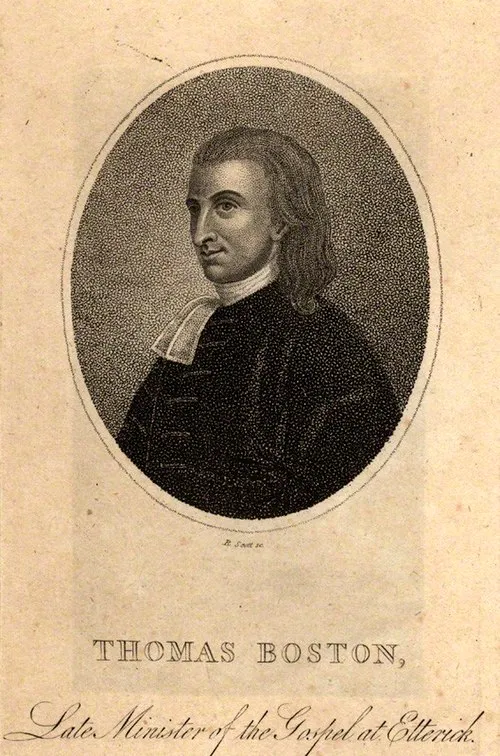
Proposición II. Lo que Dios tiene por conveniente echar a perder, no podremos enmendarlo en nuestra suerte. La torcedura que Dios hace en nuestra suerte, no podremos enderezarla. — Hemos de
I. Mostrar el echar a perder de Dios y el hacer una torcedura en la suerte de uno, según tiene por conveniente.
II. Consideraremos los intentos de los hombres de enmendar o enderezar esa torcedura en su suerte.
III. En qué sentido ha de entenderse que no podremos enmendar, o enderezar, la torcedura de nuestra suerte.
IV. Exponer algunas razones del punto.
I. En cuanto al primer apartado, a saber, mostrar el echar a perder de Dios y el hacer una torcedura en la suerte de uno, según tiene por conveniente.
Primero, Dios se reserva para sí la elección de la torcedura de cada uno; y en ello ejerce su soberanía, Mateo 20:15. No se deja a nuestra opción cuál haya de ser esa torcedura, o cuál nuestra carga peculiar; sino que, como el alfarero hace del mismo barro un vaso para un uso y otro para otro uso, así Dios hace una torcedura para uno y otra para otro, según su propia voluntad y beneplácito, Salmo 135:6. «Todo lo que quiso Jehová, ha hecho en los cielos y en la tierra», etc.
Segundo, él ve y observa el sesgo de la voluntad y de la inclinación de cada uno, cómo está puesto, y en qué se dobla especialmente apartándose de él, y por consiguiente en qué necesita la curvatura especial; así lo hizo en el caso de aquel hombre, Marcos 10:21. «Una cosa te falta: ve, vende todo lo que tienes, y da á los pobres», etc. Observa la inclinación de su corazón hacia sus grandes posesiones. Él toma nota de cuál es el ídolo que, en el caso de cada uno, es más apto para ser su rival, a fin de ajustar la prueba al caso, haciendo allí la torcedura.
Tercero, por la conducta de su providencia, o por un toque de su mano, da a esa parte de la suerte de uno una curvatura en sentido contrario; de modo que en adelante queda del todo contraria al sesgo de la voluntad de la persona, Ezequiel 24:25. Y aquí se hace la prueba: la inclinación de la voluntad queda de un lado, y esa parte de la suerte de uno del otro, de modo que no responde a la inclinación de la persona, sino que la contraría.
Cuarto. Él quiere que esa torcedura en la suerte permanezca mientras tiene por conveniente, por más o menos tiempo, exactamente según los fines santos para los cuales la destina, 2 Samuel 12:10. Oseas 5:15. Por esa voluntad queda tan fija, que la creación entera no puede alterarla, ni sacarla de la curvatura.
II. Consideraremos los intentos de los hombres de enmendar o enderezar esa torcedura en su suerte. Esto, en una palabra, consiste en sus esfuerzos por traer su suerte, en ese punto, a su propia voluntad, para que ambas vayan por un mismo camino; así implica tres cosas:
Primero. Cierta desazón bajo la torcedura de la suerte; es un yugo duro de llevar para la persona, hasta que su espíritu sea domado y sometido, Jeremías 31:18. «Azotásteme, y fuí castigado como novillo indómito: conviérteme y seré convertido», etc. Y es para quebrantar el peso del espíritu de uno que Dios lo impone: por cuya causa se declara que es cosa buena llevarlo, Lamentaciones 3:27, siendo ese el camino para hacer a uno, al fin, como un niño destetado.
Segundo. Un fuerte deseo de que la cruz sea quitada, y de que las cosas en esa parte marchen conforme a nuestras inclinaciones. Esto es muy natural, pues la naturaleza desea verse libre de todo lo que le es gravoso o contrario; y si ese deseo se guarda en la debida subordinación a la voluntad de Dios, y no es demasiado perentorio, no es pecaminoso, Mateo 26:39. «Si es posible, pase de mí este vaso; empero no como yo quiero», etc. De ahí tantas oraciones aceptadas del pueblo de Dios, por la remoción de la torcedura en su suerte.
Tercero. Un uso ferviente de los medios para ese fin. Esto se sigue naturalmente de ese deseo. El hombre, apremiado por la cruz que hay en su torcedura, se esfuerza cuanto puede, en el uso de los medios, por librarse de ella. Y si los medios usados son lícitos, y no se confía en ellos, sino que se siguen con la mira puesta en Dios, el intento no es pecaminoso, tenga o no éxito en el uso de ellos.
III. En qué sentido ha de entenderse que no podremos enmendar o enderezar la torcedura de nuestra suerte.
No ha de entenderse como si el caso fuera absolutamente sin esperanza, y como si no hubiera remedio para la torcedura de la suerte. Porque no hay caso tan desesperado que Dios no pueda remediarlo. Génesis 18:14. «¿Hay para Dios alguna cosa difícil?» Cuando la torcedura ha durado mucho, y ha desdeñado todos los remedios que uno ha usado para ella, uno está pronto a perder la esperanza acerca de ella; pero a muchas torceduras, dadas por desahuciadas, que nunca se enmendarían, Dios las ha hecho perfectamente rectas, como en el caso de Job.
Pero nunca podremos enmendarla por nosotros mismos; si el Señor mismo no la toma en su mano para quitarla, permanecerá delante de nosotros inamovible, como una montaña de bronce, aunque quizá en sí misma sea una cosa que podría quitarse fácilmente. Lo tomamos en estas tres cosas:
-
Nunca se logrará por la mera fuerza de nuestra mano. 1 Samuel 2:9. «Porque nadie será fuerte por [su] fuerza.» Los empeños más vigorosos que podamos emplear no enderezarán la torcedura, si Dios no le da un toque de su mano; de modo que todos los empeños en ese sentido, sin la mira puesta en Dios, son vanos e infructuosos, y no serán sino arar sobre la roca, Salmo 127:1, 2.
-
El uso de todos los medios lícitos para ello será infructuoso, a menos que el Señor los bendiga para ese fin, Lamentaciones 3:37. «¿Quién [será] aquel que diga, que vino [algo] que el Señor no mandó?» Como uno puede comer y no quedar saciado, así uno puede usar medios apropiados para enderezar la torcedura de su suerte, y con todo no alcanzar nada; porque nada puede ser ni hacer por nosotros más de lo que Dios hace que sea o haga, Eclesiastés 9:11. «Ni es de los ligeros la carrera, ni la guerra de los fuertes, ni aun de los sabios el pan, ni de los prudentes las riquezas», etc.
-
Nunca se logrará en nuestro tiempo, sino en el tiempo de Dios, que rara vez es tan temprano como el nuestro, Juan 7:6. «Mi tiempo aun no ha venido; mas vuestro tiempo siempre está presto.» De ahí que esa torcedura permanezca a veces inamovible, como si la retuviera una mano invisible; y en otro tiempo se vaya con un toque, porque ha llegado el tiempo de Dios para enderezarla.
IV. Asignaremos ahora las razones del punto.
1.º Por la dependencia absoluta que tenemos de Dios. Hechos 17:28. Como la luz depende del sol, o la sombra del cuerpo, así dependemos de Dios, y sin él nada podemos hacer, ni grande ni pequeño. Y Dios quiere que así lo hallemos, para enseñarnos nuestra dependencia.
2.º Porque su voluntad es irresistible, Isaías 46:10. «Mi consejo permanecerá, y haré todo lo que quisiere.» Cuando Dios quiere una cosa, y la criatura la contraria, es fácil ver cuál voluntad ha de cumplirse. Cuando el brazo omnipotente sujeta, en vano tira la criatura, Job 9:4. «¿Quién se endureció contra él, y quedó en paz?»
Inferencia 1. Hay necesidad de ceder y someternos a la torcedura de nuestra suerte; porque tanto daría pensar en quitar las rocas y los montes que Dios ha asentado, como en hacer recta aquella parte de nuestra suerte que él ha hecho torcida.
-
El enderezar la torcedura de nuestra suerte a pura fuerza nuestra no es sino un engaño que nos hacemos a nosotros mismos, y no durará, sino que, como un palo enderezado a la fuerza, pronto volverá a la curvatura.
-
El único modo eficaz de conseguir que la torcedura se enderece es acudir a Dios para ello.
Exhortación 1. Apliquémonos, pues, a Dios para que quite cualquier torcedura de nuestra suerte que, en el orden establecido de las cosas, pueda quitarse. Los hombres no pueden dejar
de desear que se quite una torcedura, más que la de
una espina en la carne; pero, puesto que no somos capaces de enmendar lo que Dios tiene por conveniente echar a perder, es evidente que hemos de acudir a aquel que la hizo para que la enmiende, y no tomar en nuestra propia mano el enderezarla.
Motivo 1. Todos nuestros intentos por quitarla serán, sin él, vanos e infructuosos. Salmo 127:1. Por resueltos que estemos a que se enderece, si Dios no lo dice, trabajaremos en vano. Lamentaciones 3:37. Por mucho que prometan los medios que usamos para ello, serán ineficaces si él no manda la bendición. Eclesiastés 9:11.
-
Tales intentos fácilmente la empeorarán. Nada es más ordinario que un espíritu soberbio, al forcejear con la torcedura, la haga más torcida, Eclesiastés 10:8, 9. «El que aportillare el vallado, morderále la serpiente. El que mudare las piedras, trabajo tendrá en ellas», etc. Esto es evidente en el caso de los murmuradores en el desierto. Naturalmente viene a ser así; porque, a ese paso, la voluntad de la persona se aparta aún más de ella; y, además, Dios es provocado a enroscar el yugo más apretado en torno al cuello de uno, de modo que de ninguna manera permitirá que le quede holgado.
-
No hay torcedura que él no pueda remediar y hacer perfectamente recta, Salmo 146:8. «Jehová levanta á los caídos», etc. Él puede realizar aquello acerca de lo cual no nos queda esperanza, Romanos 4:17. «El cual da vida á los muertos, y llama las cosas que no son, como las que son.» Es prerrogativa suya hacer maravillas; comenzar una obra allí donde toda la creación la da por desahuciada, y llevarla a perfección. Génesis 18:14.
-
Le agrada que se le emplee en enderezar torceduras, y nos llama a emplearlo de ese modo, Salmo 50:15. «E invócame en el día de la angustia: te libraré», etc. Las hace precisamente para ese fin: para traernos a él con ese encargo, y para manifestar su poder y su bondad al enderezarlas. Oseas 5:15. Las estrecheces de los hijos de los hombres ofrecen un ancho campo para desplegar sus gloriosas perfecciones, que de otro modo faltarían. Éxodo 15:11.
-
Una torcedura así enderezada es una doble misericordia. Hay algunas torceduras enderezadas por un toque de la mano de la providencia común, mientras la gente, o no se ejercita acerca de ellas, o se impacienta porque se las quite; estas son misericordias sin savia, y de corta vida. Salmo 78:30, 31. Oseas 13:11. Los frutos así arrancados con demasiada prisa del árbol de la providencia casi no pueden dejar de causar dentera, y ciertamente serán amargos para el alma llena de gracia. Pero ¡oh, las dulzuras de enderezar la torcedura mediante un humilde acudir al Señor y un esperar en él! Lleva sobre sí la imagen y la inscripción del favor divino, lo cual la hace de peso y de valor. Génesis 33:10. «Pues que así he visto tu rostro, como si hubiera visto el rostro de Dios», etc. cap. 21:6.
-
Dios ha singularizado su favor para con sus hijos más queridos, haciendo y enmendando torceduras notables en su suerte. Sus predilectos ordinariamente tienen hechas en su suerte las mayores torceduras. Hebreos 12:6. Pero entonces ellas abren paso a sus experiencias más ricas en la remoción de aquellas, al acudir ellos a él. Esto se ve con claridad en el caso de Abraham, Jacob y José. ¿Cuál de los patriarcas tuvo torceduras tan grandes como ellos? pero ¿cuál de ellos, por otra parte, tuvo tales señales del favor divino? Los más grandes entre los hombres, como Sansón y el Bautista, han nacido de mujeres naturalmente estériles; así las mayores torceduras vienen a dar en las misericordias más ricas para los que por ellas son ejercitados.
-
El camino más corto y más seguro es ir derecho a Dios con la torcedura de la suerte. Si hemos de alcanzar nuestro deseo en ese punto, hemos, como el águila, de remontarnos primero a lo alto y luego caer sobre la presa. Marcos 5:36. Nuestros intentos sin fe y descaminados de enderezar la torcedura no son sino nuestra prisa de necios, que no es rapidez; como en el caso de Abraham al entrar a Agar. Dios es el primer motor, el que pone en movimiento todas las ruedas para enderezar la torcedura, la cual sin él permanecerá inamovible. Oseas 2:21, 22.
Objeción 1. «Pero es innecesario, porque veo que, aunque la torcedura de mi suerte puede enmendarse, nunca se enmendará. Por su propia naturaleza es capaz de ser quitada, pero es claro que no ha de ser quitada; no hay esperanza.»
Respuesta. Ese es el lenguaje de la prisa incrédula, que la fe y la paciencia deben corregir. Salmo 116:11, 12. Abraham tenía tanto que alegar en cuanto a lo desesperado de su torcedura, y sin embargo acude a Dios con fe para que la enmiende. Romanos 4:19, 20. Sara había llegado a semejante conclusión, por la cual fue reprendida. Génesis 18:13, 14. Nada puede hacer que, en tal caso, sea innecesario acudir a Dios.
Objeción 2. «Pero he acudido a él una y otra vez por ello, y nunca se enmienda.»
Respuesta. Las demoras no son denegaciones de las demandas en la corte del cielo, sino pruebas de la fe y de la paciencia de los que suplican. Y quien persevere ciertamente alcanzará al cabo, Lucas 18:7, 8. «¿Y Dios no hará justicia á sus escogidos, que claman á él día y noche, aunque sea longánime acerca de ellos? Os digo que los defenderá presto.» A veces, en verdad, la gente se pone de mal humor en el caso de la torcedura de la suerte, y la deja caer de sus oraciones, en un curso de desaliento, mientras que todavía les sigue siendo penosa; pero, si Dios se propone enderezarla en misericordia, los obligará a volver a incluirla, Ezequiel 36:37. «Aun seré solicitado de la casa de Israel, para hacerles esto», etc. Si la remoción llega mientras está dejada caer, habrá poco consuelo en ella: aunque nunca hubiera de ser quitada mientras vivimos, eso no debe cortar nuestro acudir a Dios para que la quite; porque hay muchas oraciones que no han de ser respondidas hasta que lleguemos al otro mundo, Romanos 7:24, y allí todas serán respondidas de una vez.
Ver el original (inglés)
Original en inglés
Prop. II. What God sees meet to mar, we shall not be able to mend in our lot. What crook God makes in our lot, we shall not be able to even. — We shall,
I. Show God’s marring and making a crook in one’s lot, as he sees meet.
II. We shall consider men’s attempting to mend or even that crook in their lot.
III. In what sense it is to be understood, that we shall not be able to mend, or even the crook in our lot.
IV. Render some reasons of the point.
I. As to the first head, namely, to show God’s marring and making a crook in one’s lot, as he sees meet.
First, God keeps the choice of every one’s crook to himself; and therein he exerts his sovereignty, Math. XX. 15. It is not left to our option what that crook shall be, or what our peculiar burden; but, as the potter makes of the same clay one vessel for one use, another for another use; so God makes one crook for one, another for another, according to his own will and pleasure, Psal. cxxxv. 6. ” Whatsoever the Lord pleased, that did he, in heaven and in earth,” &c.
Secondly, He sees and observes the bias of every one’s will and inclination, how it lies, and wherein it especially bends away from himself, and consequently wherein it needs the special bow; so he did in that man’s case, Mark x. 21. ” One thing thou lackest; go thy way, sell whatsoever thou hast, and give to the poor,” &c. Observe the bent of his heart to his great possessions. He takes notice what is that idol that in every one’s case is most apt to be his rival, that so he may suit the trial to the case, making the crook there.
Thirdly, By the conduct of his providence, or a touch of his hand, he gives that part of one’s lot a bow the contrary way; so that henceforth it lies quite contrary to the bias of the party’s will, Ezek. xxiv. 25. And here the trial is made, the bent of the will lying one way, and that part of one’s lot another, that it does not answer the inclination of the party, but thwarts it.
Fourthly. He wills that crook in the lot to remain while he sees meet, for a longer or shorter time, just according to the holy ends he designs it for, 2 Sam. xii. 10. Hos. v. 15. By that will it is so fixed, that the whole creation cannot alter it, or put it out of the bow.
TI. We shall consider men’s attempting to mend or even that crook in their lot. This, in a word, lies in their making efforts to bring their lot in that point to their own will, that they may both go one way; so it imports three things:
First. A certain uneasiness under the crook in the lot; it is a yoke which is hard for the party to bear, till his spirit be tamed and subdued, Jer. xxxi. 18. “Thou hast chastised me, and I was chastised, as a bullock unaccustomed to the yoke; turn thou me, and I shall be turned,” &c. And it is for the breaking down of the weight of one’s spirit that God lays it on: for which cause it is declared to be a good thing to bear it. Lam. iii. 27, that being the way to make one at length as a yeaned child.
Secondly. A strong desire to have the cross removed, and to have matters in that part going according to our inclinations. This is very natural, nature desiring to be freed from every thing that is burdensome or cross to it; and if that desire be kept in a due subordination to the will of God, and it be not too peremptory, it is not sinful, Matt. xxvi. 39. ” If it be possible, let this cup pass from me; nevertheless, not as I will,” &c. Hence so many accepted prayers of the people of God, for the removal of the crook in their lot.
Thirdly. An earnest use of means for that end This naturally follows on that desire. The man being pressed with the cross, which is in his crook, labours all he can in the use of means to be rid of it. And if the means used be lawful, and not relied upon, but followed with an eye to God in them, the attempt is not sinful, whether he succeed in the use of them or not.
III. In what sese it is to be understood, that we shall not be able to mend or even the crook in our lot.
It is not to be understood, as if the case were absolutely hopeless, and that there is no remedy for the crook in the lot. For there is no case so desperate, but God may right it. Gen. xviii. 14. ” Is any thing too hard for the Lord?” When the crook has continued long, and spurned all remedies one has used for it, one is ready to lose hope about it; but many a crook, given over for hopeless that would never mend, God has made perfectly straight, as in Job’s case.
But we shall never be able to mend it by ourselves; if the Lord himself take it not in hand to remove it, it will stand before us immovable, like a mountain of brass, though perhaps it may be in itself a thing that might easily be removed. We take it up in these three things:
-
It will never do by the mere force of our hand. 1 Sam. ii. 9. — ” For, by strength shall no man prevail.” The most vigorous endeavours we can use will not even the crook, if God give it not a touch of his hand; so that all endeavours that way, without an eye to God, are vain and fruitless, and will be but ploughing on the rock, Psalm exxvii. 1, 2.
-
The use of all allowable means for it, will bo successless unless the Lord bless them for that end, Lam. iii. 37. ” Who is he that saith, and it cometh to pass, when the Lord commandeth it not?” As one may eat and not be satisfied, so one may use means proper for evening the crook in his lot, and yet prevail nothing; for nothing can be or do for us any more than God makes it to be or do, Eccl. ix. 11. “The race is not to the swift, nor the battle to the strong; neither yet bread to the wise, nor yet riches to men of understanding,” &c.
-
It will never do in our time, but in God’s time, which seldom is so early as ours, John vii. 6. “My time is not yet come, but your time is always ready.” Hence that crook remains sometimes immovable, as if it were kept by an invisible hand; and at another time it goes away with a touch, because God’s time is come for evening it.
IV. We shall now assign the reasons of the point.
1st. Because of the absolute dependence we have upon God. Acts xvii. 28. As the light depends on the sun, or the shadow on the body, so we depend on God, and without him can do nothing, great or small. And God will have us to find it so, to teach us our dependence.
2dly. Because his will is irresistible, Isa. xlvi. 10. “My counsel shall stand, and I will do all my pleasure.” When God wills one thing, and the creature the contrary, it is easy to see which will must be done. When the omnipotent arm holds, in vain does the creature draw, Job ix. 4. ” Who hath hardened himself against him and prospered?”
Inference 1. There is a necessity of yielding and submitting to the crook in our lot; for we may as well think to remove the rocks and mountains, which God has settled, as to make that part of our lot straight which he hath made crooked.
-
The evening of the crook in our lot, by main force of our own, is but a cheat we put on ourselves, and will not last, but, like a stick by main force made straight, it will quickly return to the bow again.
-
The only effectual way of getting the crook evened, is to apply to God for it.
Exhortation 1. Let us then apply to God for renoving any crook in our lot, that in the settled order of things may be removed. Men cannot cease
0 desire the removal of a crook, more than that of
1 thorn in the flesh: but, since we are not able to.nend what God sees meet to mar, it is evident we are to apply to him that made it to amend it, and not take the evening of it in our own hand.
Motive 1. All our attempts for its removal will, without him, oe vain and fruitless. Psal. cxxvii. 1. Let us be as resolute as we will to have it evened, if God say it not, we will labour in vain. Lam. iii. 37. Howsoever fair the means we use bid for it, they will be ineffectual if he command not the blessing. Eccl. ix. 11.
-
Such attempts will readily make it worse. Nothing is more ordinary, than for a proud spirit striving wdth the crook, to make it more crooked, Eccl. X. 8, 9, ” Whoso breaketh a hedge, a serpent shall bite him. Whoso removeth stones, shall oe hurt therewith,” &c. This is evident in the case of the murmurers in the wilderness. It naturally comes to be so; because, at that rate, the will of the party bends farther away from it: and, moreover, God is provoked to wreath the yoke faster about one’s neck, that he will by no means let it sit easy on him.
-
There is no crook but what may be remedied by him, and made perfectly straight, Psal. cxlvi. 8. ” The Lord raiseth them that are bowed down,” &;c. He can perform that, concerning which there remains no hope with us, Rom. iv. 17. ” Who quickeneth the dead, and calleth those things which be not as though they were?” It is his prerogative to do wonders; to begin a work, where the whole creation gives it over as hopeless, and carry it on to perfection. Gen. xviii. 14.
-
He loves to be employed in evening crooks and calls us to employ him that way, Psal. 1. 15. *’ Call upon me in the day of trouble, and I will deliver thee,” &c. He makes them for that very end, that he may bring us to him on that errand, and may manifest his power and goodness in evening of them. Hos. v. 15. The straits of the children of men afford a large field for displaying his glorious perfections, which otherwise would be wanting. Exod. xv. 11.
-
A crook thus evened is a double mercy. There are some crooks evened by a touch of the hand of common providence, while people are either not exercised about them, or when they fret for their removal; these are sapless mercies, and shortlived. Psal. lxxviii. 30, 31. Hos. xiii. 11. Fruits thus too hastily plucked off the tree of providence can hardly miss to set the teeth on edge, and will certainly be bitter to the gracious soul. But O the sweets of the evening of the crook by a humble application to, and waiting on the Lord! It has the image and superscription of divine favour upon it, which makes it bulky and valuable. Gen. xxxiii. 10. ” For therefore I have seen thy face, as though I had seen the face of God,” &c. chap. xxi. 6.
-
God has signalized his favour to his dearest children, in making and mending notable crooks in their lot. His darling ones ordinarily have the greatest crooks made in their lot. Heb. xii. 6 But then they make way for their richest experienti-es in the removal of them, upon their application to him. This is clear from the case of Abraham, Jacob, and Joseph. Which of the patriarchs had so great crooks as they? but which of them, on the other hand, had such signal tokens of the divine favour? The greatest of men, as Samson and the Baptist, have been born of women naturally barren; so do the greatest crooks issue in the richest mercies to them that are exercised thereby.
-
It is the shortest and surest way to go straight to God with the crook in the lot. If we would have our wish in that point, we must, as the eagle, first soar aloft, and then come down on the prey. Mark v. 36. Our faithless out-of-the-way attempts to even the crook, are but our fool’s haste, that is no speed; as in the case of Abraham’s going in to Hagar. God is the first mover, who sets all the wheels in motion for evening the crook, which without him Avill remain immovable. Hos. ii. 21, 22.
Object. 1. “But it is needless, for I see, that though the crook in my lot may mend, yet it never will mend. In its own nature it is capable of being removed, but it is plain it is not to be removed, it is hopeless.”
Ans. That is the language of unbelieving haste, which faith and patience should correct. Psal. cxvi. II, 12.Abraham had as much to say for the hopelessness of his crook, but yet he applies to God in faith for the mending of it. Rom. iv. 19, 20. Sarah had made such a conclusion, for which she was rebuked. Gen. xviii. 13, 14. Nothing can make it needless in such a case to apply to God.
Object. 2. ” But I have applied to him again aud again for it, yet it is never mended.”
Ans. Delays are not denials of suits at the court of heaven, but trials of the faith and patience of the petitioners. And whoso will persevere will certainly speed at length, Luke xviii. 7, 8. “And shall not God avenge his own elect, which cry Jay and night unto him, though he bear long with ihem? I tell you that he will avenge them speedily.” Sometimes indeed folks grow pettish, in the case of the crook in the lot, and let it drop out in their prayers, in a course of despondency, while yet it continues uneasy to them; but, if God mind to even it in mercy, he will oblige them to take it in again, Ezek. xxxvi. 37. ” I will yet, for this, be inquired of by the house of Israel, to do it for them,” &c. If the removal come, while it is dropt, there will be little comfort in it: though it were never to be removed while we live, that should not cut ofT our applying to God for the removal; for there are many prayers not to be answered till we come to the other world, Rom. vii. 24, and there all will be answered at once.
https://sermonesbiblicos.org/biblioteca/la-torcedura-en-la-suerte-06-lo-que-dios-tuerce/