Sermones Bíblicos
Por qué Dios hace la torcedura
Thomas Boston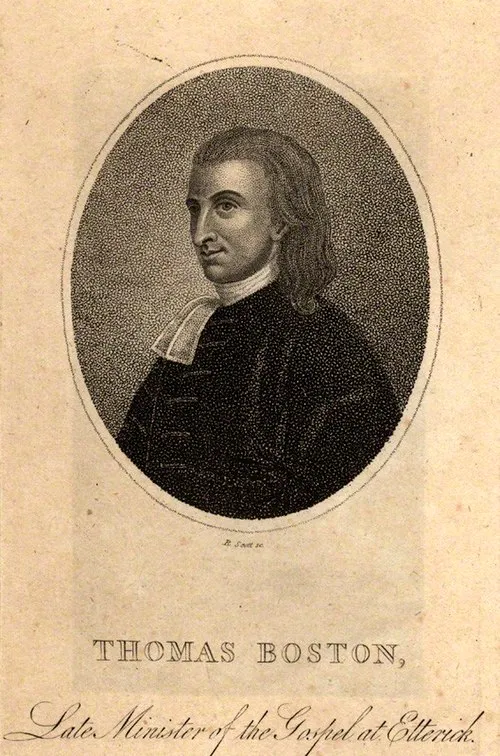
En tercer lugar, queda por averiguar por qué Dios hace una torcedura en la suerte de uno. Y esto ha de aclararse descubriendo el designio de esa dispensación: asunto que a cada uno le importa conocer, y notar con cuidado, para un aprovechamiento cristiano de la torcedura en su suerte. El designio de ella parece ser, principalmente, séptuplo.
Primero. La prueba del estado de uno: ¿está en estado de gracia, o no? ¿Es un cristiano sincero, o un hipócrita? Aunque toda aflicción prueba, concibo que aquí yace la principal prueba providencial a la que es llevado un hombre respecto de su estado; por cuanto la torcedura en la suerte, siendo cosa de curso continuado, da a uno ocasión de abrirse y mostrarse una y otra vez en lo mismo; de donde resulta que suministra base para una decisión en ese punto tan trascendental. Fue claramente sobre este fundamento que se puso la prueba del estado de Job. La pregunta era si Job era un siervo recto y sincero de Dios, como Dios mismo testificó de él, o solo uno mercenario, un hipócrita, como Satanás alegaba contra él. Y la prueba de esto se puso sobre la torcedura que había de hacerse en su suerte, Job 1:8–12 y 2:3–6. Por consiguiente, aquello a lo que apuntaban todos sus amigos, salvo Eliú, el último que habló, en sus razonamientos con él bajo su prueba, era probar que era un hipócrita; valiéndose así Satanás de estos hombres buenos para lograr su intento. Como Dios probó a Israel en el desierto, para la tierra de Canaán, por una serie de dispensaciones aflictivas, Caleb y Josué, soportándolas con denuedo, fueron declarados aptos para entrar en la tierra prometida, por haber seguido al Señor plenamente; mientras que los demás fueron agotados por ellas, y sus cadáveres cayeron en el desierto; así prueba él a los hombres para el cielo, por la torcedura en su suerte. Si uno puede resistir esa prueba, queda manifiesto que es un santo, un siervo sincero de Dios, como se probó que lo era Job; si no, no es sino un hipócrita: no puede resistir la prueba de la torcedura en su suerte, sino que se va como escoria en el horno de Dios. Un caso melancólico de esto lo tenemos en aquel hombre de honor y de riqueza que, con altas pretensiones de religión, nacidas de un principio de seriedad moral, se dirigió a nuestro Salvador para saber «¿qué haré para poseer la vida eterna?». Marcos 10:17–22. Nuestro Salvador, para descubrir al hombre a sí mismo, hace una torcedura en su suerte, donde hasta entonces había estado siempre derecha, obligándolo, por un mandato probatorio, a vender y a dar todo lo que tenía, y a seguirlo, versículo 21: «vende todo lo que tienes, y da á los pobres, y ven, sígueme, tomando tu cruz.» Por este medio quedó, en aquel momento, en el tribunal de la conciencia, despojado de sus grandes posesiones; de modo que de ahí en adelante ya no podía retenerlas con buena conciencia, como habría podido hacerlo antes. El hombre sintió al instante el escozor de esta torcedura hecha en su suerte: «entristecido por esta palabra», versículo 22; esto es, inmediatamente al oírla, herido de dolor, desorden y confusión de la mente, se le mudó el semblante, se puso nublado y encapotado, como se usa la misma palabra en Mateo 16:3. No pudo resistir la prueba de aquella torcedura; de ningún modo podía someter su suerte a Dios en ese punto, sino que le era forzoso tenerla, a toda costa, conforme a su propio parecer. Así, «se fué triste, porque tenía muchas posesiones». Se fue de Cristo de vuelta a su abundante hacienda y, aunque con el corazón adolorido y afligido, volvió a sentarse sobre ella, poseedor violento delante del Señor, contrariando el mandato divino. Y no aparece que este mandato haya sido jamás revocado, ni que él haya llegado jamás a un mejor temple respecto de ella.
En segundo lugar, excitación al deber, destetando a uno de este mundo e impulsándolo a buscar la felicidad del otro mundo. Muchos han quedado en deuda con la torcedura en su suerte por haber llegado alguna vez a volver en sí, asentarse y volverse serios. Andando por un tiempo como asna montés acostumbrada al desierto, desdeñando ser desviados, a su debido tiempo se les deslizó el pie; y, haciéndose así una torcedura en su suerte, les ha llegado su mes, en el cual han sido cogidos. Jeremías 2:24. Así el pródigo fue traído a sí mismo, y obligado a abrigar pensamientos de volver a su padre. Lucas 15:17. La torcedura en su suerte los convence al fin de que aquí no está su descanso. Hallando todavía una espina punzante de desasosiego siempre que recuestan la cabeza donde quisieran tomar descanso en la criatura, y que se ven obligados a levantarla otra vez, son llevados a concluir que no hay esperanza por ese lado, y empiezan a buscar descanso por otro camino; así les da asuntos que tratar con Dios, que antes no tenían; por cuanto sienten necesidad de los consuelos del otro mundo, para los cuales su paladar había perdido el gusto, mientras su suerte estaba derecha conforme a su deseo. Por lo cual, cualquiera que sea el uso que hagamos de la torcedura en nuestra suerte, la voz de ella es: «Levantaos, y andad, que no es ésta la holganza». Y es sin duda el medio que, de todos los de mortificación de la clase aflictiva, más hace morir a un verdadero cristiano para esta vida y este mundo.
En tercer lugar, convicción de pecado. Como cuando uno que camina descuidadamente es atacado de pronto de una cojera: el seguir cojeando el resto del camino lo convence de haber dado un paso en falso, y cada nuevo paso doloroso se lo trae de nuevo a la mente; así Dios hace una torcedura en la suerte de uno, para convencerlo de algún paso en falso que ha dado, o de algún camino que ha tomado. Lo que el pecador, de otro modo, sería propenso a pasar por alto, olvidar o tener en poco, es por este medio traído de nuevo a la memoria, puesto delante de él como cosa mala y amarga, y guardado en el recuerdo, para que su corazón sangre por ello de nuevo de cuando en cuando. Así, por la torcedura, el pecado de los hombres los alcanza para convicción de ellos, «como se avergüenza el ladrón cuando es tomado». Números 32:23. Jeremías 2:26. Lo cual los hermanos de José expresan con sentimiento, bajo la torcedura hecha en su suerte en Egipto, Génesis 42:21: «Verdaderamente hemos pecado contra nuestro hermano»; Génesis 44:16: «Dios ha hallado la maldad de tus siervos». La torcedura en la suerte suele, en su naturaleza o en sus circunstancias, referirse tan naturalmente al paso en falso o al camino, que sirve de memorial providencial de él, trayendo el pecado, aunque de fecha antigua, fresco a la memoria, y de distintivo de la locura del pecador, de palabra o de obra, para tenerlo siempre delante de él. Cuando Jacob halló que, por el trato injusto de Labán, le habían endosado a Lea por Raquel, ¿cómo podía dejar de tener un recuerdo punzante del engaño que, por lo menos siete años antes, le había hecho a su propio padre, fingiéndose ser Esaú? Génesis 27:19. ¿Cómo podía dejar de escocerle de vez en cuando después, durante el curso del matrimonio?
Había impuesto a su padre al hermano menor por el mayor; y Labán le impuso la hermana mayor por la menor. La oscuridad de los ojos de Isaac favoreció el primer engaño; y la oscuridad de la tarde favoreció otro tanto el segundo. Así le fue forzoso decir, como Adoni-bezec en otro caso, Jueces 1:7: «como yo hice, así me ha pagado Dios». De igual manera, Raquel, muriendo de parto, difícilmente podía evitar una reflexión melancólica sobre su expresión precipitada y apasionada, mencionada en Génesis 30:1: «Dame hijos, ó si no, me muero». Aun el santo Job leyó, en la torcedura de su suerte, algunos pasos en falso que había dado en su juventud, muchos años antes. Job 13:26: «escribes contra mí amarguras, y me haces cargo de los pecados de mi mocedad».
En cuarto lugar, corrección, o castigo por el pecado. En nada más que en la torcedura de la suerte se verifica aquella palabra, Jeremías 2:19: «Tu maldad te castigará, y tu apartamiento te condenará». Dios puede, por un tiempo, pasar por alto el pecado de uno, sobre el cual después pondrá una marca de su indignación, al torcer la suerte del pecador, como lo hizo en el caso de Jacob y de Raquel, ya mencionados. Aunque el pecado fue una acción pasajera, o un camino de no larga duración, la marca del desagrado divino por él, puesta sobre el pecador en la torcedura de su suerte, puede dolerle largo tiempo y con dureza, para que por experiencia repetida conozca cuán mala y amarga cosa fue. El dar muerte David a Urías con la espada de los amonitas pronto pasó; pero por esa causa «no se apartará jamás de tu casa la espada». 2 Samuel 12:10. Giezi obtuvo pronto dos bolsas de dinero de Naamán, por vía de falsedad y mentira; pero, como marca duradera de la indignación divina contra la treta profana, recibió con ello una lepra que se le pegó mientras vivió, y a su posteridad después de él. 2 Reyes 5:27. Este puede ser el caso, tanto donde el pecado es perdonado en cuanto a la culpa de la ira eterna, como donde no lo es. Y uno puede haber confesado aquel pecado y haberse arrepentido de él con sinceridad, el cual, sin embargo, lo hará cojear hasta el sepulcro, aunque no puede llevarlo al infierno. La persona de un hombre puede ser aceptada en el Amado, y tener, con todo, un distintivo particular del desagrado divino, con su pecado colgado de él en la torcedura de su suerte. Salmo 99:8: «tú les fuiste un Dios perdonador, y vengador de sus obras».
En quinto lugar, prevención del pecado. Oseas 2:6: «yo cerco tu camino con espinas, y la cercaré con seto, y no hallará sus caminos». La torcedura en la suerte se hallará fácilmente atravesada a alguna inclinación torcida del corazón, que de modo particular domina a la persona; así, es como un seto de espinas o un muro en el camino al cual esa inclinación lo inclina. Los objetos contaminantes del mundo prenden y resultan seductores de un modo especial, según se ajustan al temple particular de los hombres; pero, por medio de la torcedura en la suerte, se gasta la pintura y el barniz del objeto contaminante, con lo cual pierde su anterior apariencia atrayente. Así se embota el filo de los afectos corruptos, se debilita la tentación y se previene mucho pecado; el pecador, después de «discurrir tanto para mudar su camino, volviendo avergonzado». Jeremías 2:36, 37. Así el Señor tuerce la suerte de uno para «quitar al hombre de [su] obra, y apartar del varón la soberbia»; y así «detendrá su alma de corrupción». Job 33:17, 18. Cada uno sabe lo que le es más agradable; pero solo Dios sabe lo que es más provechoso. Como todos los hombres son mentirosos, así también todos los hombres son necios: Él es el único Dios sabio. Judas 25. Muchos están en deuda con la torcedura en su suerte, de no ir a aquellos excesos a los cuales su mente vana y sus afectos corruptos los llevarían a toda vela; y bendecirían a Dios de corazón por haberla hecho, si tan solo consideraran con calma cuál sería, con toda probabilidad, el desenlace de quitarla. Cuando uno está en peligro de irritarse bajo la dureza de llevar la torcedura, haría bien en considerar en qué condición se halla todavía para soportar de manera cristiana que se la quite. En sexto lugar, descubrimiento de la corrupción latente, sea en santos o en pecadores. Hay algunas corrupciones en el corazón de todo hombre que yacen, por así decirlo, tan cerca de la superficie, que están prontas a levantarse a cada paso; pero hay también otras que yacen tan hondas, que apenas se observan en absoluto. Mas como el fuego debajo de la olla hace que la espuma suba, aparezca encima y se derrame, así la torcedura en la suerte levanta desde el fondo, y saca, tal corrupción que de otro modo uno apenas podría imaginar que estuviera dentro. ¿Quién habría sospechado tanta fuerza de pasión en el manso Moisés, como la que descubrió en las aguas de la contienda, y por la cual se le impidió entrar en Canaán? Salmo 106:32, 33.
Números 20:13. ¿Tanta amargura de espíritu en el paciente Job, como para acusar a Dios de volverse cruel con él? Job 30:21. ¿Tanta mala índole en el buen Jeremías, como para maldecir no solo el día de su nacimiento, sino aun al hombre que llevó a su padre la nueva de ese nacimiento? Jeremías 20:14, 15. ¿O tal dejo de ateísmo en Asaf, como para declarar que la religión es cosa vana? Salmo 73:13. Pero la torcedura en la suerte, al sacar estas cosas, mostró que habían estado dentro, por mucho tiempo que hubieran permanecido ocultas sin ser notadas. Y como este designio, por muy indecentemente que los escarnecedores orgullosos se permitan tratarlo, no es de ningún modo incompatible con las perfecciones divinas, así el descubrimiento mismo es necesario para la debida humillación de los pecadores, y para manchar la soberbia de toda gloria, a fin de que los hombres se conozcan a sí mismos. Ambas cosas aparecen en que fue con este mismo designio que Dios hizo la larga torcedura continuada en la suerte de Israel en el desierto: precisamente para humillarlos y probarlos, para saber lo que había en su corazón. Deuteronomio 8:2.
En séptimo lugar, el ejercicio de la gracia en los hijos de Dios. Los creyentes, por los restos de la corrupción que mora en ellos, están expuestos a accesos de pereza e inactividad espiritual, en los cuales sus gracias yacen dormidas por el momento. Además, hay algunas gracias que por su propia naturaleza no son sino ocasionales en su ejercicio, por ejercerse solo con ocasión de ciertas cosas con las cuales tienen una relación necesaria: tales como la paciencia y la longanimidad. Ahora bien, la torcedura en la suerte sirve para despertar al cristiano al ejercicio de las gracias avasalladas por la corrupción, y a la vez para llamar a la acción a las gracias ocasionales, suministrándoles ocasiones propias. Lo cierto es que la torcedura en la suerte es la gran máquina de la Providencia para hacer que los hombres aparezcan en sus verdaderos colores, descubriendo tanto su mal como su bien; y si la gracia de Dios está en ellos, la sacará y hará que se despliegue. De tal modo pone al cristiano a valerse de todos sus recursos, que, aunque por un tiempo lo hace tambalear, al cabo evidenciará tanto la realidad como la fuerza de la gracia en él. «Estáis afligidos en diversas tentaciones, para que la prueba de vuestra fe, mucho más preciosa que el oro, el cual perece, sea hallada en alabanza». 1 Pedro 1:6, 7. La torcedura en la suerte da lugar a muchos actos de fe, esperanza, amor, abnegación, resignación y otras gracias; a muchas aspiraciones, anhelos y gemidos celestiales, que de otro modo no serían dados a luz. Y no dudo que estas cosas, aunque despreciadas por los hombres carnales como nimiedades, son más preciosas a los ojos de Dios de lo que aun los creyentes mismos alcanzan a saber, por ser actos de culto interno inmediato; y de ellas, y de la suma de ellas, se tomará nota de un modo sorprendente a la larga, aunque las personas mismas a menudo apenas pueden considerarlas dignas de su propia atención. El actuar firme de un gallardo ejército de caballería e infantería hasta poner en fuga al enemigo es tenido en alto precio; pero el actuar del santo temor y de la humilde esperanza es en realidad mucho más valioso, por serlo a los ojos de Dios, cuyo juicio, estamos seguros, es según la verdad. Esto lo enseña el salmista. Salmo 147:10, 11: «No toma contentamiento en la fortaleza del caballo, ni se complace en las piernas del hombre. Complácese Jehová en los que le temen, y en los que esperan en su misericordia». Y en verdad el ejercicio de las gracias de su Espíritu en su pueblo es tan precioso a sus ojos, que, cualquiera que sea la gracia en que alguno de ellos sobresalga, fácilmente se le hará en su suerte tal torcedura que será una prueba especial de ella, y que pondrá a prueba toda su fuerza. Abraham sobresalió en la gracia de la fe, en confiar en la mera palabra de la promesa de Dios por encima de los dictados del sentido; y Dios, al darle la promesa de que haría de él una gran nación, hizo juntamente una torcedura en su suerte, con la cual tuvo harto que hacer con toda la fuerza de su fe, mientras se veía obligado a dejar su tierra y su parentela, y a peregrinar entre los cananeos, permaneciendo estéril su mujer hasta pasada la edad de dar a luz; y cuando al fin ella hubo dado a luz a Isaac, y este hubo crecido, fue Abraham llamado a ofrecerlo en holocausto, tanto más exquisita prueba de su fe por cuanto Ismael había sido ya expulsado de su familia, y por cuanto estaba declarado que solo «en Isaac te será llamada descendencia». Génesis 21:12. «Y aquel varón Moisés era muy manso, más que todos los hombres que había sobre la tierra». Números 12:3. Y se le encomendó la conducción de un pueblo sumamente perverso e ingobernable, la torcedura en su suerte claramente destinada al ejercicio de su mansedumbre. Job sobresalió en la paciencia, y por la torcedura en su suerte tuvo otro tanto que hacer con ella. Porque Dios no da a ninguno de los suyos sobresalir en un don, sin que tarde o temprano le proporcione uso para todo el alcance de ese don.
Ver el original (inglés)
Original en inglés
Thirdly, It remains to inquire, why God makes a crook in one’s lot? And this is to be cleared by discovering the design of that dispensation: a matter which it concerns every one to know, and carefully to notice, in order to a Christian improvement of the crook in their lot. The design thereof seems to be, chiefly, sevenfold.
First. The trial of one’s state, whether one is in the state of grace or not? Whether a sincere Christian, or a hypocrite? Though every affliction is trying, yet here I conceive lies the main providential trial a man is brought into, with reference to his state; forasmuch as the crook in the lot, being a matter of continued course, one has occasion to open and show himself again and again in the same thing; whence it comes to pass, that it ministers ground for a decision, m that momentous point. It was pkinly on this foundation that the trial of Job’s state was put. The question was, whether Job was an upright and sincere servant of God, as God himself testified of him; or but a mercenary one, a hypocrite, as Satan alleged against him? And the trial hereof was put upon the crook to be made in his lot, Job i. 8 — 12. and ii. 3 — 6. Accordingly, that which all his friends, save Elihu, the last speaker, did. in their reasonings with him under his trial, aim at, was to prove him a hypocrite; Satan thus making use of these good men for gaining his point. As God made trial of Israel in the wilderness, for the land of Canaan, by a train ol afflicting dispensations, which Caleb and Joshua bearing strenuously, were declared meet to enter the promised land, as having followed the Lord fully; while others being tired out with them, their carcasses fell in the wilderness; so he makes tria of men for heaven, by the crook in their lot. If one can stand that test, he is manifested to be a saint, a sincere servant of God, as Job was proved to be; if not, he is but a hypocrite; he cannot stand the test of the crook in his lot, but goes away like dross in God’s furnace. A melancholy instance of which we have in that man of honour and wealth, who, with high pretences of religion, arising from a principle of moral seriousness, addressed himself to our Saviour, to know ” what he should do that he might inherit eternal life.” Mark X. 17 — 22. Our Saviour, to discover the man to himself, makes a crook in his lot, where all along before it had stood even, obliging him, by a probatory command, to sell and give away all that he had, and follow him, ver. 21. “Sell whatsoever thou hast, and give to the poor, and come take up the cross and follow me.” Hereby he was, that moment, in the court of conscience, stript of his great possessions; so that thenceforth he could no longer keep them, with a good conscience, as he might have done before. The man instantly felt the smart of this crook made in his lot; ” he was sad at that saying,” ver. 22. that is, immediately upon the hearing of it, being struck with pain, disorder, and confusion of mind, his countenance changed, became cloudy and lowering, as the same word is used. Matth. xvi. 3. He could not stand the test of that crook; he could by no means submit his lot to God in that point, but behooved to have it, at any rate, according to his own mind. So he ” went away grieved, for he had great possessions.” He went away from Christ back to his plentiful estate, and though with a pained and sorrowful heart, sat him down again on it a violent possessor before the Lord, thwarting the divine order. And there is no appearance that ever this order was revoked, or that ever he came to a better temper in reference thereunto.
Secondly, excitation to duty, weaning one from this world, and prompting him to look after the happiness of the other world. Many have been beholden to the crook in their lot, for that ever they came to themselves, settled, and turned Serious. Going for a time like a wild ass used to the wilderness, scorning to be turned, their foot hath slid in due time; and a crook being thereby made in their lot, their mouth hath come wherein they have been caught. Jer. ii. 24. Thus was the prodigal brought to himself, and obliged to eitertain thoughts of returning unto his father. Luke xv. 17. The crook in their lot convinces them at length that here is not their rest. Finding still a pricking thorn of uneasiness, whensoever they lay down their head where they would fain take rest in the creature, and that they are obliged to lift it again, they are brought to conclude, there is no hope from that quarter, and begin to cast about for rest another way, so it makes them errands to God, which they had not before; forasmuch as they feel a need of the comforts of the other world, to which their mouths were out of taste, while their lot stood even to their mind. Wherefore, whatever use we make of the crook in our lot, the voice of it is, ” Arise ye and depart, this is not your rest.” And it is surely that, which of all means of mortification, of the afflictive kind, doth most deaden a real Chrisdan to this life and world.
Thirdly, Conviction of sin. As when one walking heedlessly is suddenly taken ill of a lameness: his going halting the rest of his way convinces him of having made a wrong step; and every new painful step hrings it afresh to his mind: so God makes a crook in one’s lot, to convince him of some false step he hath made, or course he hath taken. What the sinner would otherwise be apt to overlook, forget, or think light of, is by this means recalled to mind, set before him as an evil and bitter thing, and kept in remembrance, that his heart may every now and then bleed for it afresh. Thus, by the crook, men’s sin finds them out to their conviction, ” as the thief is ashamed when he is found.” Numb. xxxii. 23. Jer. ii. 26. The which Joseph’s brethren do feelingly express, under the crook made in their lot in Egypt, Gen. xlii. 11. ” We are verily guilty concerning our brother,” chap. xliv. 16. ” God hath found out the iniquity of thy servants.” The crook in the lot doth usually, in its nature or circumstances, so naturally refer to the false step or course, that it serves for a providential memorial of it, bringing the sin, though of an old date, fresh to remembrance, and for a badge of the sinner’s foll}, in word or deed, to keep it ever before him. When Jacob found Leah, through Laban’s unfair dealing, palmed upon him for Rachel, how could he miss of a stingfinremembrance of the cheat he had, seven years at least before, put on his own father, pretending himself to be Esau? Gen. xxvii» 19. How could it miss of galling him occasionally afterwards during the course of the marriage ”?
He had imposed on his father the younger brother for the elder; and Laban imposed on him the elder sister for the younger. The dimness of Isaac’s eyes favoured the former cheat; and the darkness of the evening did as much favour the latter. So he behooved to say, as Adoni-bezek in another case. Judges i. 7. ” As I have done, so God hath requited me.” In like manner, Rachel dying in childbirth, could hardly avoid a melancholy reflection on her rash and passionate expression, mentioned Gen. XXX. 1. ” Give me children, or else I die.” Even holy Job read, in the crook of his lot, some false steps he had made in his youth, many years before. Job xiii. 26. ” Thou writest bitter things against me, and makest me to possess the iniquities of my youth.”
Fourthly, Correction, or punishment for sin. In nothing more than in the crook of the lot, is that word verified, Jer. ii. 19. ” Thine own wickedness shall correct thee, and thy backslidings shall reprove thee.” God may, for a time, wink at one’s sin, which afterward he will set a brand of his indignation upon, in crooking the sinner’s lot, as he did in the case of Jacob, and of Rachel, mentioned before. Though the sin was a passing action, or a course of no long continuance, the mark of th© divine displeasure for it, set on the sinner in thecrook of his lot, may pain him long and sore, that by repeated experience he may know what an evil and bitter thing it was. David’s killing Uriah by the sword of the Ammonites was soon over; but for that cause ” the sword never departed from his house/’ 2 Sam. xii. 10. Gehazi quickly obtained two bags of money from Naaman, in the way of falsehood and lying; but as a lasting mark of the divine indignation against the profane trick, he got withal a leprosy which clave to him while he lived, and to his posterity after him. 2 Kings, v. 27. This may be the case, as well where the sin is pardoned, as to the guilt of eternal wrath, as where it is not. And one may have confessed and sincerely repented of that sin, which yet shall make him go halting to the grave, though it cannot carry him to hell. A man’s person may be accepted in the Beloved, who yet hath a particular badge of the divine displeasure, with his sin hung upon him in the crook of his lot. Psal. xcix. 8. ” Thou wast a God that forgavest them, though thou tookest vengeance oq their inventions.”
Fifthly, Preventing of sin. Hos. ii. 6. ” I will hedge up thy way with thorns, and make a wall that she shall not find her paths.” The crook in the lot will readily be found to lie cross to some wrong bias of the heart, which peculiarly sways with the party: so it is like a thorn-hedge or wall in the way which that bias inclines him to. The defiling objects in the world do specially take and prove ensnaring, as they are suited to the particular cast of temper in men: but by means of the crook in the lot, the paint and varnish is worn off the defiling object, whereby it loses its former taking appearance: thus, the edge of corrupt affections is blunted, temptation weakened, and much sin prevented; the sinner after ” gadding about so much to change his way, returning ashamed.” Jer ii. 36, 37. Thus the Lord crooks one’s lot that ” he may withdraw man from his purpose, and hide pride from men:” and so ” he keepeth back his soul from the pit.” Job xxxiii. 17, 18. Every one knows what is most pleasant to him; but God alone knows what is most profitable. As all men are liars, so all men are fools too: He is the only wise God. Jude, ver. 25. Many are obliged to the crook in their lot, that they go not to those excesses, which their vain minds and corrupt affections would Mdth full sail carry them to; and they would from their hearts bless God for making it, if they did but calmly consider what would most likely be the issue of the removal thereof. When one is in hazard of fretting under the hardship of bearing the crook, he would do well to consider what condition he is as yet in to bear its removal in a Christian manner. Sixthly, Discovery of latent corruption, whether in saints or sinners. There are some corruptions in every man’s heart, which lie, as it were, so near the surface, that they are ready on every turn to rise up; but then there are others also which lie so very deep, that they are scarcely observed a* all. But as the fire under the pot makes the scum to rise up appear a-top, and run over; so the crook in the lot raises up from the bottom, and brings out, such corruption as otherwise one could hardly imagine to be within. Who would have suspected such strength of passion in the meek Moses as he discovered at the waters of strife, and for which he was kept out of Canaan? Psal. cvi. 32, 33.
Num. XX. 13. So much bitterness of spirit in the patient Job, as to charge God with becoming cruel to him? Job XXX. 21. So much ill-nature in the good Jeremiah, as to curse not only the day of his birth, but even the man who brought tidings of it to his father? Jer. xx. 14, 15. Or, such a tang of atheism in Asaph, as to pronounce religion a vain thing? Psalm lxxiii. 13. But the crook in the lot, bringing out these things, showed them to have been within, how long soever they had lurked unobserved. And as this design, however indecently proud scoffers allow themselves to treat it, is in no way inconsistent with the divine perfections; so the discovery itself is necessary for the due humiliation of sinners, and to stain the pride of all glory, that men may know themselves. Both which appear, in that it was on this very design that God made the long-continued crook in Israel’s lot in the wilderness; even to humble them and prove them, to know what was in their heart. Deut. viii. 2.
Seventhly, The exercise of grace in the children of God. Believers, through the remains of indwelling corruption, are liable to fits of spiritual laziness and inactivity, ii\ which their graces lie dormant for the time. Besides, there are some graces, which of their own nature are but occasional in their exercise; as being exercised only upon occasion of certain things which they have a necessary relation to: such as patience and longsuffering. Now, the crook in the lot serves to rouse up a Christian to the exercise of the graces, overpowered by corruption, and withal to call forth to action the occasional graces, ministering proper occasions for them. The truth is, the crook in the lot is the great engine of Providence for making men appear in their true colours, discovering both their ill and their good; and if the grace of God be in them, it will bring it out, and cause it to display itself. It so puts the Christian to his shifts, that however it makes him stagger for a while, yet it will at length evidence both the reality and the strength of grace in him. ” Ye are in heaviness through manifold temptations, that the trial of your faith, being much more precious than of gold that perisheth, may be found unto praise.” 1 Pet. i. 6, 7. The crook in the lot gives rise to many acts of faith, hope, love, self-denial, resignation, and other graces; to many heavenly breathings, pantings, and groanings, which otherwise would not be brought forth. And I make no question but these things, however by carnal men despised as trifling, are more precious in the sight of God than even believers themselves are aware of, being acts of immediate internal worship; and will have a surprising notice taken of them, and of the sum of them, at long run, howbeit the persons themselves often can hardly think them worth their own notice at all. The steady acting of a gallant army of horse and foot to the routing of the enemy, is highly prized; but the acting of holy fear and humble hope, is in reality far more valuable, as being so in the sight of God, whose judgment, wo are sure, is according to truth. This the Psalmist teacheth. Psal. cxlvii. 10,11. “He delighteth not in the strength of the horse; he taketh not pleasure in the legs of a man. The Lord taketh pleasure in them that fear him, in those that hope in his mercy.” And indeed the exercise of the graces of his Spirit in his people, is so very precious in his sight, that whatever grace any of them excel in, they will readily get such a crook made in their lot as will be a special trial of it, that will make a proof of its full strength. Abraham excelled in the grace of faith, in trusting God’s bare word of promise above the dictates of sense: and God, giving him a promise, that he would make of him a great nation, made withal a crook in his lot, by which he had enough ado with all the strength of his faith; while he was obliged to leave his country and kindred, and sojourn among the Canaanites; his wife continuing barren, till past the age of child-bearing: and when she had at length brought forth Isaac, and he was grown up, he was called to offer him up for a burnt-offering, the more exquisite trial of his faith, that Ishmael was now expelled his family, and that it was declared. That in Isaac only his seed should be called. Gen. xxi. 12. ” Moses was very meek above all the men which were upon the face of the earth.” Numb, xii. 3. And he was intrusted with the conduct of a most perverse and unmanageable people, the crook in his lot plainly designed for the exercise of his meekness. Job excelled in patience, and by the crook in his lot, he got as much to do with it. For God gives none of his people to excel in a gift, but some time or other he will afford them use for the whole compass of it.
https://sermonesbiblicos.org/biblioteca/la-torcedura-en-la-suerte-04-por-que-la-hace/