Sermones Bíblicos
Cómo Dios hace la torcedura
Thomas Boston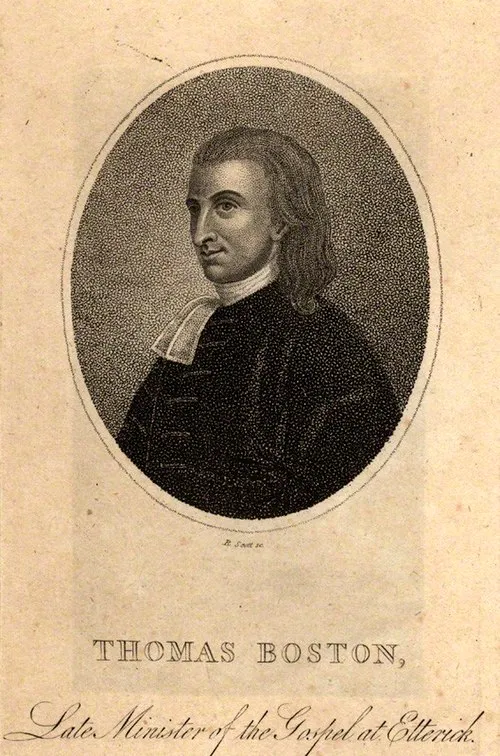
II. Habiendo visto la torcedura misma, pasamos en seguida a considerar la hechura de Dios en ella. Y aquí ha de mostrarse: 1. Que es hechura de Dios. 2. Cómo es hechura suya. 3. Por qué la hace.
Primero: que la torcedura en la suerte, sea cual fuere, es hechura de Dios, se demuestra por estas tres consideraciones.
Primero: no puede ponerse en duda que la torcedura en la suerte, considerada como torcedura, es un mal penal, sea lo que fuere en cuanto a su materia; esto es, ya sea pecaminosa o no la cosa en sí (su causa inmediata y su ocasión), es ciertamente un castigo o una aflicción. Ahora bien, así como puede, en cuanto tal, sernos traída santa y justamente por nuestro Señor Soberano y Juez, así él reclama expresamente el hacerla, Amós 3:6: «¿habrá algún mal en la ciudad, el cual Jehová no haya hecho?» Por lo cual, como no puede haber mal penal sino de hechura de Dios, y la torcedura en la suerte es un mal tal, se concluye necesariamente que es hechura de Dios.
Segundo: es evidente, por la doctrina de la Escritura acerca de la providencia divina, que Dios dispone la suerte de cada hombre, y todas las partes de ella. Él está al timón de los asuntos humanos, y los vuelve hacia donde quiere. «Todo lo que quiso Jehová, ha hecho en los cielos y en la tierra, en las mares y en todos los abismos», Salmo 135:6. No hay cosa alguna que nos acontezca sin su mano soberana. La misma providencia que nos sacó del vientre nos lleva a la condición y al lugar señalados para nosotros, y en ellos nos fija, por aquel que «ha prefijado el orden de los tiempos, y los términos de la habitación de ellos», Hechos 17:26. Ella rige las cosas más pequeñas y más casuales en torno a nosotros, tales como «los cabellos de nuestra cabeza que caen a tierra», Mateo 10:29, 30; «La suerte se echa en el seno», Proverbios 16:33. Sí, también los actos libres de nuestra voluntad, por los cuales elegimos para nosotros mismos, pues aun «como los repartimientos de las aguas, así está el corazón del rey en la mano de Jehová», Proverbios 21:1. Y todos los pasos que damos, y los que otros dan respecto de nosotros; porque «el hombre no es señor de su camino, ni del hombre que camina es ordenar sus pasos», Jeremías 10:23. Y esto, ya sean deliberados y pecaminosos esos pasos que causan la torcedura, como el de los hermanos de José al venderlo a Egipto; ya sean indeliberados, como un homicidio puramente casual, cuando uno, cortando leña, mata a su prójimo, pues «saltó el hierro del cabo», Deuteronomio 19:5. Porque hay una providencia santa y sabia que gobierna las acciones pecaminosas y las irreflexivas de los hombres, como el jinete a un caballo cojo, de cuyo cojear no es él, sino la cojera del caballo, la causa verdadera y propia; por lo cual, en el primero de estos casos, se dice que Dios envió a José a Egipto, Génesis 45:7, y en el segundo, que entregó a uno en mano de su prójimo, Éxodo 21:13.
Por último: Dios, por un decreto eterno, inmóvil como montañas de bronce, Zacarías 6:1, ha señalado el todo de la suerte de cada uno, las partes torcidas de ella tanto como las rectas. Por el mismo decreto eterno por el cual fueron señaladas las partes altas y bajas de la tierra, los montes y los valles, quedan determinadas las alturas y las honduras, la prosperidad y la adversidad, en la suerte de los habitantes de ella; y se realizan, en el tiempo, en perfecta conformidad con aquel.
El misterio de la Providencia, en el gobierno del mundo, es, en todas sus partes, el edificio levantado por Dios, en exacta conformidad con el plano de su decreto, «del que hace todas las cosas según el consejo de su voluntad», Efesios 1:11. De suerte que no hay torcedura en la suerte de nadie que no pueda remontarse a este origen. En esto Job nos da piadosamente un ejemplo en su propio caso, Job 23:13, 14: «Empero si él [se determina] en una cosa, ¿quién lo apartará? Su alma deseó, e hizo. El pues acabará lo que ha determinado de mí: y muchas cosas como estas hay en él.»
Segundo: para que veamos cómo la torcedura en la suerte es hechura de Dios, hemos de distinguir entre torceduras puras y sin pecado, y torceduras impuras y pecaminosas.
Primero: hay torceduras puras y sin pecado, que son meras aflicciones, cruces limpias, penosas en verdad, pero que no contaminan. Tales fueron la pobreza de Lázaro, la esterilidad de Raquel, los ojos tiernos de Lea y la ceguera del hombre que lo era desde su nacimiento, Juan 9:1. Ahora bien, las torceduras de esta clase son hechura de Dios, por la eficacia de su poder, que las produce directamente y hace que existan. Él es el hacedor del pobre, Proverbios 17:5: «El que escarnece al pobre, afrenta a su Hacedor»; esto es, afrenta a Dios, que lo hizo pobre, conforme a aquello, 1 Samuel 2:7: «Jehová empobrece». Él es quien tiene la llave de la matriz y, según lo tiene por conveniente, la cierra, 1 Samuel 1:5, o la abre, Génesis 29:31. Y es «el que formó el ojo», Salmo 94:9. Y el hombre había nacido ciego, «para que las obras de Dios se manifiesten en él», Juan 9:3. Por eso dice a Moisés, Éxodo 4:11: «¿quién hizo al mudo y al sordo, al que ve y al ciego? ¿no soy yo Jehová?» Tales torceduras en la suerte son hechura de Dios en el sentido más amplio y en toda su comprensión, por ser efectos directos de su acción, lo mismo que los cielos y la tierra. Segundo: hay torceduras impuras y pecaminosas, que, en su propia naturaleza, son pecados tanto como aflicciones, contaminantes tanto como penosas. Tal fue la torcedura hecha en la suerte de David por los desórdenes de su familia: la deshonra de Tamar, el asesinato de Amnón, la rebelión de Absalón, todos ellos contra naturaleza. De la misma clase fue la hecha en la suerte de Job por los sabeos y los caldeos, al quitarle la hacienda y matar a sus siervos. Así como estas fueron, respectivamente, las aflicciones de David y de Job, así fueron los pecados de quienes las ejecutaron, los desdichados instrumentos de ellas. Así, una misma cosa puede ser, para uno, un pecado atroz, que lo contamina y lo deja bajo culpa, y, para otro, una aflicción, que lo deja solamente bajo padecimiento. Ahora bien, las torceduras de esta clase no son hechura de Dios en la misma amplitud que las de la clase anterior; porque él ni pone el mal en el corazón de nadie, ni lo incita a ello: «Dios no puede ser tentado de los malos, ni él tienta a alguno», Santiago 1:13. Pero son hechura suya por su santo permiso de ellas, por el poderoso ponerles coto y por el sabio encauzarlas hacia algún buen fin.
1.º Las permite santamente, dejando a los hombres «andar en sus caminos», Hechos 14:16. Aunque no es el autor de esas torceduras pecaminosas, haciéndolas existir por la eficacia de su poder, con todo, si no las permitiera, queriendo no impedirlas, no podrían existir en absoluto; porque «cierra y ninguno abre», Apocalipsis 3:7. Pero retiene justamente su gracia, que el pecador no desea; quita la restricción bajo la cual este está inquieto y, puesto que el pecador quiere marcharse, le deja las riendas sobre el cuello y lo deja al vaivén de su concupiscencia. Oseas 4:17: «Ephraim es dado a ídolos; déjalo.» Salmo 81:11, 12: «Israel no me quiso a mí. Dejélos por tanto a la dureza de su corazón.» En esta desdichada situación, la torcedura pecaminosa se sigue, por el movimiento propio del pecador, natural e infaliblemente, así como el agua corre cuesta abajo dondequiera que queda abierta una brecha delante de ella. Así, en estas circunstancias, «caminaron en sus consejos», versículo 12. Y así esta clase de torcedura es hechura de Dios, como juez justo que castiga por medio de ella al que la padece. Esta consideración del asunto redujo al silencio a David bajo las maldiciones de Simei, 2 Samuel 16:10, 11: «Dejadle que maldiga, que Jehová se lo ha dicho.»
2.º Les pone coto con poder, Salmo 76:10: «el resto de las iras» (esto es, la ira de la criatura) «tú reprimirás». Si Dios no pusiera coto a estas torceduras, por dolorosas que sean en el caso de cualquiera, serían aún más dolorosas. Pero le dice al instrumento pecador, como le dijo al mar: «Hasta aquí vendrás, y no pasarás adelante, y ahí parará la hinchazón de tus ondas.» Pone sobre él una mano que lo refrena, de modo que no puede dar un paso más, en el camino por donde lo arrastra su concupiscencia impetuosa, más allá de lo que él tiene por conveniente permitir. De aquí resulta que la torcedura de esta clase no es ni mayor ni menor, sino exactamente tan grande como él, por su poderoso ponerle coto, la hace ser. Un ejemplo eminente de esto lo tenemos en el caso de Job, cuya suerte fue torcida por un obrar peculiar del diablo; pero aun a aquel gran pecador Dios le puso un límite en el caso: «Y dijo Jehová a Satán: He aquí, todo lo que tiene está en tu mano: solamente no pongas tu mano sobre él», Job 1:12. Ahora bien, Satán llegó hasta el extremo del límite, sin dejar intacto nada dentro de su ámbito que vio que podía servir a su designio, versículos 18 y 19. Pero de ningún modo pudo dar un solo paso más allá de él, para lograr su intento, que no pudo conseguir dentro de él.
Y por tanto, para hacer mayor la prueba y más dolorosa la torcedura, no quedaba sino que se quitara el límite puesto y se ensanchara la esfera de su acción; por lo cual dice: «toca a su hueso y a su carne, y verás si no te blasfema en tu rostro», capítulo 2:5; y, quitado aquel en consecuencia, pero puesto a la vez uno nuevo, versículo 6: «He aquí, él está en tu mano; mas guarda su vida», la torcedura fue llevada hasta el extremo que el nuevo límite permitía, en conformidad con su designio de llevar a Job a blasfemar: «hirió a Job de una maligna sarna desde la planta de su pie hasta la mollera de su cabeza», versículo 7. Y de no haber sido por este límite, que aseguraba la vida de Job, él, tras hallar también infructuoso este intento, sin duda lo habría matado de una vez.
3.º Las encauza sabiamente hacia algún buen propósito, digno de las perfecciones divinas. Mientras el instrumento pecador tiene un designio malo en la torcedura causada por él, Dios la dirige a un fin santo y bueno. En los desórdenes de la familia de David, el designio de Amnón era satisfacer una lujuria bestial; el de Absalón, hartarse de venganza y satisfacer su orgullo y su ambición; pero Dios se proponía con ello castigar a David por su pecado en el asunto de Urías. En la torcedura hecha en la suerte de Job por Satán y por los sabeos y los caldeos, instrumentos suyos, el designio de Satán era hacer que Job blasfemara, y el de ellos, satisfacer su avaricia; pero Dios tenía en ello otro designio, digno de sí mismo, a saber, manifestar la sinceridad y la rectitud de Job. Si él no encauzara sabia y poderosamente estas torceduras hechas en la suerte de los hombres, ningún bien podría salir de ellas; pero siempre las encauza de modo que cumple por ellas sus propios propósitos santos (aunque el pecador no lo pretende así); porque sus designios no pueden malograrse: «Mi consejo permanecerá», Isaías 46:10. Así la torcedura pecaminosa, por la mano soberana de Dios, es vuelta hacia su propia gloria y el bien de su pueblo al final, conforme a la palabra, Proverbios 16:4: «Todas las cosas ha hecho Jehová por sí mismo.» Romanos 8:28: «a los que a Dios aman, todas las cosas les ayudan a bien.» Así el complot de Amán para la destrucción de los judíos «fue lo contrario», Ester 9:1. Y la torcedura hecha en la suerte de José, al venderlo sus propios hermanos a Egipto, aunque de parte de ellos fue de lo más pecaminosa y de un designio de lo más pernicioso, con todo, por ser hechura de Dios, mediante su santo permiso, su poderoso ponerle coto y el sabio encauzarla, tuvo un desenlace muy digno de la sabiduría y de la bondad divinas; y ambas se las hace notar José, Génesis 50:20: «Vosotros pensasteis mal sobre mí, mas Dios lo encaminó a bien, para hacer lo que vemos hoy, para mantener en vida a mucho pueblo.»
Ver el original (inglés)
Original en inglés
II. Having seen the crook itself, we are in the next place, to consider of God’s making it. And here is to be shown, 1. That it is of God’s making. 2. How it is of his making. 3. Why he makes it.
First, That the crook in the lot, whatever it is, is of God’s making appears from these three considerations.
First, It cannot be questioned, but the crook in the lot, considered as a crook, is a penal evil, whatever it is for the matter thereof; that is, whether the thing in itself, its immediate cause and occasion, be sinful or not, it is certainly a punishment or affliction. Now, as it may be, as such, holily and justly brought on us, by our Sovereign Lord and Judge, so he expressly claims the doing or making of it, Amos iii. 6. ” Shall there be evil in a city, and the Lord hath not done it?” Wherefore, since there can be no penal evil, but of God’s making, and the crook in the lot is such an evil, it is necessarily concluded to be of God’s makin g.
Secondly, It is evident, from the scripture doctrine of divine providence, that God brings about every man’s lot, and all the parts thereof. He sits at the helm of human affairs, and turns them about whithersoever he listeth. ” Whatsoever the Lord please, that did he in heaven and in earth, in the seas and all deep places,” Psal. cxxxv. 6. There is not any thing whatsoever befalls us, without his overruling hand. The same providence that brought us out of the womb, bringeth us to, and fixeth us in, the condition and place allotted for us, by him who ” hath determined the times, and the bounds of our habitation.” Acts xvii. 26. It overrules the smallest and most casual things about us, such as ” hairs of our head falling on the ground,” Matt. x. 29, 30. ” A lot cast into the lap.” Prov. xvi. 33. Yea, the free acts of our will, whereby we choose for ourselves, for even ” the king’s heart is in the hand of the Lord, as the rivers of water.” Prov. xxi. I. And the whole steps we make, and which others make in reference to us; for ” the way of man is not in himself; it is no); in man that walketh to direct his steps.” Jer. x. 23. And this, whether these steps causing the crook be deliberate and sinful ones, such as Joseph’s brethren selling him into Egypt; or whether they be undesigned, such as manslaughter purely casual, as when one having wood, kills his neighbour with ” the head of the axe slipping from the helve.” Deut. xix. 5. For there is a holy and wise providence that governs the sinful and the heedless actions of men, as a rider doth a lame horse, of whose halting, not he, but the horse’s lameness, is the true and proper cause; wherefore in the fcirmer of these cases, God is said to have sent Joseph into Egypt, Gen. xlv. 7, and in the latter, to deliver one into his neighbour’s hand, Exod. xxi. 13.
Lastly, God hath, by an eternal decree, immoveable as mountains of brass, Zech. vi. 1, appointed the whole of every one’s lot, the crooked parts thereof, as well as the straight. By the same eternal decree, whereby the high and low parts of the earth, the mountains and the valleys, were appointed, are the heights and the depths, the prosperity and adversity, in the lot of the inhabitants thereof determined; and they are brought about, in time, in a perfect agreeableness thereto.
The mystery of Providence, in the government of the world, is, in all the parts thereof, the building reared up of God, in exact conformity to the plan in his decree, ” who worketh all things after the counsel of his own will.” Eph. i. 11. So that there is never a crook in one’s lot, but may be run up to this original. Hereof Job piously sets us an example in his own case. Job xxiii. 13, 14. ” He is of one mind, and who can turn him?” and what his soul desireth, even that he doth. For he performeth the thing that is appointed for me; and many such things are with him.”
Secondly, That we may see how the crook in the lot is of God’s making, we must distinguish between pure sinless crooks, and impure sinful ones.
First, There are pure and sinless crooks; which are mere afflictions, cleanly crosses, grievous in deed, but not defiling. Such was Lazarus’s poverty, Rachel’s barrenness, Leah’s tender eyes, the blindness of the man who had been so from his birth, John ix. 1. Now, the crooks of this kind are of God’s making, by the efficacy of his power directly bringing them to pass, and causing them to be. He is the maker of the poor, Prov. xvii. 5. ” Whoso mocketh the poor, reproacheth his Maker;” that is, reproacheth God who made him poor, according to that, 1 Sam. ii. 7, ” The Lord maketh poor.” It is he that hath the key of the womb, and as he sees meet, shuts it, 1 Sam. i 5, or opens it. Gen. xxix. 3L And it is “he that formeth the eyes,” Psal. xciv. 9. And the man was ” born blind, that the works of God should be made manifest in him.” John ix. 3. Therefore he saith to Moses, Exod. iv. II “Who maketh the dumb, or deaf, or the seeing, or the blind? Have not I, the Lord?” Such crooks in the lot are of God’s making, in the most ample sense, and in their full comprehension, being the direct effects of his agency, as well as the heavens and the earth. Secondly, There are impure sinful crooks, which, in their own nature, are sins as well as afflictions, defiling as well as grievous. Such was the crook made in David’s lot, through his family disorders, the defiling of Tamar, the murder of Amnon, the rebellion of Absalom, all of them unnatural. Of the same kind was that made in Job’s lot by the Sabeans and Chaldeans, taking away his substance and slaying his servants. Aa these were the afflictions of David and Job respectively, so they were the sins of the actors, the unhappy instruments thereof. Thus one and the same thing may be, to one a heinous sin, defiling and laying him under guilt, and to another an affliction, laying him under suffering only. Now, the crooks of this kind are not of God’s making, in the same latitude as those of the former; for he neither puts evil in the heart of any, nor sdrreth up to it: ” He cannot be tempted with evil, neither tempteth he any man.” James i. 1.3. But rhey are of his making, by his holy permission of them; powerful bounding of them, and wise overruling of them to some good end.
1st. He holily permits them, suffering men “to walk in their own ways.” Acts xiv. 16. Though he is not the author of those sinful crooks, causing them to be, by the efficacy of his power: yet, if he did not permit them, willing not to hinder them, they could not be at all: for ” he shutteth and no man openeth.” Rev. iii. 7. But he justly withholds his grace which the sinner doth not desire, takes off the restraint under which he is uneasy, and since the sinner will be gone, lays the reins on his neck, and leaves him to the swing of his lust. Hos. iv. 17. ” Ephraim is joined to idols; let him alone.” Psal. lxxxi. 11, 12. “Israel would none of me: so I gave them up to their own heart’s lusts.” In which unhappy situation the sinful crook doth, from the sinner’s own proper motion, naturally and infallibly follow; even as water runs down a hill, wherever there is a gap left open before it. So in these circumstances, “Israel walked in their own counsels,” ver. 12. And thus this kind of crook is of God’s making, as a just judge, punishing the sufferer by it. This view of the matter silenced David under Shimei’s cursings, 2 Sam. xvi. 10, 11. ” Let him alone, and let him curse, for the Lord hath bidden him.”
2dly. He powerfully bounds them, Psal. lxxvi. 10. ” The remainder of wrath” (that is, the creature’s wrath) ” thou shalt restrain.” Did not God bound these crooks, however sore they are in any one’s case, they would be yet sorer. But he says to the sinful instrument, as he said to the sea, ” Hitherto shalt thou come, but no farther; and here shall thy proud waves be stayed.” He lays a restraining hand on him, that he cannot go one step farther, in the way his impetuous lust drives, than he sees meet to permit. Hence it comes to pass, that the crook of this kind is neither more nor less, but just as great as he by his powerful bounding makes it to be. An eminent instance hereof we have in the case of Job, whose lot was crooked through a peculiar agency of the devil; but even to that grand sinner, God set a bound in the case: ” The Lord said unto Satan, Behold all that he hath is in thy power, only upon himself put not forth thine hand.” Job i. 12. Now, Satan went the full length of the bound, leaving nothing within the compass thereof untouched, which he saw could make for his purpose, ver. 18, 19. But he could by no means move one step beyond it, to carry his point, which he could not gain within it
And therefore, to make the trial greater, and the crook sorer, nothing remained but that the bound set should be removed, and the sphere of his agency enlarged; for which cause he saith, ” But touch his bone and his flesh and he will curse thee to thy face,” chap. ii. 5, and it being removed accordingly, but withal a new one set, ver. 6. ” Behold he is in thine hand, but save his life;” the crook was carried to the utmost that the new bound would permit, in a consistency with his design of bringing Job to blaspheme; ” Satan smote him with sore boils, from the sole of his foot unto the crown of his head,” ver. 7. And had it not been for this bound, securing Job’s life, he, after finding this attempt unsuccessful too, had doubtless despatched him at once.
3dly. He wisely overrules them to some good purpose, becoming the divine perfections. While the sinful instrument hath an ifU design in the crook caused by him, God directs it to a holy and good end. In the disorders of David’s family, Amnon’s design was to gratify a brutish lust; Absalom’s, to glut himself with revenge, and to satisfy his pride and ambition; but God meant thereby to punish David for his sin in the matter of Uriah. In the crook made in Job’s lot, by Satan, and the Sabe ans and Chaldeans, his instruments, Satan’s design was to cause Job to blaspheme, and theirs to gratify their covetousness: but God had another design therein becoming himself, namely, to manifest Job’s sincerity and uprightness. Did not he wisely and powerfully overrule these crooks made in men’s lot, no good could come out of them; but he always overrules them so as to fulfil his own holy purposes thereby: (howbeit the sinner meaneth not so;) for his designs cannot miscarry, his ” counsel shall stand,” Isa. xlvi. 10. So the sinful crook is, by the overruling hand of God, turned about to his. own glory, and his people’s good in the end; according to the word, Prov. xvi. 4. ” The Lord hath made all things for himself.” Rom. viii. 28. ” All things work together for good to them that love God.” Thus Haman’s plot for the destruction of the Jews ” was turned to the contrary.” Esth. ix. 1. And the crook made in Joseph’s lot, by his own brethren selling him into Egypt, though it was on their part most sinful, and of a most mischievous design; yet, as it was of God’s making, by his holy permission, powerful bounding, and wisely overruling it, had an issue well becoming the divine wisdom and goodness: both of which Joseph notices to them. Gen. 1. 20. ” As for you, ye thought evil against me; but God meant it unto good, to bring to pass, as it is this day, to save much people alive.”
https://sermonesbiblicos.org/biblioteca/la-torcedura-en-la-suerte-03-como-dios-la-hace/