Sermones Bíblicos
Observaciones introductorias
Thomas Boston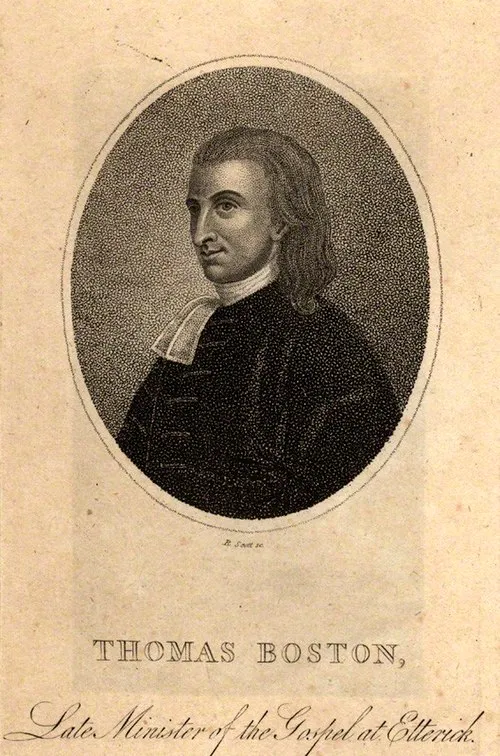
«Mira la obra de Dios; porque ¿quién podrá enderezar lo que él torció?»
Una visión JUSTA de los sucesos aflictivos es del todo necesaria para un comportamiento cristiano bajo ellos; y esa visión ha de obtenerse solamente por la fe, no por el sentido; porque únicamente la luz de la palabra los representa con justeza, descubriendo en ellos la obra de Dios y, por consiguiente, designios que convienen a las perfecciones divinas. Cuando estos se perciben con el ojo de la fe, y se consideran debidamente, tenemos una visión justa de los sucesos aflictivos, apta para aplacar los movimientos turbulentos de los afectos corruptos bajo apariencias exteriores lúgubres.
Es bajo esta visión que Salomón, en la parte precedente de este capítulo, plantea varias paradojas, que son determinaciones sorprendentes en favor de ciertas cosas que, al ojo del sentido, se ven lúgubres y horrendas, y por ello son generalmente reputadas penosas y chocantes. Pronuncia que el día de la muerte de uno es mejor que el día de su nacimiento; a saber, el día de la muerte de aquel que, habiendo llegado a ser amigo de Dios por medio de la fe, ha llevado una vida para honra de Dios y servicio de su generación, y con ello se ha granjeado el nombre bueno y fragante, mejor que el ungüento precioso, versículo 1. Del mismo modo, pronuncia que la casa del luto es preferible a la casa del festín, el pesar a la risa, y la reprensión de un sabio a la canción de un necio; porque, si bien las últimas son en verdad las más placenteras, las primeras son las más provechosas, versículos 2–6. Y observando con preocupación cómo los hombres están en peligro, no solo por los ceños y el mal trato del mundo —la opresión que hace enloquecer a un sabio—, sino también por sus sonrisas y caricias —un presente que destruye el corazón—; por tanto, ya que, vaya por donde vaya, hay peligro, pronuncia que el fin de toda cosa mundana es mejor que el principio de ella, versículos 7, 8. Y de todo ello infiere justamente que es mejor ser humilde y paciente, que soberbio e impaciente, bajo las dispensaciones aflictivas; pues, en el primer caso, nos sometemos sabiamente a lo que es realmente mejor; en el segundo, peleamos contra ello, versículo 8. Y nos disuade de enojarnos con nuestra suerte a causa de la adversidad que en ella se halla, versículo 9; advierte contra el hacer comparaciones odiosas de los tiempos pasados y los presentes, insinuando en ese punto reflexiones indebidas sobre la providencia de Dios, versículo 10; y, contra aquella disposición quejumbrosa e irritable, prescribe primero un remedio general, a saber, la sabiduría santa, como aquello que nos capacita para sacar el mejor partido de toda cosa, y aun da vida en circunstancias que matan, versículos 11, 12; y luego un remedio particular, que consiste en una aplicación debida de esa sabiduría para tomar una visión justa del caso: «Mira la obra de Dios; porque ¿quién podrá enderezar lo que él torció?»
En cuyas palabras se proponen: 1. El remedio mismo; 2. La idoneidad del mismo. 1. El remedio mismo es un mirar con sabiduría la mano de Dios en todo lo que hallamos que nos oprime con dureza; «Mira la obra (o, ve tú el hacer) de Dios», a saber, en las partes torcidas, ásperas y desagradables de tu suerte, las cruces que hallas en ella. Tú ves muy bien la cruz misma; sí, le das vueltas y más vueltas en tu mente, y la contemplas despacio por todos lados: miras, además, a esta y a la otra causa segunda de ella, y así echas espuma y te reconcomes. Pero, si quisieras quedar aquietado y satisfecho en el asunto, alza tus ojos hacia el cielo, ve el hacer de Dios en ello, la operación de su mano. Mira eso, y considéralo bien; clava la vista en la causa primera de la torcedura en tu suerte; contempla cómo es la obra de Dios, su hacer.
- Esta visión de la torcedura en nuestra suerte es muy apropiada para acallar los levantamientos indecorosos del corazón, y para sosegarnos bajo ella: «Porque ¿quién podrá (esto es, nadie podrá) enderezar lo que Dios torció?» En cuanto a la torcedura en tu suerte, Dios la ha hecho; y ha de continuar mientras él quiera que así sea. Si aplicas todas tus fuerzas para nivelarla, o enderezarla, tu intento será vano: no se alterará a pesar de todo lo que puedas hacer; solo aquel que la hizo puede repararla, o enderezarla. Esta consideración, esta visión del asunto, es un medio apropiado para, a la vez, acallar y satisfacer a los hombres, y así traerlos a una sumisión debida a su Hacedor y Gobernador, bajo la torcedura en su suerte.
Ahora tomamos el propósito del texto en estas tres proposiciones.
Proposición I. Cualquier torcedura que haya en la suerte de uno, es hechura de Dios.
Proposición II. Lo que Dios tiene a bien estropear, nadie podrá repararlo en su suerte.
Proposición III. El considerar la torcedura en la suerte como la obra de Dios, o de su hechura, es un medio apropiado para llevarnos a un comportamiento cristiano bajo ella.
Proposición I. Cualquier torcedura que haya en la suerte de uno, es hechura de Dios.
Aquí se han de considerar dos cosas, a saber, la torcedura misma, y el que Dios la haga.
Ver el original (inglés)
Original en inglés
Consider the work of God: for who can make that straight which he hath made crooked?
A JUST view of afflicting incidents is altogether necessary to a Christian deportment under them; and that view is to be obtained only by faith, not by sense; for it is the light of the word alone that represents them justly, discovering in them the work of God, and, consequently, designs becoming the divine perfections. When these are perceived by the eye of faith, and duly considered, we have a just view of afflicting incidents, fitted to quell the turbulent motions of corrupt affections under dismal outward appearances.
It is under this view that Solomon, in the preceding part of this chapter, advances several paradoxes, which are surprising determinations in favour of certain things, that, to the eye of sense, looking gloomy and hideous, are therefore generally reputed grievous and shocking. He pronounceth the day of one’s death to be better than the day of his birth; namely, the day of the death of one, who having become the friend of God through faith, hath led a life to the honour of God, and service of his generation, and thereby raised himself the good and savoury name better than precious ointment, ver. 1. In like manner, he pronounces the house of mourning to be preferable to the house of feasting, sorrow to laughter, and a wise man’s rebuke to a fool’s song; for that, howbeit the latter are indeed the more pleasant, yet the former are the more profitable, ver. 2 — 6. And observing with concern, how men are in hazard, not only from the world’s frowns and ill-usage, oppression making a wise man mad, but also from its smiles and caresses, a gift destroying the heart; therefore, since whatever way it goes there is danger, he pronounces the end of every worldly thing better than the beginning thereof, ver. 7, 8. And from the whole, he justly infers, that it is better to be humble and patient, than proud and impatient, under afflicting dispensations; since, in the former case, we wisely submit to what is really best; in the latter, we fight against it, ver. 8. And he dissuades from being angry with our lot, because of the adversity found therein, ver. 9; cautions against making odious comparisons of former and present times, in that point insinuating undue reflections on the providence of God, ver. 10: and, against that querulous and fretful disposition, he first prescribes a general remedy, namely, holy wisdom, as that which enables us to make the best of every thing, and even giveth life in killing circumstances, ver. 11, 12; and then a particular remedy, consisting in a due application of that wisdom, towards taking a just view of the case, ” Consider the work of God: for who can make that straight which he hath made crooked?”
In which words are proposed, 1. The remedy itself; 2. The suitableness thereof. ‘1. The remedy itself, is a wise eyeing of the hand of God in all we find to bear hard upon us; ” Consider the work (or, see thou the doing) of God,” namely, in the crooked, rough, and disagreeable parts of thy lot, the crosses thou findest in it. Thou seest very well the cross itself; yea, thou turnest it over and over in thy mind, and leisurely viewest it on all sides: thou lookest, withal, to this and the other second cause of it, and so thou art in a foam and fret. But, wouldst thou be quieted and satisfied in the matter, lift up thine eyes towards heaven, see the doing of God in it, the operation of his hand. Look at that, and consider it well; eye the first cause of the crook in thy lot; behold how it is the work of God, his doing.
- This view of the crook in our lot is very suitable to still indecent risings of heart, and quiet us under it: ” For who can (that is, none can) make that straight which God hath made crooked?” As to the crook in thy lot, God hath made it; and it must continue while he will have it so. Shouldst thou ply thine utmost force to even it, or make it straight, thine attempt will be vain: it will not alter for all thou canst do; only he who made it can mend it, or make it straight. This consideration, this view of the matter, is a proper means, at once, to silence and to satisfy men, and so to bring them unto a dutiful submission to their Maker and Governor, under the crook in their lot.
Now, we take up the purpose of the text in these three propositions.
Prop. I. Whatsoever crook there is in one’s lot, it is of God’s making.
Prop. II. What God sees meet to mar, no one shall be able to mend in his lot.
Prop. III. The considering of the crook in the lot as the work of God, or of his making, is a proper means to bring us to a Christian deportment under it.
Prop. I. Whatsoever crook there is in one’s lot, It is of God’s making.
Here, two things are to be considered, namely, the crook itself, and God’s making of it.
https://sermonesbiblicos.org/biblioteca/la-torcedura-en-la-suerte-01-observaciones/