Sermones Bíblicos
La sangre
Charles H. Spurgeon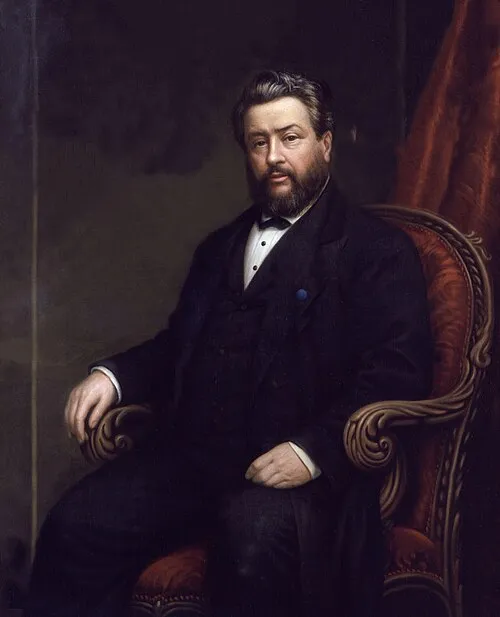
La sangre
Un sermón
(N.º 228)
Predicado el domingo por la mañana, 12 de diciembre de 1858, por el
REV. C. H. SPURGEON
En el Music Hall, Royal Surrey Gardens.
«Veré la sangre, y pasaré de vosotros.»—Éxodo 12:13
EL PUEBLO DE DIOS ESTÁ SIEMPRE A SALVO. «Todos los santos están en su mano»; y la mano de Dios es lugar de seguridad, lo mismo que lugar de honra. Nada puede dañar al hombre que ha hecho de Dios su refugio. «Mandado has que yo sea salvo», dijo David; y todo hijo de Dios que cree puede decir lo mismo. Peste, hambre, guerra, tempestad: todo esto ha recibido mandamiento de Dios de salvar a su pueblo. Aunque la tierra se sacudiera bajo los pies del hombre, el cristiano puede mantenerse firme; y aunque los cielos se enrollaran, y el firmamento pasara como un rollo consumido por el fuego ardiente, el cristiano no tiene por qué temer. El pueblo de Dios será salvo: si no puede ser salvo bajo los cielos, será salvo en los cielos; si no hay para ellos seguridad en el tiempo de angustia sobre esta tierra sólida, serán «arrebatados juntamente con el Señor en el aire, y así estarán siempre con el Señor», y siempre a salvo.
Ahora bien, en el tiempo del que habla este libro del Éxodo, Egipto estaba expuesto a un peligro terrible. Jehová mismo estaba a punto de recorrer las calles de todas las ciudades de Egipto. No era meramente un ángel destructor, sino Jehová mismo; porque así está escrito: «yo pasaré aquella noche por la tierra de Egipto, y heriré á todo primogénito en la tierra de Egipto, así en los hombres como en las bestias». Nada menos que YO SOY, el gran Dios, había jurado «cortar a Rahab» con la espada de la venganza. Tiemblen, habitantes de la tierra, porque Dios ha descendido entre ustedes, provocado, encendido en cólera, y al fin despertado de su aparente sueño de paciencia. Se ha ceñido su espada terrible, y ha venido a herirlos. Tiemblen de miedo todos ustedes que tienen pecado dentro de sí, porque cuando Dios anda por las calles, espada en mano, ¿no los herirá a todos? Pero ¡escuchen! Habla la voz de la misericordia del pacto: los hijos de Dios están a salvo, aunque un Dios airado ande por las calles. Así como están a salvo de la vara del impío, así están a salvo de la espada de la justicia: siempre y para siempre a salvo; porque no hubo ni un cabello de la cabeza de un israelita que fuera siquiera tocado. Jehová los guardó a salvo bajo sus alas. Mientras desgarraba a sus enemigos como un león, protegía a sus hijos, a cada uno de ellos. Pero, amados, aunque esto es siempre verdad —que el pueblo de Dios está a salvo—, hay otro hecho igualmente verdadero, a saber: que el pueblo de Dios está a salvo solo por la sangre. La razón por la que Dios perdona a su pueblo en el tiempo de la calamidad es que ve la marca de la sangre en su frente. ¿Cuál es el fundamento de aquella gran verdad, que á los que á Dios aman, todas las cosas les ayudan á bien? ¿Cuál es la causa de que todas las cosas les produzcan así el bien, sino esta: que han sido comprados con la sangre preciosa de Cristo? Por eso nada puede dañarlos, porque la sangre está sobre ellos, y toda cosa mala tiene que pasar de largo. Así fue aquella noche en Egipto. Dios mismo andaba fuera con su espada; pero los perdonó, porque vio la marca de la sangre en el dintel y en las dos jambas. Y así es con nosotros. El día en que Dios, en su ira feroz, salga de su morada para espantar la tierra con terrores y condenar a los impíos, estaremos seguros si, cubiertos con la justicia del Salvador y rociados con su sangre, somos hallados en él.
¿Oigo a alguien decir que ahora vengo a un tema viejo? Este pensamiento me asaltó cuando me preparaba para predicar: que tendría que contarles otra vez una historia vieja; y justo cuando pensaba en eso, al hojear un libro, me encontré con una anécdota de Judson, el misionero en Birmania. Había pasado por penalidades inauditas, y había realizado hazañas peligrosas por su Amo. Regresó a América después de treinta años de ausencia. Anunciado para dirigirse a una asamblea en una ciudad de provincia, y habiéndose reunido una vasta concurrencia desde grandes distancias para oírlo, se levantó al cierre del culto de costumbre y, con todos los ojos fijos y cada oído atento, habló unos quince minutos, con hondo sentimiento, del Salvador precioso, de lo que él había hecho por nosotros y de lo que le debíamos; y se sentó, visiblemente conmovido. «La gente está muy decepcionada», le dijo un amigo camino a casa; «les extraña que no hayas hablado de alguna otra cosa». «¿Pues qué querían?», respondió él: «Presenté, lo mejor que pude, el tema más interesante del mundo». «Pero querían algo distinto: una historia». «Pues bien, estoy seguro de que les di una historia: la más emocionante que pueda concebirse». «Pero ya la habían oído. Querían algo nuevo de un hombre que acababa de llegar de las antípodas». «Entonces me alegro de que tengan que decir que un hombre venido de las antípodas no tenía nada mejor que contar que la historia admirable del amor de Jesús al morir. Mi oficio es predicar el evangelio de Cristo; y cuando puedo hablar, no me atrevo a jugar con mi comisión. Cuando hoy miré a aquella gente, y al recordar dónde habría de encontrarlos la próxima vez, ¿cómo podía ponerme en pie y alimentar la vana curiosidad, halagarles la fantasía con historias entretenidas, por muy decentemente que estuvieran ensartadas en un hilo de religión? Eso no es lo que Cristo quiso decir con predicar el evangelio. Y luego, ¿cómo podría yo enfrentar después la acusación tremenda: “Te di una oportunidad de hablarles de MÍ; la gastaste describiendo tus propias aventuras”?» Así pensé yo. Pues bien, si Judson contó la historia vieja después de haber estado treinta años fuera, y no pudo hallar nada mejor, yo volveré sencillamente a este tema viejo, que siempre es nuevo y siempre fresco para nosotros: la sangre preciosa de Cristo, por la cual somos salvos.
Primero, pues, la sangre; segundo, su eficacia; tercero, la única condición que se le añade: «cuando yo vea la sangre»; y cuarto, la lección práctica.
I. Primero, pues, LA SANGRE MISMA. En el caso de los israelitas era la sangre del cordero pascual. En nuestro caso, amados, es la sangre del Cordero de Dios, que quita los pecados del mundo.
-
La sangre de la cual he de hablar con solemnidad esta mañana es, ante todo, la sangre de una víctima divinamente designada. Jesucristo no vino a este mundo sin designación. Fue enviado aquí por su Padre. Este es, en verdad, uno de los cimientos que sostienen la esperanza del cristiano. Podemos contar con que el Padre acepte a Jesucristo, porque su Padre lo ordenó para ser nuestro Salvador desde antes de la fundación del mundo. ¡Pecador! Cuando te predico esta mañana la sangre de Cristo, predico algo que es del todo agradable a Dios; porque Dios mismo escogió a Cristo para ser el Redentor; él mismo lo apartó desde antes de la fundación del mundo, y él mismo, sí, Jehová el Padre, cargó en él el pecado de todos nosotros. El sacrificio de Cristo no se les presenta sin autorización; no es algo que Cristo hizo a escondidas y en secreto; estaba escrito en el gran decreto, desde toda la eternidad, que él era el Cordero inmolado desde antes de la fundación del mundo. Como él mismo dijo: «He aquí, vengo; en el envoltorio del libro está escrito de mí: El hacer tu voluntad, Dios mío, hame agradado». Es la voluntad de Dios que la sangre de Jesús sea derramada. Jesús es el Salvador escogido por Dios para los hombres; y aquí, al dirigirme a los impíos, aquí, digo, hay un argumento potente para con ellos. ¡Pecador! Puedes confiar en Cristo, en que es capaz de salvarte de la ira de Dios, porque Dios mismo lo ha designado para salvar.
-
También Cristo Jesús, como el cordero, no solo fue una víctima divinamente designada, sino que fue sin mancha. Si hubiera habido un solo pecado en Cristo, no habría sido capaz de ser nuestro Salvador; pero él fue sin mancha ni defecto: sin pecado original, sin transgresión alguna en la práctica. En él no hubo pecado, aunque fue «tentado en todo según nuestra semejanza». Aquí está, otra vez, la razón por la que la sangre puede salvar: porque es la sangre de una víctima inocente, una víctima cuya única razón para morir estaba en nosotros, y no en él mismo. Cuando el pobre cordero inocente fue muerto por el jefe de familia en Egipto, puedo imaginar que pensamientos como estos le pasaban por la mente. «Ah», diría, al hundir el cuchillo en el cordero, «esta pobre criatura muere, no por culpa alguna que jamás haya tenido, sino para mostrarme que yo soy culpable, y que merecía morir así». Vuelve, pues, tu ojo a la cruz, y mira a Jesús sangrando allí y muriendo por ti. Recuerda:
«Por pecados que no eran suyos, murió para expiar;»
El pecado no tuvo donde afirmar el pie en él; jamás lo turbó. El príncipe de este mundo vino y miró, pero dijo: «Nada tengo en Cristo; no hay lugar donde yo plante mi pie, ningún pedazo de terreno corrompido que pueda llamar mío». Oh, pecador, la sangre de Jesús puede salvarte, porque él mismo era perfectamente inocente, y «murió, el justo por los injustos, para llevarnos á Dios».
Pero algunos dirán: «¿De dónde le viene a la sangre de Cristo tal poder para salvar?». Mi respuesta es: no solo porque Dios designó esa sangre, y porque era la sangre de un ser inocente y sin mancha, sino porque Cristo mismo era Dios. Si Cristo fuera un mero hombre, oyentes míos, no se les podría exhortar a que confíen en él; por muy sin mancha y santo que fuera, no habría eficacia en su sangre para salvar; pero Cristo era «Dios verdadero de Dios verdadero». La sangre que Jesús derramó era sangre divina. Era sangre de hombre, porque él era hombre como nosotros; pero la divinidad estaba tan unida a la humanidad, que la sangre recibió de ella su eficacia. ¿Pueden imaginar cuál ha de ser el valor de la sangre del propio Hijo amado de Dios? No: no pueden ponerle una estimación que llegue siquiera a una millonésima parte de su preciosidad. Sé que estiman esa sangre como fuera de todo precio, si han sido lavados en ella; pero sé también que no la estiman bastante. Fue asombro de los ángeles que Dios se dignara morir; será el asombro de todos los asombros, el asombro incesante de la eternidad, que Dios se hiciera hombre para morir. ¡Oh! Cuando pensamos que Cristo era el Creador del mundo, y que de sus hombros, que todo lo sostienen, pendía el universo, no podemos asombrarnos de que su muerte sea poderosa para redimir, y de que su sangre limpie del pecado. Vengan acá, santos y pecadores; acérquense y agólpense en torno a la cruz, y vean a este hombre, vencido por la debilidad, desfalleciente, gimiendo, sangrando y muriendo. Este hombre es también «Dios sobre todas las cosas, bendito por los siglos». ¿No hay poder para salvar? ¿No hay eficacia en una sangre así? ¿Pueden imaginar alguna extensión de pecado que sobrepase el poder de la divinidad, alguna altura de iniquidad que supere las cumbres sin cima de lo divino? ¿Puedo concebir una profundidad de pecado más honda que el infinito, o una anchura de iniquidad más ancha que la Deidad? Porque es divino, «puede también salvar eternamente á los que por él se allegan á Dios». Designada por la Divinidad, sin mancha y divina, su sangre es la sangre por la cual ustedes pueden escapar del enojo y de la ira de Dios.
-
Una vez más: la sangre de la que hablamos hoy es sangre derramada una sola vez por muchos para remisión del pecado. El cordero pascual era muerto cada año; pero ahora Cristo ha aparecido para quitar el pecado mediante la ofrenda de sí mismo, y ya no hay más mención del pecado, porque Cristo, una vez para siempre, ha quitado el pecado por la ofrenda de sí mismo. El judío tenía el cordero cada mañana y cada tarde, porque había una mención continua del pecado; la sangre del cordero no podía quitarlo. El cordero valía para hoy, pero estaba el pecado de mañana: ¿qué había de hacerse con ese? Pues tenía que sangrar una víctima nueva. Pero, oh, oyente mío, nuestro gozo más grande es que la sangre de Jesús ha sido derramada una sola vez, y él ha dicho: «Consumado es». Ya no hace falta la sangre de los toros ni de los machos cabríos, ni de ningún otro sacrificio; aquel único sacrificio «hizo perfectos para siempre á los santificados». ¡Pecador tembloroso! Ven otra vez a la cruz; tus pecados son pesados, y muchos; pero la expiación por ellos está consumada por la muerte de Cristo. Mira, pues, a Jesús, y recuerda que Cristo no necesita nada que supla su sangre. El camino entre Dios y el hombre está terminado y abierto; el vestido para cubrir tu desnudez está completo, sin un trapo tuyo; el baño en que has de ser lavado está lleno, lleno hasta el borde, y no necesita que se le añada nada. «¡Consumado es!» Deja que eso resuene en tus oídos. Nada hay ahora que pueda impedir que seas salvo, si Dios te ha hecho dispuesto ahora a creer en Jesucristo. Él es un Salvador completo, lleno de gracia para un pecador vacío.
-
Y sin embargo debo añadir un pensamiento más, y luego dejar este punto. La sangre de Jesucristo es sangre que ha sido aceptada. Cristo murió; fue sepultado; pero ni el cielo ni la tierra podían decir si Dios había aceptado el rescate. Faltaba el sello de Dios sobre la gran Carta Magna de la salvación del hombre, y ese sello fue puesto, oyente mío, en aquella hora en que Dios llamó al ángel y le mandó descender del cielo y hacer rodar la piedra. Cristo fue puesto en dura prisión, en la cárcel del sepulcro, como rehén por su pueblo. Hasta que Dios hubiera firmado la orden de absolución de todo su pueblo, Cristo tenía que permanecer en los lazos de la muerte. No intentó forzar su prisión; no salió de manera ilegal, arrancando los barrotes de su calabozo; esperó: envolvió el sudario, doblándolo aparte; puso los lienzos en un lugar separado; esperó, esperó con paciencia; y al fin, bajando de los cielos como el destello de un meteoro, el ángel descendió, tocó la piedra y la hizo rodar; y cuando Cristo salió, resucitando de entre los muertos en la gloria del poder de su Padre, entonces fue puesto el sello sobre la gran carta de nuestra redención. La sangre fue aceptada, y el pecado fue perdonado. Y ahora, alma, no es posible que Dios te rechace, si vienes hoy a él alegando la sangre de Cristo. Dios no puede —y aquí hablamos también con reverencia—: el Dios eterno no puede rechazar a un pecador que alega la sangre de Cristo; porque si lo hiciera, sería negarse a sí mismo y contradecir todos sus actos anteriores. Él ha aceptado la sangre, y él la aceptará; jamás puede revocar aquella aceptación divina de la resurrección; y si vas a Dios, oyente mío, alegando simple y únicamente la sangre de aquel que pendió del madero, Dios tendría que dejar de ser Dios antes de poder rechazarte, o de rechazar esa sangre.
Y sin embargo temo no haber logrado hacerlos pensar en la sangre de Cristo. Les ruego, pues, que solo por un momento traten de figurarse a Cristo en la cruz. Dejen que su imaginación represente la turba abigarrada reunida en torno a aquella pequeña colina del Calvario. Levanten ahora los ojos, y vean las tres cruces puestas sobre aquel montículo que se eleva. Vean en el centro la frente de Cristo, coronada de espinas. ¿Ven las manos que siempre estuvieron llenas de bendición, clavadas firmemente al madero maldito? ¿Ven su rostro amado, más desfigurado que el de cualquier otro hombre? ¿Lo ven ahora, cuando su cabeza se inclina sobre su pecho en las agonías extremas de la muerte? Era un hombre real, recuérdenlo. Era una cruz real. No piensen en estas cosas como invenciones, fantasías y novelas. Existió tal ser, y murió como lo describo. Dejen que su imaginación lo pinte, y luego quédense quietos un momento y mediten este pensamiento: «La sangre de ese hombre, a quien ahora contemplo muriendo en agonía, tiene que ser mi redención; y si he de ser salvo, tengo que poner mi única confianza en lo que él padeció por mí, cuando él mismo “llevó nuestros pecados en su cuerpo sobre el madero”». Si Dios el Espíritu Santo los ayuda, estarán entonces en el estado debido para pasar al segundo punto.
II. LA EFICACIA DE ESTA SANGRE. «Veré la sangre, y pasaré de vosotros.»
-
La sangre de Cristo tiene un poder tan divino para salvar, que nada fuera de ella puede jamás salvar el alma. Si algún israelita insensato hubiera despreciado el mandamiento de Dios, y hubiera dicho: «Rociaré otra cosa sobre las jambas», o «Adornaré el dintel con joyas de oro y de plata», habría perecido; nada podía salvar su casa sino la sangre rociada. Y ahora recordemos todos que «nadie puede poner otro fundamento que el que está puesto, el cual es Jesucristo», porque «no hay otro nombre dado á los hombres, en que podamos ser salvos». Mis obras, mis oraciones, mis lágrimas, no pueden salvarme; la sangre, solo la sangre, tiene poder para redimir. Los sacramentos, por muy bien que se observen, no pueden salvarme. Nada sino tu sangre, oh Jesús, puede redimirme de la culpa del pecado. Aunque yo diera arroyos de aceite, y diez mil de la grosura de bestias cebadas; sí, aunque diera mi primogénito por mi rebelión, el fruto de mi vientre por el pecado de mi alma, todo sería inútil. Nada sino la sangre de Jesús tiene en sí el más mínimo poder salvador. ¡Oh! Ustedes que están confiando en su bautismo de infantes, en su confirmación y en su Cena del Señor, están confiando en una mentira. Nada sino la sangre de Jesús puede salvar. No me importa cuán correcta sea la ordenanza, cuán verdadera la forma, cuán bíblica la práctica: todo es vanidad para ustedes si se apoyan en ello. No permita Dios que yo diga una palabra contra las ordenanzas, o contra las cosas santas; pero manténganlas en su lugar. Si las hacen el fundamento de la salvación de su alma, son más leves que una sombra, y cuando más las necesiten hallarán que les fallan. No hay, lo repito otra vez, el más mínimo átomo de poder salvador en ninguna parte, sino en la sangre de Jesús. Esa sangre tiene el único poder para salvar, y cualquier otra cosa en que ustedes se apoyen será un refugio de mentira. Esta es la roca, y esta es la obra que es perfecta; pero todas las demás cosas son ensueños; tienen que ser barridas el día en que Dios venga a probar nuestra obra, de qué clase es. LA SANGRE se alza en majestad solitaria, la única roca de nuestra salvación.
-
Esta sangre no es simplemente lo único que puede salvar, sino que tiene que salvar sola. Pon cualquier cosa junto con la sangre de Cristo, y estás perdido; confía en cualquier otra cosa junto con esta, y pereces. «Es verdad», dice uno, «que el sacramento no puede salvarme, pero confiaré en eso, y también en Cristo». Entonces eres un hombre perdido. Tan celoso es Cristo de su honra, que cualquier cosa que pongas junto a él, por buena que sea, se vuelve, por el hecho mismo de ponerla junto a él, cosa maldita. ¿Y qué es lo que pondrías junto a Cristo? ¿Tus buenas obras? ¡Cómo! ¿Uncirás un reptil con un ángel? ¿Te uncirás tú mismo al carro de la salvación junto con Cristo? ¿Qué son tus buenas obras? Tus justicias son «como trapo de inmundicia»; ¿y habrá de unirse el trapo de inmundicia a la justicia celestial y sin mancha de Cristo? No debe ser, y no será. Confía solo en Jesús, y no puedes perecer; pero confía en cualquier cosa junto con él, y estás tan seguramente condenado como si confiaras en tus pecados. Solo Jesús, solo Jesús, solo Jesús: esta es la roca de nuestra salvación.
Y aquí permítanme detenerme, y combatir unas cuantas formas y figuras que siempre toma nuestra propia justicia. «Oh», dice uno, «podría confiar en Cristo si sintiera más mis pecados». Señor, ese es un error que condena. ¿Ha de ser tu arrepentimiento, tu sentimiento del pecado, un salvador a medias? ¡Pecador! La sangre es la que ha de salvarte, no tus lágrimas; la muerte de Cristo, no tu arrepentimiento. Se te manda hoy confiar en Cristo; no en tus sentimientos, no en tus angustias a causa del pecado. Muchos hombres han sido llevados a una gran angustia del alma, porque han mirado más su arrepentimiento que la obediencia de Cristo—
«Aunque tus lágrimas fluyeran sin cesar, aunque tu celo no tuviera tregua, nada de eso el pecado podría expiar: Cristo ha de salvar, y solo Cristo.»
«No», dice otro, «pero siento que no estimo la sangre de Cristo como debo, y por eso tengo miedo de creer». Amigo mío, esa es otra forma insidiosa del mismo error. Dios no dice: «Cuando vea tu estimación de la sangre de Cristo, pasaré de ti»; no, sino: «Cuando vea la sangre». No es tu estimación de esa sangre: es la sangre la que te salva. Como dije antes, esa sangre magnífica y solitaria tiene que estar sola.
«No», dice otro, «pero si tuviera más fe, entonces tendría esperanza». También esa es una forma muy mortífera del mismo mal. No has de ser salvo por la eficacia de tu fe, sino por la eficacia de la sangre de Cristo. No es tu creer: es el morir de Cristo. Te mando creer, pero no te mando mirar tu creer como el fundamento de tu salvación. Ningún hombre irá al cielo si confía en su propia fe; lo mismo da que confíes en tus propias buenas obras que confiar en tu fe. Tu fe tiene que tratar con Cristo, no consigo misma. El mundo pende de nada; pero la fe no puede pender de sí misma: tiene que pender de Cristo. A veces, cuando mi fe está vigorosa, me sorprendo haciendo esto. Hay gozo que fluye a mi corazón, y al cabo de un rato empiezo a hallar que mi gozo de pronto se va. Pregunto las causas, y hallo que el gozo vino porque estaba pensando en Cristo; pero cuando empiezo a pensar en mi gozo, entonces mi gozo huyó. No debes pensar en tu fe, sino en Cristo. La fe viene de meditar en Cristo. Vuelve, pues, tu ojo, no a la fe, sino a Jesús. No es tu asimiento de Cristo lo que te salva; es el asimiento que él tiene de ti. No es la eficacia de tu creer en él; es la eficacia de su sangre aplicada a ti por el Espíritu.
No sé cómo seguir a Satanás lo bastante en todos sus rodeos dentro del corazón humano, pero esto sí sé: siempre está tratando de echar a un lado esta gran verdad, que la sangre, y solo la sangre, tiene poder para salvar. «Oh», dice otro, «si tuviera tal o cual experiencia, entonces podría confiar». Amigo, no es tu experiencia: es la sangre. Dios no dijo: «Cuando vea tu experiencia», sino: «Cuando vea la sangre de Cristo». «No», dice uno, «pero si tuviera tales o cuales gracias, podría esperar». No: él no dijo: «Cuando vea tus gracias», sino: «Cuando vea la sangre». Consigue gracia; consigue toda la fe, el amor y la esperanza que puedas; pero, oh, no los pongas donde debe estar la sangre de Cristo. El único pilar de tu esperanza tiene que ser la cruz, y cualquier otra cosa que pongas para apuntalar la cruz de Cristo le es odiosa a Dios, y deja de tener virtud alguna, porque es un anticristo. La sangre de Cristo, pues, sola, salva; pero cualquier cosa junto con ella, y no salva.
-
Aún podemos decir de la sangre de Cristo: es todo-suficiente. No hay caso al que la sangre de Cristo no pueda hacer frente; no hay pecado que ella no pueda lavar. No hay multiplicidad de pecado que no pueda limpiar, ni agravamiento de culpa que no pueda quitar. Ustedes pueden estar doblemente teñidos, rojos como el carmesí; pueden haber yacido en la lejía de sus pecados estos setenta años; pero la sangre de Cristo puede quitar la mancha. Pueden haberlo blasfemado casi tantas veces como han respirado; pueden haberlo rechazado tantas veces como han oído su nombre; pueden haber quebrantado su día de reposo; pueden haber negado su existencia; pueden haber dudado de su Deidad; pueden haber perseguido a sus siervos; pueden haber pisoteado su sangre; pero todo esto la sangre puede lavarlo. Pueden haber cometido fornicaciones sin número; es más, el asesinato mismo puede haber manchado sus manos; pero esta fuente llena de sangre puede lavar todas las manchas. La sangre de Jesucristo nos limpia de todo pecado. No hay clase de hombre, no hay engendro de la humanidad, no hay demonio en forma humana, que esta sangre no pueda lavar. El infierno puede haberse empeñado en hacer un dechado de iniquidad; puede haberse esforzado en juntar pecado, y pecado, y pecado, hasta hacer un monstruo en forma de hombre, un monstruo aborrecido de la humanidad; pero la sangre de Cristo puede transformar a ese monstruo. Los siete demonios de la Magdalena puede echarlos fuera; la locura del endemoniado puede calmarla; la lepra arraigada puede curarla; la herida del mutilado, sí, el miembro perdido, puede restaurarlo. No hay enfermedad espiritual que el gran Médico no pueda sanar. Este es el gran catolicón [N. del T.: remedio universal], la medicina para todas las enfermedades. Ningún caso puede exceder su virtud, por negro o por vil que sea: sangre todo-suficiente, todo-suficiente.
-
Pero vayamos más lejos. La sangre de Cristo salva con certeza. Mucha gente dice: «Bueno, espero ser salvo por la sangre de Cristo»; y quizá dice alguien aquí, que está creyendo en Cristo: «Bueno, espero que salve». Querido amigo, eso es una afrenta a la honra de Dios. Si un hombre te hace una promesa, y dices: «Bueno, espero que la cumpla», ¿no queda implícito que tienes al menos una pequeña duda de si lo hará o no? Ahora bien, yo no espero que la sangre de Cristo lave mi pecado. Sé que está lavado por su sangre; y esa es la fe verdadera, la que no se queda esperando acerca de la sangre de Cristo, sino que dice: «Sé que es así; esa sangre limpia. En el momento en que fue aplicada a mi conciencia, limpió, y todavía limpia». El israelita, si era fiel a su fe, no entraba y decía: «Espero que el ángel destructor pase de largo»; sino que decía: «Sé que pasará; sé que Dios no puede herirme; sé que no lo hará. Ahí está la marca de la sangre; estoy seguro sin lugar a duda; no hay ni la sombra de un riesgo de que yo perezca. Estoy salvo; tengo que ser salvo». Y así predico esta mañana un evangelio seguro: «Todo aquel que cree en el Señor Jesucristo no perecerá, mas tendrá vida eterna». «Yo doy a mis ovejas vida eterna», dijo él, «y no perecerán para siempre, ni nadie las arrebatará de mi mano». Oh, pecador, no tengo ni la sombra de una duda de si Cristo te salvará si confías en su sangre. Oh, no: sé que lo hará. Estoy cierto de que su sangre puede salvar; y te ruego, en el nombre de Cristo, que creas lo mismo; cree que esa sangre de cierto limpia, no solo que puede limpiar, sino que tiene que limpiar: «en que podamos ser salvos», dice la Escritura [N. del T.: la versión inglesa que cita el autor dice «debemos ser salvos», de ahí su énfasis]. Si tenemos esa sangre sobre nosotros, tenemos que ser salvos; de lo contrario habríamos de suponer un Dios infiel y un Dios sin bondad; en realidad, un Dios transformado de todo lo que es propio de Dios en todo lo que es vil.
-
Y todavía más: el que tiene esta sangre rociada sobre sí es salvo por completo. Ni un cabello de la cabeza de un israelita fue perturbado por el ángel destructor. Fueron salvos por completo; así, el que cree en la sangre es salvo de todas las cosas. Me gusta la traducción antigua del capítulo de Romanos. Hubo una vez un mártir llamado ante Bonner; y después de haber expresado su fe en Cristo, Bonner dijo: «Eres un hereje y serás condenado». «No», dijo él, citando la versión antigua: «Ahora, pues, ninguna condenación hay para los que creen en Cristo Jesús». Y eso nos pone delante un pensamiento dulce: no hay condenación para el hombre que tiene sobre sí la sangre de Cristo; de ninguna manera puede ser condenado por Dios. Sería imposible. No existe tal cosa; no puede existir tal cosa. No hay condenación. No puede ser condenado, porque no hay condenación para el que está en Cristo Jesús. Aplíquese la sangre al dintel y a la jamba, y no hay destrucción. Hay un ángel destructor para Egipto, pero no lo hay para Israel. Hay un infierno para los impíos, pero ninguno para los justos. Y si no lo hay, no pueden ser puestos allí. Si no hay condenación, no pueden sufrirla. Cristo salva por completo: todo pecado es lavado, toda bendición queda asegurada, la perfección está provista, y la gloria eterna es el resultado seguro.
Creo, pues, que me he detenido lo bastante en la eficacia de su sangre; pero ninguna lengua de serafín podrá jamás decir su valor. Tengo que irme a casa, a mi aposento, y llorar porque soy impotente para contar esta historia; y sin embargo me he esforzado por contarla con sencillez, de modo que todos puedan entender; y ruego, por tanto, que Dios el Espíritu lleve a algunos de ustedes a poner su confianza, de manera sencilla, total y entera, en la sangre de Jesucristo.
III. Esto nos lleva al tercer punto, en el cual he de ser muy breve, y el tercer punto es: LA ÚNICA CONDICIÓN. ¿Qué dice uno? «¿Predicas una salvación condicional?». Sí, la predico. Hay una sola condición: «Veré yo la sangre, y pasaré de vosotros». ¡Qué condición tan bienaventurada! No dice «cuando tú la veas», sino «veré yo». Tu ojo de fe puede estar tan nublado, que no puedas ver la sangre de Cristo. Sí, pero el ojo de Dios no está nublado: él puede verla; es más, tiene que verla; porque Cristo, en el cielo, está siempre presentando su sangre ante el rostro de su Padre. El israelita no podía ver la sangre; estaba dentro de la casa; no podía ver lo que había en el dintel y en la jamba; pero Dios podía verla; y esta es la única condición de la salvación del pecador: que Dios vea la sangre, no que tú la veas. Oh, cuán seguro está, entonces, todo aquel que confía en el Señor Jesucristo. No es su fe la condición, ni su certeza; es el hecho sencillo de que el Calvario está puesto perpetuamente ante los ojos de Dios, en un Salvador resucitado y ascendido. «Veré la sangre, y pasaré de vosotros.» Caigan, pues, de rodillas en oración, ustedes, almas que dudan, y sea esta su súplica: «Señor, ten misericordia de mí por causa de la sangre. Yo no puedo verla como quisiera, pero, Señor, tú la ves, y has dicho: “Veré la sangre, y pasaré de vosotros”. Señor, tú la ves hoy; pasa por alto mi pecado, y perdóname solo por amor de ella».
IV. Y ahora, por último, ¿CUÁL ES LA LECCIÓN? La lección del texto para el cristiano es esta. Cristiano, cuida de recordar siempre que nada sino la sangre de Cristo puede salvarte. Hoy me predico a mí mismo lo que te predico a ti. A menudo me hallo así: he estado orando para que el Espíritu Santo repose en mi corazón y limpie una pasión mala, y al poco me hallo lleno de dudas y temores; y cuando pregunto la razón, hallo que es esta: he estado mirando la obra del Espíritu hasta poner la obra del Espíritu donde debe estar la obra de Cristo. Ahora bien, es pecado poner tus propias obras donde deben estar las de Cristo; pero es igualmente pecado poner allí la obra del Espíritu Santo. Nunca debes hacer del Espíritu de Dios un anticristo, y virtualmente lo haces cuando pones la obra del Espíritu como el fundamento de tu fe. ¿No oyes a menudo a hombres cristianos decir: «No puedo creer en Cristo hoy como podía ayer, porque ayer sentí unos goces tan dulces y benditos»? Ahora bien, ¿qué es eso sino poner tus disposiciones y tus sentimientos donde debe estar Cristo? Recuerda: la sangre de Cristo no es más capaz de salvarte en una buena disposición que en una mala. La sangre de Cristo tiene que ser tu confianza, tanto cuando estás lleno de gozo como cuando estás lleno de duda. Y aquí es donde tu felicidad estará en peligro, si empiezas a poner tus buenas disposiciones y tus buenos sentimientos en lugar de la sangre de Cristo. Oh, hermanos, si pudiéramos vivir siempre con un solo ojo fijo en la cruz, siempre seríamos felices; pero cuando conseguimos un poco de paz y un poco de gozo, empezamos a apreciar tanto el gozo y la paz, que olvidamos la fuente de donde vienen. Como dice el señor Brooks: «Un esposo que ama a su esposa quizá le dé a menudo joyas y anillos; pero supongamos que ella se siente y empiece a pensar tanto en sus joyas y sus anillos, que olvide a su esposo: sería oficio de un esposo bondadoso quitárselos, para que ella fijara sus afectos enteramente en él». Y así es con nosotros. Jesús nos da joyas de fe y de amor, y nos ponemos a confiar en ellas, y él nos las quita para que vengamos otra vez como pecadores culpables y desvalidos, y pongamos nuestra confianza en Cristo. Por citar un verso que repito a menudo: creo que el espíritu de un cristiano debe ser, desde su primera hora hasta la última, el espíritu de estas dos líneas:
«Nada en mi mano traigo; solo a tu cruz me aferro.»
Esa es la lección para el santo.
Pero un minuto más: hay aquí una lección para el pecador. Pobre pecador tembloroso, culpable, que te condenas a ti mismo: tengo una palabra del Señor para ti. «La sangre de Jesucristo nos limpia», es decir, a ti y a mí, «nos limpia de todo pecado». Ese «nos» te incluye, si ahora sientes tu necesidad de un Salvador. Ahora bien, esa sangre puede salvarte, y se te manda simplemente confiar en esa sangre, y serás salvo. Pero te oigo decir: «Señor, usted dijo que si siento mi necesidad. Ahora siento que no siento; solo quisiera sentir mi necesidad lo bastante». Pues bien, no traigas entonces tus sentimientos, sino confía solo en la sangre. Si puedes apoyarte simplemente en la sangre de Cristo, sean cuales sean tus sentimientos, o aunque no los tengas, esa sangre puede salvar. Pero estás diciendo: «¿Cómo he de ser salvo? ¿Qué debo hacer?». Pues bien, no hay nada que puedas hacer. Tienes que dejar de hacer por completo, para ser salvo. Tiene que haber una negación de todas tus obras. Tienes que obtener a Cristo primero, y entonces podrás hacer cuanto quieras. Pero no debes confiar en tus obras. Tu asunto ahora es elevar el corazón en una oración como esta: «Señor, me has mostrado algo de mí mismo; muéstrame algo de mi Salvador». Mira al Salvador pendiente de la cruz, vuelve tu ojo a él, y di: «Señor, en ti confío; no tengo otra cosa en que confiar, pero me apoyo en ti. Me hunda o salga a flote, Salvador mío, en ti confío». Y con tanta seguridad, pecador, como puedes poner tu confianza en Cristo, estás tan a salvo como un apóstol o un profeta. Ni la muerte ni el infierno pueden matar al hombre cuya firme confianza está al pie de la cruz. «Cree en el Señor Jesucristo, y serás salvo». «El que creyere y fuere bautizado, será salvo; mas el que no creyere, será condenado». El que creyere será salvo, por muchos que sean sus pecados; el que no creyere será condenado, por pocos que sean sus pecados y por muchas que sean sus virtudes. ¡Confía en Jesús ahora! Pecador, confía solo en Jesús.
«No toda la sangre de las bestias en los altares judíos inmolada pudo dar paz a la conciencia culpable, ni lavar la mancha. Pero Cristo, el Cordero celestial, quita todos nuestros pecados; un sacrificio de nombre más noble y de sangre más rica que la de ellas.»
Ver el original (inglés)
Original en inglés
The Blood
A Sermon
(No. 228)
Delivered on Sabbath Morning, December 12th, 1858, by the
REV. C.H. SPURGEON
at the Music Hall, Royal Surrey Gardens.
“When I see the blood, I will pass over you.”—Exodus 12:13.
GOD’S PEOPLE ARE ALWAYS SAFE. “All the saints are in his hand;” and the hand of God is a place for safety, as well as a place of honour. Nothing can hurt the man who has made his refuge God. “Thou hast given commandment to save me,” said David; and every believing child of God may say the same. Plague, famine, war, tempest,—all these have received commandment of God to save his people. Though the earth should rock beneath the feet of man, yet the Christian, may stand fast, and though the heavens should be rolled up, and the firmament should pass away like a scroll that is burned by fervent heat, yet need not a Christian fear; God’s people shall be saved: if they cannot be saved under the heavens, they shall be saved in the heavens; if there be no safety for them in the time of trouble upon this solid earth, they shall be “caught up together with the Lord in the air, and so shall they be ever with the Lord,” and ever safe.
Now, at the time of which this Book of Exodus speaks, Egypt was exposed to a terrible peril. Jehovah himself was about to march through the streets of all the cities of Egypt. It was not merely a destroying angel, but Jehovah himself; for thus it is written, “I will pass through the land of Egypt this night, and will smite all the first-born in the land of Egypt, both man and beast.” No one less than I AM, the great God, had vowed to “cut Rahab” with the sword of vengeance. Tremble, ye inhabitants of the earth, for God has come down among you, provoked, incensed, and at last awakened from his seeming sleep of patience. He has girded on his terrible sword, and he has come to smite you. Quake for fear, all ye that have sin within you, for when God walks through the streets, sword in hand, will he not smite you all? But hark! the voice of covenant mercy speaks, God’s children are safe, even though an angry God be in the streets. As they are safe from the rod of the wicked, so are they safe from the sword of justice—always and ever safe; for there was not a hair of the head of an Israelite that was so much as touched; Jehovah kept them safe beneath his wings. While he did rend his enemies like a lion, yet did he protect his children, every one of them. But, beloved, while this is always true, that God’s people are safe, there is another fact that is equally true, namely, that God’s people are only safe through the blood. The reason why God spares his people in the time of calamity is, because he sees the blood-mark on their brow. What is the basis of that great truth, that all things work together for good to them that love God? What is the cause that all things so produce good to them, but this, that they are bought with the precious blood of Christ? Therefore it is that nothing can hurt them, because the blood is upon them, and every evil thing must pass them by. It was so that night in Egypt. God himself was abroad with his sword; but he spared them, because he saw the blood-mark on the lintel and on the two sideposts. And so it is with us. In the day when God in his fierce anger shall come forth from his dwelling place, to affright the earth with terrors and to condemn the wicked, we shall be secure, if covered with the Saviour’s righteousness, and sprinkled with his blood, we are found in him.
Do I hear some one say, that I am now coming to an old subject? This thought struck me when I was preparing for preaching, that I should have to tell you an old story over again; and just as I was thinking of that, happening to turn over a book, I met with an anecdote of Judson the missionary to Burmah. He had passed through unheard-of hardships, and had performed dangerous exploits for his Master. He returned, after thirty years’ absence, to America. “Announced to address an assembly in a provincial town, and a vast concourse having gathered from great distances to hear him, he rose at the close of the usual service, and, as all eyes were fixed and every year attent, he spoke for about fifteen minutes, with much pathos, of the precious Saviour, of what he had done for us, and of what we owed to him; and he sat down, visibly affected. “The people are very much disappointed,” said a friend to him on their way home; “they wonder you did not talk of something else.” “Why what did they want?” he replied: “I presented, to the best of my ability, the most interesting subject in the world.” “But they wanted something different—a story” “Well, I am sure I gave them a story—the most thrilling one that can be conceived of.” “But they had beard it before. They wanted something new of a man who had just come from the antipodes.” “Then I am glad they have it to say, that a man coming from the antipodes had nothing better to tell than the wondrous story of the dying love of Jesus. My business is to preach the gospel of Christ; and when I can speak at all, I dare not trifle with my commission. When I looked upon those people to-day, and remembering where I should next meet them, how could I stand up and furnish food to vain curiosity—tickle their fancy with amusing stories, however decently strung together on a thread of religion? That is not what Christ meant by preaching the gospel. And then how could I hereafter meet the fearful charge, ‘I gave you one opportunity to tell them of ME; you spent it in describing your own adventures!’” So I thought. Well, if Judson told the old story after he had been thirty years away, and could not find anything better, I will just go back to this old subject, which is always new and always fresh to us—the precious blood of Christ, by which we are saved.
First, then, the blood; secondly, its efficacy; thirdly, the one condition appended to it;—“When I see the blood;” and fourthly, the practical lesson.
I. First, then, THE BLOOD ITSELF. In the case of the Israelites it was the blood of the Paschal Lamb. In our case, beloved, it is the blood of the Lamb of God, which taketh away the sins of the world.
-
The blood of which I have solemnly to speak this morning, is, first of all, the blood of a divinely appointed victim. Jesus Christ did not come into this world unappointed. He was sent here by his Father. This indeed is one of the underlying ground-works of the Christian’s hope. We can rely upon Jesus Christ’s acceptance by his Father, because his Father ordained him to be our Saviour from before the foundation of the world. Sinner! when I preach to thee the blood of Christ this morning, I am preaching something that is well pleasing to God; for God himself did choose Christ to be the Redeemer; he himself set him apart from before the foundation of the world, and he himself, even Jehovah the Father, did lay upon him the iniquity of us all. The sacrifice of Christ is not brought to you without warrant; it is not a something which Christ did surreptitiously and in secret; it was written in the great decree from all eternity, that he was the Lamb slain from before the foundation of the world. As he himself said, “Lo I come; in the volume of the book it is written of me, I delight to do thy will O God.” It is God’s will that the blood of Jesus should be shed. Jesus is God’s chosen Saviour for men; and here, when addressing the ungodly, here, I say, is one potent argument with them. Sinner! You may trust in Christ, that he is able to save you from the wrath of God, for God himself has appointed him to save.
-
Christ Jesus, too, like the lamb, was not only a divinely appointed victim, but he was spotless. Had there been one sin in Christ, he had not been capable of being our Saviour; but he was without spot or blemish—without original sin, without any practical transgression. In him was no sin, though he was “tempted in all points like as we are.” Here, again, is the reason why the blood is able to save, because it is the blood of an innocent victim, a victim the only reason for whose death lay in us, and not in himself. When the poor innocent lamb was put to death, by the head of the household of Egypt, I can imagine that thoughts like these ran through his mind. “Ah” he would say, as he struck the knife into the lamb, “This poor creature dies, not for any guilt that it has ever had, but to show me that I am guilty, and that I deserved to die like this.” Turn, then, your eye to the cross, and see Jesus bleeding there and dying for you. Remember,
“For sins not his own, he died to atone;”
Sin had no foothold in him, never troubled him. The prince of this world came and looked, but he said, “I have nothing in Christ; there is no room for me to plant my foot—no piece of corrupt ground, which I may call my own.” O sinner, the blood of Jesus is able to save thee, because he was perfectly innocent himself, and “he died the just for the unjust, to bring us to God.”
But some will say, “Whence has the blood of Christ such power to save?” My reply is, not only because God appointed that blood, and because it was the blood of an innocent and spotless being, but because Christ himself was God. If Christ were a mere man, my hearers, you could not be exhorted to trust him; were he ever so spotless and holy, there would be no efficacy in his blood to save; but Christ was “very God of very God;” the blood that Jesus shed was Godlike blood. It was the blood of man, for he was man like ourselves; but the divinity was so allied with the manhood, that the blood derived efficacy from it. Can you imagine what must be the value of the blood of God’s own dear Son? No, you cannot put an estimate upon it that should so much as reach to a millionth part of its preciousness. I know you esteem that blood as beyond all price if you have been washed in it; but I know also that you do not esteem it enough. It was the wonder of angels that God should condescend to die; it will be the wonder of all wonders, the unceasing wonder of eternity, that God should become man to die. Oh! when we think that Christ was Creator of the world, and that on his all-sustaining shoulders did hang the universe, we cannot wonder that his death is mighty to redeem, and that his blood should cleanse from sin. Come hither saints and sinners; gather in and crowd around the cross, and see this man, overcome with weakness, fainting, groaning, bleeding, and dying. This man is also “God over all, blessed for ever,” Is there not power to save? Is there not efficacy in blood like that? Can you imagine any stretch of sin which shall out-measure the power of divinity—any height of iniquity that shall overtop the topless steeps of the divine? Can I conceive a depth of sin that shall be deeper than the infinite? or a breadth of iniquity that shall be broader than the Godhead? Because he is divine, he is “able to save to the uttermost, them that come unto God by him.” Divinity appointed, spotless, and divine, his blood is the blood whereby ye may escape the anger and the wrath of God.
-
Once more; the blood of which we speak today, is blood once shed for many for the remission of sin. The paschal lamb was killed every year; but now Christ hath appeared to take away sin by the offering up of himself and there is now no more mention of sin, for Christ once for all hath put away sin, by the offering of himself. The Jew had the lamb every morning and every evening, for there was a continual mention of sin; the blood of the lamb could not take it away. The lamb availed for to-day, but there was the sin of to-morrow, what was to be done with that? Why, a fresh victim must bleed. But oh, my hearer, our greatest joy is, that the blood of Jesus has been once shed, and he has said, “It is finished.” There is no more need of the blood of bulls or of goats, or of any other sacrifice; that one sacrifice hath “perfected for ever them that are sanctified.” Trembling sinner! come to the cross again; thy sins are heavy, and many; but the atonement for them is completed by the death of Christ. Look then to Jesus, and remember that Christ needs nothing to supplement his blood. The road between God and man is finished and open; the robe to cover thy nakedness is complete, without a rag of thine; the bath in which thou art to be washed is full, full to the brim, and needs nothing to be added thereunto. “It is finished!” Let that ring in thy ears. There is nothing now that can hinder thy being saved, if God hath made thee willing now to believe in Jesus Christ. He is a complete Saviour, full of grace for an empty sinner.
-
And yet I must add one more thought, and then leave this point. The blood of Jesus Christ is blood that bath been accepted. Christ died—he was buried; but neither heaven nor earth could tell whether God had accepted the ransom. There was wanted God’s seal upon the great Magna Charta of man’s salvation, and that seal was put, my hearer, in that hour when God summoned the angel, and bade him descend from heaven and roll away the stone. Christ was put in durance vile in the prison house of the grave, as a hostage for his people. Until God had signed the warrant for acquittal of all his people, Christ must abide in the bonds of death. He did not attempt to break his prison; be did not come out illegally, by wrenching down the bars of his dungeon; he waited: he wrapt up the napkin, folding it by itself: he laid the grave-clothes in a separate place; he waited, waited patiently; and at last down from the skies, like the flash of a meteor, the angel descended, touched the stone and rolled it away; and when Christ came out, rising from the dead in the glory of his Father’s power, then was the seal put upon the great charta of our redemption. The blood was accepted, and sin was forgiven. And now, soul, it is not possible for God to reject thee, if thou comest this day to him, pleading the blood of Christ. God cannot—and here we speak with reverence too—the everlasting God cannot reject a sinner who pleads the blood of Christ: for if he did so, it were to deny himself, and to contradict all his former acts. He has accepted blood, and he will accept it; he never can revoke that divine acceptance of the resurrection; and if thou goest to God, my hearer, pleading simply and only the blood of him that did hang upon the tree, God must un-God himself before he can reject thee, or reject that blood.
And yet I fear that I have not been able to make you think of the blood of Christ. I beseech you, then, just for a moment try to picture to yourself Christ on the cross. Let your imagination figure the motley crew assembled round about that little hill of Calvary. Lift now your eyes, and see the three crosses put upon that rising knoll. See in the centre the thorn-crowned brow of Christ. Do you see the hands that have always been full of blessing nailed fast to the accursed wood! See you his dear face, more marred than that of any other man? Do you see it now, as his head bows upon his bosom in the extreme agonies of death? He was a real man, remember. It was a real cross. Do not think of these things as figments, and fancies, and romances. There was such a being, and he died as I describe it. Let your imagination picture him, and then sit still a moment and think over this thought: “The blood of that man, whom now I behold dying in agony, must be my redemption; and if I would be saved, I must put my only trust in what he suffered for me, when he himself did ‘bear our sins in his own body on the tree.’” If God the Holy Spirit should help you, you will then be in a right state to proceed to the second point.
II. THE EFFICACY OF THIS BLOOD. “When I see the blood I will pass over you.”
-
The blood of Christ hath such a divine power to save, that nothing but it can ever save the soul. If some foolish Israelite had despised the command of God, and had said, “I will sprinkle something else upon the doorposts,” or, “I will adorn the lintel with jewels of gold and silver,” he must have perished; nothing could save his household but the sprinkled blood. And now let us all remember, that “other foundation can no man lay than that which is laid, Jesus Christ,” for “there is none other name given among men whereby we must be saved.” My works, my prayers, my tears, cannot save me; the blood, the blood alone, has power to redeem. Sacraments, however well they may be attended to, cannot save me. Nothing but thy blood, O Jesus, can redeem me from the guilt of sin. Though I should give rivers of oil, and ten thousand of the fat of fed beasts; yea, though I should give my first-born for my transgression, the fruit of my body for the sin of my soul, all would be useless. Nothing but the blood of Jesus has in it the slightest saving-power. Oh! you that are trusting in your infant baptism, your confirmation, and your Lord’s Supper, you are trusting in a lie. Nothing but the blood of Jesus can save. I care not how right the ordinance, how true the form, how scriptural the practice, it is all a vanity to you if you rely in it. God forbid I should say a word against ordinances, or against holy things; but keep them in their places. If you make then the basis of your soul’s salvation, they are lighter than a shadow, and when you need them most you shall find them fail you. There is not, I repeat it again, the slightest atom of saving-power anywhere but in the blood of Jesus. That blood has the only power to save, and aught else that you rely upon shall be a refuge of lies. This is the rock, and this is the work that is perfect; but all other things are day dreams; they must be swept away in the day when God shall come to try our work of what sort it is. THE BLOOD stands out in solitary majesty, the only rock of our salvation.
-
This blood is not simply the only thing that can save, but it must save alone. Put anything with the blood of Christ, and you are lost; trust to anything else with this and you perish. “It is true,” says one, that the Sacrament cannot save me, but I will trust in that, and in Christ too.” You are a lost man, then. So jealous is Christ of his honour, that anything you put with him, however good it is, becomes, from the fact of your putting it with him, an accursed thing. And what is it that thou wouldst put with Christ? Thy good works? What! wilt thou yoke a reptile with an angel—yoke thyself to the chariot of salvation with Christ? What are thy good works? Thy righteousnesses are “as filthy rags;” and shall filthy rags be joined to the spotless celestial righteousness of Christ? It must not, and it shall not be. Rely on Jesus only, and thou canst not perish; but rely on anything with him, and thou art as surely damned as if thou shouldst rely upon thy sins. Jesus only—Jesus only—Jesus only—this is the rock of our salvation.
And here let me stop, and combat a few forms and shapes which our self-righteousness always takes. “Oh,” says one, “I could trust in Christ if I felt my sins more.” Sir, that is a damning error. Is thy repentance, thy sense of sin, to be a part-Saviour? Sinner! the blood is to save thee, not thy tears, Christ’s death, not thy repentance. Thou art bidden this day to trust in Christ; not in thy feelings, not in thy pangs on account of sin. Many a man has been brought into great soul distress, because he has looked more at his repentance than at the obedience of Christ—
“Could thy tears for ever flow, Could thy zeal no respite know; All for sin could not atone, Christ must save and Christ alone.”
“Nay,” says another, “but I feel that I do not value the blood of Christ as I ought, and therefore I am afraid to believe.” My friend, that is another insiduous form of the same error. God does not say, “When I see your estimate of the blood of Christ, I will pass over you; no, but when I see the blood.” It is not your estimate of that blood, it is the blood that saves you. As I said before, that magnificent, solitary blood, must be alone.
“Nay,” says another, “but if I had more faith then I should have hope.” That, too, is a very deadly shape of the same evil. You are not to be saved by the efficacy of your faith, but by the efficacy of the blood of Christ. It is not your believing, it is Christ’s dying. I bid you believe, but I bid you not to look to your believing as the ground of your salvation. No man will go to heaven if he trusts to his own faith; you may as well trust to your own good works as trust to your faith. Your faith must deal with Christ not with itself. The world hangs on nothing; but faith cannot hang upon itself, it must hang on Christ. Sometimes, when my faith is vigorous, I catch myself doing this. There is joy flowing into my heart, and after awhile I begin to find that my joy suddenly departs. I ask the causes, and I find that the joy came because I was thinking of Christ; but when I begin to think about my joy, then my joy fled. You must not think of your faith but of Christ. Faith comes from meditation upon Christ. Turn, then, your eye, not upon faith but upon Jesus. It is not your hold of Christ that saves you; it is his hold of you. It is not the efficacy of your believing in him; it is the efficacy of his blood applied to you through the Spirit.
I do not know how sufficiently to follow Satan in all his windings into the human heart, but this, I know, he is alway strying to keep back this great truth—the blood, and the blood alone has power to save. “Oh,” says another, “if I had such-and-such an experience then I could trust.” Friend, it is not thine experience, it is the blood. God did not say, “When I see your experience,” but “When I see the blood of Christ.” “Nay,” says one, “but if I had such-and-such graces, I could hope.” Nay, but he did not say, “When I see your graces,” but “When I see the blood.” Get grace, get as much as you can of faith, and love, and hope, but oh, do not put them where Christ’s blood ought to be. The only pillar of your hope must be the Cross, and aught else that you put to buttress up the cross of Christ is obnoxious to God, and ceases to have any virtue in it, because it is an anti-Christ. The blood of Christ, then alone, saves; but anything with it, and it does not save.
-
Yet again we may say of the blood of Christ, it is all-sufficient. There is no case which the blood of Christ cannot met; there is no sin which it cannot wash away. There is no multiplicity of sin which it cannot cleanse, no aggravation of guilt which it cannot remove. Ye may be double-dyed like scarlet, ye may have lain in the lye of your sins these seventy years, but the blood of Christ can take out the stain. You may have blasphemed him almost as many times as you have breathed, you may have rejected him as often as you have heard his name; you may have broken his Sabbath, you may have denied his existence, you may have doubted his Godhead, you may have persecuted his servants, you may have trampled on his blood; but all this the blood can wash away. You may have committed whoredoms without number, nay, murder itself may have defiled your hands, but this fountain filled with blood can wash all the stains away. The blood of Jesus Christ cleanseth us from all sin. There is no sort of a man, there is no abortion of mankind, no demon in human shape that this blood cannot wash. Hell may have sought to make a paragon of iniquity, it may have striven to put sin, and sin, and sin together, till it has made a monster in the shape of man, a monster abhorred of mankind, but the blood of Christ can transform that monster. Magdalen’s seven devils it can cast out, the madness of the demoniac it can ease, the deep-seated leprosy it can cure, the wound of the maimed, yea, the lost limb it can restore. There is no spiritual disease which the great Physician cannot heal. This is the great Catholicon, the medicine for all diseases. No case can exceed its virtue, be it never so black or vile; all-sufficient, all-sufficient blood.
-
But go further. The blood of Christ saves surely. Many people say, “Well, I hope I shall be saved through the blood of Christ;” and perhaps, says one here, who is believing in Christ, “Well, I hope it will save.” My dear friend, that is a slur upon the honour of God. If any man gives you a promise, and you say, “Well, I hope he will fulfil it;” is it not implied that you have at least some small doubt as to whether he will or not. Now, I do not hope that the blood of Christ will wash away my sin. I know it is washed away by his blood; and that is true faith which does not hope about Christ’s blood, but says, “I know it is so; that blood does cleanse. The moment it was applied to my conscience it did cleanse, and it does cleanse still.” The Israelite, if he was true to his faith, did not go inside, and say, I hope the destroying angel will pass by me;” but he said, “I know he will; I know God cannot smite me; I know he will not. There is the blood-mark there, I am secure beyond a doubt; there is not the shadow of a risk of my perishing. I am, I must be saved.” And so I preach a sure gospel this morning: “Whosoever believeth on the Lord Jesus Christ shall not perish but have everlasting life.” “I give unto my sheep eternal life,” said he, “and they shall never perish, neither shall any pluck them out of my hand.” O, sinner, I have not the shadow of a doubt as to whether Christ will save you if you trust in his blood. O no, I know he will. I am certain his blood can save; and I beg you, in Christ’s name, believe the same; believe that that blood is sure to cleanse, not only that it may cleanse, but that it must cleanse, “whereby we must be saved,” says the Scripture. If we have that blood upon us we must be saved, or else we are to suppose a God unfaithful and a God unkind; in fact, a God transformed from everything that is God-like into everything that is base.
-
And yet again, he that hath this blood sprinkled upon him is saved completely. Not the hair of the head of an Israelite was disturbed by the destroying angel. They were completely saved; so he that believeth in the blood is saved from all things. I like the old translation of the chapter in the Romans. There was a martyr once summoned before Bonner; and after he had expressed his faith in Christ, Bonner said “You are a heretic and will be damned.” “Nay” said he, quoting the old version, “There is therefore now no damnation to them that believe in Christ Jesus.” And that brings a sweet thought before us; there is no damnation to the man who has the blood of Christ upon him; he cannot be condemned of God anyhow. It were impossible. There is no such a thing; there can be no such thing. There is no damnation. He cannot be damned; for there is no damnation to him that is in Christ Jesus. Let the blood be applied to the lintel, and to the door-post, there is no destruction. There is a destroying angel for Egypt, but there is none for Israel. There is a hell for the wicked, but none for the righteous. And if there is none, they cannot be put there. If there is no damnation they cannot suffer it. Christ saves completely; every sin is washed, every blessing ensured, perfection is provided, and glory everlasting is the sure result.
I think then, I have dwelt sufficiently long upon the efficacy of his blood; but no tongue of seraph can ever speak its worth. I must go home to my chamber, and weep because I am powerless to tell this story, and yet I have laboured to tell it simply, so that all can understand; and I pray, therefore, that God the Spirit may lead some of you to put your trust simply, wholly, and entirely, on the blood of Jesus Christ.
III. This brings us to the third point, upon which I must be very brief, and the third point is—THE ONE CONDITION. What says one “Do you preach a conditional salvation?” Yes I do, there is the one condition “Where I see the blood I will pass over you.” What a blessed condition! it does not say, when you see the blood, but when I see it. Thine eye of faith may be so dim, that thou canst not see the blood of Christ. Ay, but God’s eye is not dim: He can see it, yea he must see it; for Christ in heaven is always presenting his blood before his Father’s face. The Israelite could not see the blood; he was inside the house; he could not see what was on the lintel and the doorpost; but God could see it; and this is the only condition of the sinner’s salvation—God’s seeing the blood; not your seeing it. O how safe, then, is every one that trusts in the Lord Jesus Christ. It is not his faith that is the condition, not his assurance; it is the simple fact, that Calvary is set perpetually before the eyes of God in a risen and ascended Saviour. “When I see the blood, I will pass over you.” Fall on your knees then in prayer, ye doubting souls, and let this be your plea:—“Lord, have mercy upon me for the blood’s sake. I cannot see it as I could desire, but Lord thou seest it, and thou hast said, ‘When I see it, I will pass over you.’ Lord, thou seest it this day, pass over my sin, and forgive me for its dear sake alone.”
IV. And now, lastly, WHAT IS THE LESSON. The lesson of the text is to the Christian this. Christian, take care that thou dost always remember, that nothing but the blood of Christ can save thee. I preach to myself to-day what I preach to you. I often find myself like this:—I have been praying that the Holy Spirit might rest in my heart and cleanse out an evil passion, and presently I find myself full of doubts and fears, and when I ask the reason, I find it is this:—I have been looking to the Spirit’s work until I put the Spirit’s work where Christ’s work ought to be. Now, it is a sin to put your own works where Christ’s should be; but it is just as much a sin to put the Holy Spirit’s work there. You must never make the Spirit of God an anti-Christ, and you virtually do that when you put the Spirit’s work as the groundwork of your faith. Do you not often hear Christian men say, “I cannot believe in Christ to-day as I could yesterday, for yesterday I felt such sweet and blessed enjoyments.” Now, what is that but putting your frames and feelings where Christ ought to be. Remember, Christ’s blood is no more able to save you in a good frame than in a bad frame. Christ’s blood must be your trust, as much when you are full of joy as when you are full of doubt. And here it is that your happiness will be in danger, by beginning to put your good frames and good feelings in the room of the blood of Christ. O, brethren, if we could always live with a single eye fixed on the Cross, we should always be happy; but when we get a little peace, and a little joy, we begin to prize the joy and peace so much, that we forget the source whence they come. As Mr. Brooks says, “A husband that loves his wife will, perhaps, often give her jewels and rings; but suppose she should sit down and begin to think of her jewels and rings so much that she should forget her husband, it would be a kind husband’s business to take them away from her so that she might fix her affections entirely on him.” And it is so with us. Jesus gives us jewels of faith and love, and we get trusting to them, and he takes them away in order that we may come again as guilty, helpless sinners, and put our trust in Christ. To quote a verse I often repeat—I believe the spirit of a Christian should be, from his first hour to his last, the spirit of these two lines:—
“Nothing in my hand I bring, Simply to thy cross I cling.”
That is the lesson to the saint.
But another minute; there is a lesson here to the sinner. Poor, trembling, guilty self-condemned sinner, I have a word from the Lord for thee. “The blood of Jesus Christ cleanseth us,” that is you and me, “cleanseth us from all sin.” That “us” includes you, if now you are feeling your need of a Saviour. Now that blood is able to save you, and you are bidden simply to trust that blood, and you shall be saved. But I hear you say, “Sir,” you said, “If I feel my need. Now I feel that I do not feel, I only wish I did feel my need enough.” Well do not bring your feelings then, but trust only in the blood. If you can rely simply on the blood of Christ, whatever your feelings may be, or may not be, that blood is able to save. But you are saying, “How am I to be saved? What mush I do?” Well there is nothing that you can do. You must leave off doing altogether, in order to be saved. There must be a denial of all your doings. You must get Christ first, and then you may do as much as you like. But you must not trust in your doings. Your business is now to lift up your heart in prayer like this:—“Lord, thou hast shown me something of myself, show me something of my Saviour.” See the Saviour hanging on the cross, turn your eye to him, and say, “Lord, I trust thee I have nothing else to trust to, but I rely on thee; sink or swim, my Saviour, I trust thee.” And as surely sinner, as thou canst put thy trust in Christ, thou art as safe as an apostle or prophet. Not death nor hell can slay that man whose firm reliance is at the foot of the cross. “Believe on the Lord Jesus Christ and thou shalt be saved.” “He that believeth and is baptized shall be saved; he that believeth not shall be damned.” He that believeth shall be saved, be his sins never so many; he that believeth not shall be damned, be his sins never so few, and be his virtues never so many. Trust in Jesus now! Sinner, trust in Jesus only.
“Not all the blood of beasts On Jewish altars slain Could give the guilty conscience peace, Or wash away the stain. But Christ, the heavenly Lamb, Takes all our sins away; A sacrifice of nobler name And richer blood than they.”
https://sermonesbiblicos.org/biblioteca/la-sangre/