Sermones Bíblicos
El texto abierto
John Flavel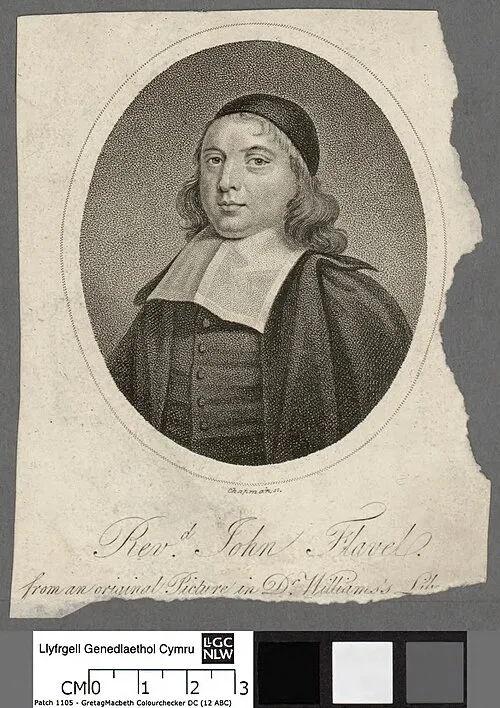
Un santo de verdad
Sobre toda cosa guardada guarda tu corazón; porque de él mana la vida. — Proverbios 4:23.
El corazón del hombre es su peor parte antes de ser regenerado, y la mejor después: es el asiento de los principios y la fuente de las acciones. El ojo de Dios está, y el ojo del cristiano debe estar, fijado principalmente en él.
La mayor dificultad en la conversión es ganar el corazón para Dios; y la mayor dificultad después de la conversión es guardar el corazón con Dios. Aquí está el aprieto mismo y el peso de la religión; aquí está aquello que hace del camino de la vida un camino angosto, y de la puerta del cielo una puerta estrecha. La dirección y la ayuda en esta gran obra son el fin y la suma de este texto, en el cual tenemos,
-
Una exhortación, Sobre toda cosa guardada guarda tu corazón.
-
La razón, o el motivo que la refuerza; porque de él mana la vida.
En la exhortación consideraré,
-
La materia del deber.
-
La manera de practicarlo.
-
La materia del deber, guarda tu corazón. El corazón no se toma aquí propiamente por aquella parte noble del cuerpo que los filósofos llaman primum vivens, et ultimum moriens; lo primero que vive y lo último que muere; sino que por corazón, por metáfora, la Escritura entiende a veces alguna facultad particular y noble del alma: en Romanos 1:21 se pone por la parte del entendimiento, el necio corazón de ellos, (es decir) su necio entendimiento fue entenebrecido. Y en Salmos 119:11 se pone por la memoria, En mi corazón he guardado tus dichos; y en 1 Juan 3:20 se pone por la conciencia, la cual tiene en sí tanto la luz del entendimiento como los reconocimientos de la memoria: si nuestro corazón nos reprendiere, (es decir) si nuestra conciencia, cuyo oficio propio es condenar. Pero aquí hemos de tomarlo de modo más general, por el alma entera, o el hombre interior; porque lo que el corazón es para el cuerpo, eso es el alma para el hombre; y lo que la salud es para el corazón, eso es la santidad para el alma: Quod sanitas in corpore id sanctitas in corde [N. del T.: lo que la salud es en el cuerpo, eso es la santidad en el corazón]. El estado de todo el cuerpo depende de la sanidad y el vigor del corazón, y el estado eterno de todo el hombre, de la buena o mala condición del alma.
Y por guardar el corazón, entiende el uso y el aprovechamiento diligente y constante (nota del autor: digo constante, porque la razón añadida en el texto extiende el deber a todos los estados y condiciones de la vida del cristiano, y hace que obligue ad semper [N. del T.: para siempre]: si el corazón ha de guardarse porque de él mana la vida, entonces, mientras estas salidas de la vida sigan manando de él, estamos obligados a guardarlo.) de todos los medios y deberes santos, para preservar el alma del pecado y mantener su dulce y libre comunión con Dios. Lavater in loc. [N. del T.: en este pasaje] sostiene que la palabra está tomada de una guarnición sitiada, cercada por muchos enemigos de fuera y en peligro de ser traicionada por ciudadanos traidores de dentro: en tal peligro, a los soldados se les manda velar so pena de muerte; y aunque la expresión (guarda tu corazón) parece imponérnoslo como obra nuestra, no implica, sin embargo, suficiencia o capacidad en nosotros para hacerlo. Tan capaces somos de detener el sol en su carrera, o de hacer que los ríos corran hacia atrás, como de regir y ordenar nuestros corazones con nuestra propia destreza y poder: tanto valdría que fuéramos nuestros propios salvadores como nuestros propios guardadores; y sin embargo Salomón habla con bastante propiedad cuando dice guarda tu corazón, porque el deber es nuestro, aunque el poder sea de Dios. El hombre natural no tiene poder alguno; el hombre que tiene gracia tiene alguno, aunque no suficiente; y el poder que tiene depende de la fuerza con que Cristo lo despierta y lo auxilia: gratia gratiam postulat, la gracia que hay dentro de nosotros es deudora de la gracia que está fuera de nosotros. Sin mí nada podéis hacer, Juan 15:5. Hasta aquí la materia del deber.
-
La manera de practicarlo es sobre toda cosa guardada; el hebreo es muy enfático, cum omnicustodia [N. del T.: «con toda custodia»], guarda con toda guarda, quid. [N. del T.: abreviatura latina del original, de sentido incierto] guarda, guarda; pongan doble guardia, que si no se les irán los corazones. Y esta vehemencia de expresión con que se urge el deber da a entender con claridad cuán difícil es guardar nuestros corazones, y cuán peligroso es dejarlos ir.
-
La razón, o el motivo que aviva este deber, es muy fuerte y de peso: porque de él mana la vida. Esto es, es la fuente y el manantial de todas las acciones y operaciones vitales; hinc fons boni et peccandi origo [N. del T.: de aquí la fuente del bien y el origen del pecar], dice Jerónimo; es el manantial y el origen tanto del bien como del mal, como el resorte de un reloj que pone en movimiento todas las ruedas. El corazón es el tesoro; la mano y la lengua, no más que las tiendas: lo que hay en estas viene de allí; la mano y la lengua siempre empiezan donde el corazón termina. El corazón concibe, y los miembros ejecutan, Lucas 6:45. El buen hombre del buen tesoro de su corazón saca bien; y el mal hombre del mal tesoro de su corazón saca mal; porque de la abundancia del corazón habla su boca. Así pues, si el corazón yerra en su obra, estos por fuerza han de salir mal en la suya; porque los errores del corazón son como los errores de la primera digestión, que no se pueden corregir después; o como el trastrocar y el invertir los tipos y las letras en la prensa, lo cual por fuerza causa otras tantas erratas en todos los ejemplares que se imprimen. ¡Oh, cuán importante es entonces el deber que se contiene en la proposición siguiente!
Doctrina. Que el guardar el corazón, y el manejarlo rectamente en toda condición, es el gran negocio de la vida del cristiano.
Lo que el filósofo dice de las aguas se aplica con igual propiedad a los corazones; suis terminis: difficile continentur [N. del T.: dentro de sus límites se contienen con dificultad]: es difícil mantenerlos dentro de límite alguno. Dios les ha puesto límites y linderos; sin embargo, ¿con qué frecuencia los traspasan, no solo los de la gracia y la religión, sino aun los de la razón y la honradez común? Hic labor hoc opus est [N. del T.: «esta es la fatiga, esta es la obra»]: esto es lo que da al cristiano materia de labor, de temor y de temblor hasta el día de su muerte. No es el limpiar la mano lo que hace al cristiano, pues más de un hipócrita puede mostrar una mano tan limpia como la suya; sino el purificar, el velar y el ordenar rectamente el corazón: esto es lo que provoca tantas quejas tristes, y cuesta tantos gemidos profundos y lágrimas salobres. Fue el orgullo del corazón de Ezequías lo que lo hizo yacer en el polvo, lamentándose delante del Señor, 2 Crónicas 32:26. Fue el temor de que la hipocresía invadiera el corazón lo que hizo clamar a David: Sea mi corazón íntegro en tus estatutos; porque no sea yo avergonzado, Salmos 119:80. Fue la triste experiencia que tuvo de las divisiones y distracciones de su propio corazón en el servicio de Dios lo que lo hizo derramar aquella oración: consolida mi corazón para que tema tu nombre, Salmos 86:11.
El método con que desenvolveré el punto será este;
Primero, indagaré qué supone y qué implica el guardar el corazón.
Segundo, expondré diversas razones por las que los cristianos deben hacer de esto la gran obra y el gran negocio de sus vidas.
Tercero, señalaré aquellos tiempos particulares que reclaman especialmente esta diligencia en guardar el corazón.
Cuarto, y por último, aplicaré el todo en varios usos.
Ver el original (inglés)
Original en inglés
A SAINT INDEED
Keep thy heart with all diligence; for out of it are the issues of life—Prov. iv. 23.
The heart of man is his worst part before it be regenerate, and the best afterwards: it is the seat of principles, and fountain of actions. The eye of God is, and the eye of a Christian ought to be, principally fixed upon it.
The greatest difficulty in conversion, is, to win the heart to God; and the greatest difficulty after conversion, is, to keep the heart with God. Here lies the very pinch and stress of religion; here is that which makes the way to life a narrow way, and the gate to heaven a strait gate. Direction and help in this great work, are the scope and sum of this text; wherein we have,
-
An exhortation, keep thy heart with all diligence.
-
The reason, or motive enforcing it; for out of it are the issues of life.
In the exhortation I shall consider,
-
The matter of the duty.
-
The manner of performing it.
-
The matter of the duty, keep thy heart. Heart is not here taken properly for that noble part of the body which philosophers call, the primum vivens, et ultimum moriens; the first that lives, and the last that dies; but by heart, in a metaphor, the scripture sometimes understands some particular noble faculty of the soul: in Rom. i. 21, it is put for the understanding part, their foolish heart, (i. e.) their foolish understanding was darkened. And Psalm cxix. 11, it is put for the memory, thy word have I hid in my heart; and 1 John iii. 20, it is put for the conscience, which hath it in both the light of the understanding, and the recognitions of the memory: if our heart condemn us, (i.e.) if our conscience, whose proper office it is to condemn. But here we are to take it more generally for the whole soul, or inner man; for look what the heart is to the body, that the soul is to the man; and what health is to the heart, that holiness is to the soul: Quod sanitas in corpore id sanctitas in corde. The state of the whole body depends upon the soundness and vigour of the heart, and the everlasting state of the whole man upon the good or ill condition of the soul.
And by keeping the heart, understand the diligent and constant (author’s note: I say constant; for the reason added in the text extends the duty to all the states and conditions of a Christian’s life, and makes it bind ad semper: if the heart must be kept because out of it are the issues of life, then as long as these issues of life do flow out of it, we are obliged to keep it.) use and improvement of all holy means and duties, to preserve the soul from sin, and maintain its sweet and free communion with God. Lavater in loc. will have the word taken from a besieged garrison, begirt by many enemies without, and in danger of being betrayed by treacherous citizens within: in which danger, the soldiers, upon pain of death, are commanded to watch; and whereas the expression (keep thy heart) seems to put it upon us as our work, yet it does not imply a sufficiency or ability in us to do it. We are as able to stop the sun in its course, or make the rivers run backward, as by our own skill and power to rule and order our hearts: we may as well be our own saviours, as our own keepers; and yet Solomon speaks properly enough when he says, keep thy heart; because the duty is ours; though the power be God’s. A natural man hath no power: a gracious man hath some, though not sufficient; and that power he hath, depends upon the exciting and assisting strength of Christ: gratia gratiam postulat, grace within us is beholding to grace without us. Without me ye can do nothing, John xv. 5. So much of the matter of the duty.
-
The manner of performing it, is with all diligence; the Hebrew is very emphatical, cum omnicustodia, keep with all keeping, quid. keep, keep; set double guards, your hearts will be gone else. And this vehemency of expression with which the duty is urged, plainly implies how difficult it is to keep our hearts, and how dangerous to let them go.
-
The reason, or motive quickening to this duty, is very forcible and weighty: for out of it are the issues of life. That is, it is the source and fountain of all vital actions and operations; hinc fons buni et pecandi orige, saith Jerom; it is the spring and original both of good and evil, as the spring in a watch that sets all the wheels in motion. The heart is the treasury, the hand and tongue but the shops: what is in these, comes from thence; the hand and tongue always begin where the heart ends. The heart contrives, and the members execute, Luke vi. 45. A good man out of the good treasury of his heart bringeth forth good things, and an evil man out of the evil treasury of his heart bringeth forth evil things: for out of the abundance of his heart his mouth speaketh. So then, if the heart err in its work, these must needs miscarry in theirs; for heart-errors are like the errors of the first concoction, which cannot be rectified afterwards: or like the misplacing, and inverting of the stamps and letters in the press, which must needs cause so many errata in all the copies that are printed off. O then how important a duty is that which is contained in the following proposition!
Doct. That the keeping, and right managing of the heart in every condition, is the great business of a Christian’s life.
What the philosopher saith of waters, is as properly applicable to hearts; suis terminis: dafficile continentur: it is hard to keep them within any bounds: God hath set bounds and limits to them, yet how frequently do they transgress, not only the bounds of grace and religion, but even of reason and common honesty? Hic labour hoc opus est: this is that which affords the Christian matter of labour, fear and trembling to his dying day. It is not the cleansing of the hand that makes a Christian, for many a hypocrite can shew as fair a hand as he; but the purifying, watching, and right ordering of the heart; this is the thing that provokes so many sad complaints, and costs so many deep groans and brinish tears. It was the pride of Hezekiah’s heart that made him lie in the dust mourning before the Lord, 2 Chron. xxxii. 26. It was the fear of hypocrisy invading the heart, that made David cry, let my heart be sound in thy statutes, that I be not ashamed, Psal. cxix. 80. It was the sad experience he had of the divisions and distractions of his own heart in the service of God, that made him pour out that prayer, unite my heart to fear thy name, Psal. lxxxvi. 11.
The method in which I shall improve the point shall be this;
First, I shall enquire what the keeping of the heart supposes and imports.
Secondly, Assign divers reasons, why Christians must make this the great work and business of their lives.
Thirdly, Point at those special seasons which especially call for this diligence in keeping the heart.
Fourthly, and lastly, apply the whole in several uses.
https://sermonesbiblicos.org/biblioteca/guardar-el-corazon-02-el-texto/