Sermones Bíblicos
Epístola dedicatoria
John Flavel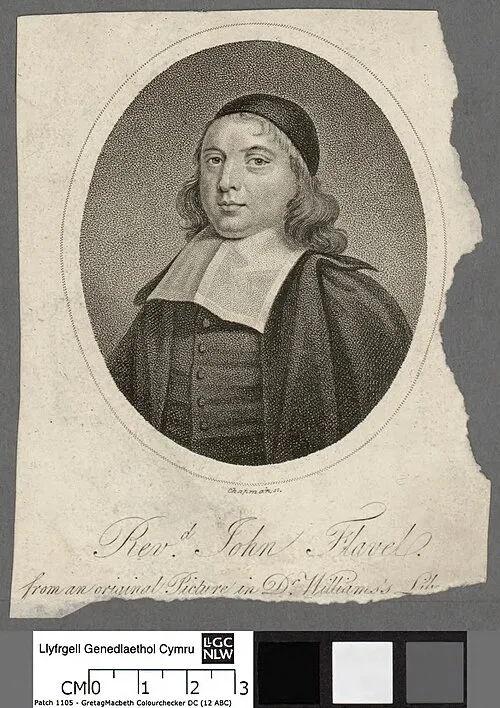
Epístola dedicatoria.
A mis muy amados y deseados, el rebaño de Jesucristo en Dartmouth, sobre el cual el Espíritu Santo me ha puesto por obispo: se les desea de corazón juicio sano, celo verdadero y pureza sin mancha.
Mis queridos amigos:
Hay tres tristes espectáculos con los cuales nuestros ojos deberían conmover de continuo nuestros corazones. El primero es contemplar, en todo lugar, a tantos profanos y disolutos, que llevan la imagen misma de Satanás; el semblante de su conducta descubre con claridad lo que son y adónde van, Filipenses 3:18-19. Estos parecen lo que son: hijos de ira. El segundo es ver a tantos hipócritas malditos que se disfrazan con artificio y, con destreza maravillosa, representan el papel de santos; de modo que aun un ojo juicioso puede a veces confundir las operaciones similares del Espíritu en ellos con sus operaciones salvadoras en otros. Oír a tal persona departir, orar, lamentar sus corrupciones y hablar de sus experiencias persuadiría fácilmente a cualquiera de que tiene el corazón, y no solo el rostro, de un cristiano sincero: pues sic oculus, sic ille manus, sic ora ferebat. [N. del T.: así el ojo, así las manos, así el rostro.]
Así habla el pueblo de Dios, así ora, y así mismo exponen su estado: estos parecen santos, pero no lo son. El tercero es ver a tantos santos de verdad, en quienes está el Espíritu de verdad, y que, sin embargo, por las impetuosas operaciones de sus corrupciones y por descuidar la vigilancia sobre sus corazones, caen a menudo en prácticas tan escandalosas que parecen hipócritas, aunque no lo son.
Estos son, en verdad, tres tristes espectáculos; y ¡ojalá mi cabeza fuera aguas, y mis ojos fuentes de lágrimas, para llorar abundantemente sobre todos ellos!
Por los primeros lloraría de corazón, considerando que ellos (si así continúan) han de ser condenados eternamente, 2 Tesalonicenses 1:8-9; 1 Corintios 6:9.
Por los segundos lloraría y temblaría a la vez, considerando que ellos (si así permanecen) han de ser condenados doblemente, Mateo 24:51.
Y por los terceros, no menos que por cualquiera de los otros, porque, aunque ellos mismos pueden ser salvos, y lo serán, con todo sus ejemplos afianzan los lazos de la muerte sobre los dos primeros, Mateo 18:7; 2 Samuel 12:13-14.
¡Ay! ¡Que alguna vez lleguen a derramar la sangre de otras almas, por quienes Cristo derramó su propia sangre! ¡Que lleguen a ser crueles con otros, ellos que han hallado a Cristo tan bondadoso con ellos! Sé que no se atreven a hacerlo directa e intencionalmente, pero así resulta, por ocasión y en el desenlace. Permítanme aquí apartarme un poco, y razonar con estas almas prejuiciadas y endurecidas; en seguida vuelvo otra vez a ustedes. Oh, ¿por qué dañan sus propias almas con el ejemplo de otros hombres? ¿Porque ellos tropiezan y se rompen las espinillas, van ustedes a caer y romperse el cuello? Deseo que todos los que se endurecen con estas cosas, y se forman un buen concepto de su propia condición deplorable, lo consideren con sobriedad y respondan a estas tres preguntas.
Pregunta 1. ¿Ampara o patrocina la religión, de alguna manera, las prácticas pecaminosas de sus profesantes? ¿O no las condena más bien, con imparcialidad y con severidad? Es la gloria de la religión cristiana el ser pura y sin mácula, Santiago 1:27. Ninguna doctrina es tan santa, Salmos 19:8. Ni ninguna hace mayor provisión para una vida santa, Tito 2:11-12. Hay, en verdad, un caso en que podemos cargar las malas prácticas de los hombres a sus principios; pero es aquel en que sus prácticas brotan naturalmente de sus principios y se siguen de ellos por necesidad. Por ejemplo: si veo a un papista pecar con osadía, puedo cargarlo a sus principios, pues ponen las indulgencias a la venta, y así abren camino a la disolución; si veo a un arminiano menospreciar la gracia de Dios y enaltecerse con soberbia, puedo clamar: ¡vergüenza sobre sus principios, que conducen directamente a ello! Pero ¿puedo hacerlo allí donde tales prácticas están condenadas, y se ha provisto contra ellas, por los propios principios declarados de quienes las cometen?
Pregunta 2. ¿No es cosa de lo más irracional arremeter contra la religión por los caminos escandalosos de algunos, mientras ustedes, entre tanto, desprecian por completo y pasan por alto la conducta santa y celestial de muchos otros? ¿Andan flojos y descuidados en su vida todos los que poseen la piedad? No: algunos son adorno de su profesión, y la gloria de Cristo. ¿Y por qué ha de ser condenado el inocente con el culpable? ¿Por qué los once, por un Judas?
Pregunta 3. Si condenan la religión por la vida escandalosa de algunos que la profesan, ¿no han de desechar entonces toda religión del mundo, y volverse ateos de plano? Ciertamente esta es la consecuencia: pues ¿qué religión hay, sino que algunos de los que la profesan andan en contra de su profesión? Y entonces, como Constantino le dijo al novaciano, tienes que levantar tu escalera e ir al cielo por ti mismo. Pero, ¡ay!, no son nuestras apologías impresas en favor de la religión, sino la reforma visible de sus profesantes, lo que ha de reparar a la vez su honor y quitar esos tropiezos fatales, contra los cuales golpea el mundo ciego y cae en perdición eterna.
Ahora bien, hay dos caminos por los cuales esto puede lograrse. Primero, convenciendo las conciencias de los profesantes de sus extravíos, y del mal y de los agravantes de estos. Segundo, medicando el corazón y limpiando la fuente de donde proceden. En el primero de ellos ha trabajado hace poco un siervo de Cristo digno y eminente, poniendo un claro espejo del evangelio ante el rostro de los profesantes, espejo que representa de verdad sus manchas y sus tachas: si el que lo lee quiere considerar, aplicar y practicar, sin duda redundará en su salvación; pero si no le resulta de provecho a quien lo lee, sé que servirá de testimonio a favor de quien lo escribió. El segundo es un designio principal de este pequeño tratado, cuyo asunto es de sumo peso y de uso diario para el pueblo de Dios, aunque el modo de tratarlo vaya acompañado de muchos defectos y flaquezas: no todos pueden ser excelentes, y con todo pueden ser útiles.
No fatigaré su paciencia más tiempo del que tarde en decirles:
-
Por qué lo publico a la vista del mundo.
-
Por qué se lo dirijo particularmente a ustedes.
Primero, en cuanto a la publicación, reciban este relato sincero y breve: así como una providencia especial me llevó a este asunto, así una especie de necesidad me llevó a publicarlo. La providencia que al principio me condujo a él fue esta: un amigo querido y escogido, de mi trato íntimo, hallándose bajo mucha turbación interior a causa de cierto desorden particular del corazón, me abrió el caso, y me pidió con empeño algunas reglas y auxilios en ese particular. Mientras yo aplicaba mis pensamientos a ese caso especial, acudieron a mi mente otros varios casos de parecida importancia (algunos de los cuales dependían de aquella consideración); y esta Escritura, sobre la cual he insistido, se presentó como fundamento apto de todo el discurso. Extendido este hasta lo que ustedes ven, diversos amigos me pidieron que transcribiera, para uso de ellos, diversos de los casos aquí tratados, y algunos otros me rogaron que publicara el conjunto; a lo cual, en cierto modo, me vi obligado, a fin de ahorrarme el trabajo de transcribir, que para mí es obra muy tediosa y fatigosa. Y justo cuando casi había terminado la copia, se presentó una oportunidad (y ello de un modo algo extraño) de hacerla pública. Así que, de principio a fin, he sido llevado más allá de mis primeras intenciones en esto.
Objeción. Si alguno dice que el mundo está ya hastiado de libros, y que por tanto, aunque el discurso sea necesario, la publicación es innecesaria.
Solución. Respondo: hay, en verdad, multitud de libros, y de ellos muchos no se ocupan de las verdades de raíz ni de la piedad práctica, sino que gastan sus fuerzas en nociones impracticables y en controversias frívolas; muchos también golpean las verdades de raíz, y procuran socavar el poder de la piedad; y los hay que nutren la raíz, y tienden a aclarar y confirmar, a preparar y aplicar las grandes verdades del evangelio, para que sean pan del cual las almas vivan y se alimenten. Ahora bien, aunque yo quisiera que quienes han manejado la pluma del escriba hubieran empleado mejor su tiempo y su trabajo, y no endilgaran al mundo discursos tan inútiles, con todo, de los libros de esta última clase digo que, cuando los labradores se quejen de demasiado trigo, que entonces se quejen los cristianos de demasiados libros así.
- Y si tanto presumen de su propio caudal y de su capacidad, que tales libros les son innecesarios, si los dejan estar, no les harán daño; y otras pobres almas hambrientas se alegrarán de ellos, y bendecirán a Dios por lo que ustedes desprecian y dejan.
Objeción. Si se dice que varios de los casos aquí tratados no tocan su condición, respondo:
Solución. 1. Lo que no es condición de ustedes puede ser condición de otro. Si ustedes están puestos en un estado fácil, colmado y próspero, y así no tienen necesidad de los auxilios que aquí se ofrecen para sostener su corazón bajo necesidades que aprietan, otros se ven forzados a vivir por fe para el sustento de cada día. Si a ustedes los mecen sobre la rodilla de la providencia, algunos de sus hermanos están bajo los pies de ella. Si ustedes tienen paz interior y tranquilidad de espíritu, y así no necesitan los consejos que aquí se dan para rechazar esas conclusiones desesperadas que las pobres almas afligidas están prontas a sacar contra sí mismas en tal tiempo, con todo puede ser palabra a su tiempo para ellas, y podrán decir, como David a Abigail: bendita seas tú del Señor, y bendito sea tu consejo.
-
Pronto puede ser condición de ustedes lo que ahora no lo es. No digas que tu monte está firme, ni que nunca serás conmovido. Hay mudanzas en la diestra del Altísimo; y entonces aquellas verdades, que apenas se estiman más que los frutos de seto, serán como manzanas de oro con figuras de plata. En Jeremías 10:11 el profeta enseña allí a los judíos (que entonces habitaban en sus propias casas) cómo defender su religión en Babilonia, y qué habían de decir allí a los caldeos; y por eso ese versículo está escrito en caldeo. Basta en cuanto a las razones de su publicación. Ahora, en cuanto a dedicárselo a ustedes, me indujeron a ello las consideraciones siguientes:
-
La relación que tengo con ustedes, por encima de todo pueblo del mundo. Miro mis dones como de ustedes, mi tiempo como de ustedes, y todos los talentos que se me han confiado, como de ustedes. No es con ustedes como con la mujer cuyo marido ha muerto, y así queda libre de la ley de su marido: la relación aún continúa, y así continúan todos los deberes mutuos de ella.
-
La consideración de mi ausencia forzosa de entre ustedes. No querría que la ausencia personal, por grados insensibles, fuera destorciendo (como suele hacerlo) el cordón de la amistad; y por eso he procurado (como suelen hacer los amigos ausentes) conservarla y fortalecerla mediante este pequeño recuerdo. Fue la respuesta de Vespasiano a Apolonio, cuando este pidió entrada para dos filósofos: mis puertas (dijo Vespasiano) están siempre abiertas a los filósofos, pero mi propio pecho está abierto a ti. No puedo decir con él que mis puertas estén abiertas al libre acceso de los amigos, pues una triste providencia las tiene cerradas contra mí mismo; pero esto sí puedo decir: mi propio pecho sigue abierto a ustedes; me son tan queridos como siempre.
-
Otro motivo (y en verdad el principal) fue la perpetua utilidad y la necesidad de estas verdades para ustedes, de las cuales tendrán continua necesidad. Y sé que pocos de ustedes tienen tan feliz memoria para retenerlas, y yo no puedo estar siempre con ustedes para inculcar estas cosas, pero litera scripta manet. [N. del T.: la letra escrita permanece.] Quise dejarles esto como un legado, como testimonio de sincero amor hacia ustedes y de cuidado sobre ustedes. Esto puede aconsejarlos y dirigirlos cuando yo no pueda. Una muerte civil o una muerte natural puede volverme inútil para ustedes; pero esto me sobrevivirá, y ¡ojalá sirva a sus almas cuando yo guarde silencio en el polvo!
Por abreviar ahora hacia el fin: solo tres peticiones tengo que hacerles, las cuales les ruego encarecidamente que no me nieguen; sí, les encargo que, como alguna vez esperan comparecer con consuelo ante el gran Pastor, no se atrevan a despreciar estas peticiones.
-
Por encima de todos los demás estudios del mundo, estudien sus propios corazones. No malgasten un minuto más de su precioso tiempo en controversias frívolas y sin jugo. Se cuenta aun de Belarmino (cuán verdadero sea, no lo examino) quod a studiis scholasticae theologiae averteretur fere nause abundas, quonian succo carebant liquid pietatis, es decir, se apartaba con náusea del estudio de la teología escolástica, porque carecía del dulce jugo de la piedad. Preferiría que se dijera de ustedes, como alguien dijo de Swinkfeldius, le faltaba una cabeza ordenada, pero no un corazón honesto, antes que tuvieran cabezas ordenadas y corazones desordenados. Mi querido rebaño: según la gracia que me fue dada, me he afanado en el curso de mi ministerio entre ustedes por alimentarlos con el pan que fortalece el corazón, el de la doctrina práctica; y les aseguro que es mucho mejor que tengan las impresiones dulces y salvadoras de las verdades del evangelio, comunicadas a sus corazones de un modo sentido y poderoso, que entenderlas tan solo por un mero raciocinio, o por una seca inferencia silogística. Dejen los estudios triviales a quienes tienen el tiempo de sobra entre las manos y no saben cómo emplearlo. Recuerden que están a la puerta de la eternidad, y que tienen otra obra que hacer. Esas horas que gastan en la obra del corazón, en sus aposentos, son los puntos de oro de todo su tiempo, y tendrán el influjo más dulce hasta su última hora. Nunca olviden aquellos sermones que les prediqué sobre ese asunto, a partir de 2 Reyes 20:2-3. La obra del corazón es obra grave y difícil; y un error ahí puede costarles las almas. Puedo decir de ella lo que Agustín dice de la doctrina de la trinidad: nihilo facilius aut periculosius erratur; en nada puede el hombre errar con más facilidad ni con más peligro. ¡Oh, entonces, estudien sus corazones!
-
Mi siguiente petición es que miren con cuidado su conducta, y sean exactos en todos sus caminos; sostengan en alto la palabra de vida. Asegúrense, por el rigor y la santidad de sus vidas, de asentarse en las conciencias mismas de sus enemigos. Recuerden que sus vidas han de ser presentadas en el gran día para juzgar al mundo, 1 Corintios 6:2. ¡Oh, entonces, qué tales conviene que vosotros seáis! Tienen muchos ojos sobre ustedes: el ojo omnisciente de Dios, que escudriña el corazón y los riñones, Apocalipsis 2:23; el ojo vigilante de Satanás, Job 1:7-8; los ojos envidiosos de los enemigos, que los observan con minucia, Salmos 5:8; el ojo pronto y observador de la conciencia, del cual no se escapa ninguna de sus acciones, Romanos 9:1.
¡Oh, entonces, sean precisos y exactos en todo género de conducta! Mantengan el poder de la piedad en sus aposentos y en sus familias, y entonces no lo dejarán caer en sus empleos más públicos ni en su conducta en el mundo. Muchas veces les he dicho que es honra del evangelio el hacer los mejores padres e hijos, los mejores amos y siervos, los mejores maridos y esposas del mundo.
Mi tercera y última petición es que oren por mí. Espero poder decir, y estoy seguro de que algunos de ustedes lo han reconocido, que vine al principio entre ustedes como la respuesta y la contestación de sus oraciones; y así, en verdad, debe ser, Lucas 10:2. También estoy persuadido de que he sido llevado adelante en mi obra por las oraciones de ustedes; es dulce cuando es así, Efesios 6:18-19. Y espero recibir aún, por sus oraciones, un beneficio más, aquel mismo que se menciona en Hebreos 13:18-19 y en Filemón 22. Y en verdad no es más que justo que oren por mí: muchas veces he orado yo por ustedes. Que den testimonio por mí el púlpito, la familia y el aposento; y lejos sea de mí que peque yo contra Jehová cesando de rogar por vosotros.
Sí, amigos: el interés de ustedes debería persuadirlos a ello. Las misericordias que alcancen para mí redundan en provecho de ustedes mismos; si Dios me preserva, es para uso y servicio de ustedes. Cuantos más dones y gracias tiene un ministro, tanto mejor para los que han de asistir a su ministerio; cuanto más derrame Dios en mí, tanto más podré yo derramar hacia ustedes. No los detendré más, sino para rogarles que acepten este pequeño testimonio de mi gran amor, y que acudan a él según lo exijan las necesidades de su condición. Léanlo con consideración y con obediencia; no lo juzguen por el vestido y el estilo, sino por el peso y el sabor de lo que leen. Es una buena regla de Bernardo: in legendis libris, non quaeramus scientiam sed saporem, es decir, al leer los libros, no atendamos tanto a la ciencia como al sabor. Que resulte olor de vida para vida para ustedes, y para todos aquellos a cuyas manos llegue, es el deseo cordial de,
Su pastor, que los ama y les es fiel,
JOHN FLAVEL.
Desde mi estudio en Ley, en Slapton,
7 de octubre de 1667.
Ver el original (inglés)
Original en inglés
EPISTLE DEDICATORY.
To my dearly beloved and longed for, the flock of Jesus Christ in Dartmouth, over whom the Holy Ghost hath made me an overseer; sound judgment, true zeal, and unstained purity, are heartily wished.
My Dear Friends,
There are three sad sights with which our eyes should continually affect our hearts: the 1st, is to behold in every place, so many profane and dissolute ones, who bear the very image of Satan; the face of whose conversation plainly discovers what they are and whither they are going, Phil. iii. 18, 19. These look like themselves, the children of wrath. The 2d, is to see so many cursed hypocrites artificially disguising themselves, and with marvellous dexterity acting the parts of saints; so that even a judicious eye may sometimes mistake the similar workings of the spirit on them, for his saving workings on others: to hear such a person conferring, praying, bewailing his corruptions, and talking of his experiences; would easily persuade a man to believe that he hath the heart, as well as the face, of a sincere Christian: for, sic oculus, sic ille manus, sic ora ferebat.
So the people of God do speak, so they pray, and even so they open their conditions: these look like saints, but are none. The 3d, is to see so many real saints, in whom the spirit of truth is, who yet, through the impetuous workings of their corruptions, and neglecting of the watch over their hearts, do often fall into such scandalous practices, that they look like hypocrites, though they are not so.
These are three sad sights indeed; and, Oh that my head were waters, and mine eyes fountains of tears, that I might weep abundantly over them all!
For the first, I would mourn heartily, considering that they (so continuing) must be damned eternally, 2 Thess. i. 8, 9. 1 Cor. vi. 9.
For the second, I would both weep and tremble, considering that they (so abiding) must be damned doubly, Matth. xxiv. 51.
And for the third, no less than any of the rest, because, though they themselves may, and shall be saved, yet their examples make fast the bonds of death upon both the former, Matth. xviii. 7. 2 Sam. xii. 13, 14.
Alas! that ever they should shed the blood of other souls, for whom Christ shed his own blood! that ever they should be cruel to others, who have found Christ so kind to them! I know they dare not do it directly and intentionally, but so it proves occasionally and eventually. Suffer me here to digress a little, and expostulate with these prejudiced and hardened souls; I will presently return to you again. O why do you mischief your own souls by other men’s examples? because they stumble and break their shins, will you fall, and break your necks? I desire all such as harden themselves by these things, and take up a good opinion of their own deplorable condition, would soberly consider, and answer these three queries.
Query 1. Doth religion any way countenance or patronize the sinful practices of its professors? Or doth it not rather impartially and severely condemn them? It is the glory of the Christian religion, that it is pure and undefiled, Jam. i. 27. No doctrine so holy, Psal. xix. 8. Nor doth any make more provision for an holy life, Tit. ii. 11, 12. Indeed there is a case wherein we may change the evil practices of men upon their principles; but that is, when their practices naturally flow from, and necessarily follow their principles: as for example, if I see a Papist sin boldly, I may charge it upon his principles, for they set pardons to sale, and so make way for looseness; if I see an Arminian slight the grace of God, and proudly advance himself, I may cry, shame upon his principles, which directly lead to it: but can I do so, where such practices are condemned and provided against, by their own avowed principles who commit them?
Query 2. Is it not a most irrational thing to let fly at religion because of the scandalous ways of some, whilst in the mean time you wholly slight and overlook the holy and heavenly conversation of many others? Are all that possess godliness loose and careless in their lives? no, some are an ornament to their profession, and the glory of Christ; and why must the innocent be condemned with the guilty? why the eleven, for one Judas?
Query 3. If you condemn religion because of the scandalous lives of some that profess it, must you not then cast off all religion in the world, and turn downright Atheists? Surely this is the consequence of it: for what religion is there, but some that profess it walk contrary to their professions? and then, as Constantine told the Novatian, you must set set up your ladder, and go to heaven by yourself. But, alas! it is not our printed apologies for religion, but the visible reformation of its professors, that must both salve its honour, and remove those fatal stumbling-blocks at which the blind world strikes, and falls into eternal perdition.
Now there are two ways by which this may be effected: First”, by convincing the consciences of professors of their miscarriages; and the evil and aggravations of them. Secondly, by medicating the heart, and cleansing the fountain whence they proceed. In the first of these, a worthy and eminent servant of Christ has lately laboured, holding a clear gospel-glass before the faces of professors, which truly represents their spots and blemishes: if he that reads it will consider, apply, and practice, it shall doubtless turn to his salvation; but if it turn to no good account to him that reads it, I know it shall turn to a testimony for him that wrote it. The second is a principal design of this small treatise, the subject whereof is exceeding weighty, and of daily use to the people of God, though the manner of handling it be attended with many defects and weaknesses: every one cannot be excellent, who yet may be useful.
I will exercise your patience no longer than whilst I tell you,
-
Why I publish it to the view of the world.
-
Why I direct it particularly to you.
First, for the publication of it, take this sincere and brief account, that, as I was led to this subject by a special providence, so to the publication of it by a kind of necessity: the providence at first leading me to it, was this, a dear and choice friend of my intimate acquaintance, being under much inward trouble, upon the account of some special heart-disorder, opened the case to me; and earnestly requested some rules and helps in that particular: whilst I was bending my thoughts to that special case, divers other cases of like importance (some of which were dependent upon that consideration) occurred to my thoughts; and this scripture, which I have insisted upon, presented itself, as a fit foundation for the whole discourse; which being lengthened out to what you see, diverse friends requested me to transcribe for their use, divers of the cases here handled, and some others begged me to publish the whole; to which I was in a manner necessitated, to save the pains of transcribing, which to me is a very tedious and tiresome work: and just as I had almost finished the copy, and opportunity presented (and that somewhat strangely) to make it public. So that from first to last I have been carried beyond my first intentions in this thing.
Object. If any say, the world is even cloyed with books; and therefore, though the discourse be necessary, yet the publication is needless.
Sol. I answer, There are multitudes of books indeed, and of them, many concern not themselves about root-truths, and practical godliness, but spend their strength upon impracticable notions and frivolous controversies; many also strike at root-truths, and endeavor to undermine the power of godliness; and some there are that nourish the root, and tend to clear and confirm, to prepare and apply the great truths of the gospel, that they may be bread for souls to live and feed on: now, though I could wish, that those who have handled the pen of the scribe, had better employed their time and pains than to obtrude such useless discourses upon the world; yet, for books of the latter rank, I say, that, when husbandmen complain of too much corn, let Christians complain of too many such books.
- And if you be so highly conceited of your own furniture and ability, that such books are needless to you; if you let them alone, they will do you no hurt, and other poor hungry souls will be glad of them, and bless God for what you despise and leave.
Object. If it be said, that several of the cases here handled touch not your condition, I answer,
Sol. 1. That which is not your condition may be another’s condition. If you be placed in an easy, full, and prosperous state, and so have no need of the helps here offered to support your heart under pinching wants, others are forced to live by faith for every day’s provision: If you be dandled upon the knee of providence, some of your brethren are under its feet: if you have inward peace and tranquility of spirit, and so need not the counsels here given, to ward off those desperate conclusions that poor afflicted souls are ready to draw upon themselves at such a time; yet it may be a word in season to them, and they may say, as David to Abigail, blessed be thou of the Lord, and blessed by thy advice.
-
That may be your condition shortly, which is not your condition at present: say not, thy mountain stands strong, thou shalt never be moved: there are changes in the right-hand of the most High; and then those truths, which are little more esteemed than hedge-fruits, will be as apples of gold in pictures of silver. In Jer. 10, 11, the prophet there teaches the Jews (who then dwelt in their own houses) how to defend their religion in Babylon, and what they should say to the Chaldeans there, and therefore that verse is written in Chaldee. So much for the reasons of its publication. Next, for the dedication of it to you, I was induced thereto by the considerations,
-
Of the relation I have to you above all the people in the world: I look upon my gifts as yours, my time as yours, and all the talents I am intrusted with, as yours: it is not with you as with a woman whose husband is dead, and so is freed from the law of her husband; the relation still continues, and so do all the mutual duties of it.
-
By the consideration of my necessitated absence from you. I would not that personal absence should by insensible degrees untwist (as usually it doth) the cord of friendship; and therefore have endeavoured (as absent friends use to do) to preserve and strengthen it by this small remembrance. It was Vespasian’s answer to Apollonius, when he desired access for two philosophers: my doors (said Vespasian) are always open to philosophers, but my very breast is open to thee. I cannot say with him, my doors are open for the free access of friends, being by a sad providence shut against myself; but this I can say, my very breast is still open to you; you are as dear to me as ever.
-
Another inducement (and indeed the main) was the perpetual usefulness and necessity of these truths for you, which you will have continual need of: and I know few of you have such happy memories to retain, and I cannot be always with you to inculcate these things, but litera scripta manet. I was willing to leave this with you as a legacy, as a testimony of sincere love for, and care over you: this may counsel and direct you when I cannot: I may be rendered useless to you by a civil or natural death; but this will out live me, and oh that it may serve your souls when I am silent in the dust!
To hasten now to a conclusion: I have only three requests to make to you, which I earnestly beseech you not to deny me; yea, I charge you, as ever you hope to appear with comfort before the great shepherd, do not dare to slight these requests;
-
Above all other studies in the world study your own hearts: waste not a minute more of your precious time about frivolous and sapless controversies. It is reported even of Bellarmine (how truly I examine not) quod a studiis scholasticae theologiae averteretur fere nause abundas, quonian succo carebant liquid pietatis, i.e. he turned with loathing from the study of school divinity, because it wanted the sweet juice of piety. I had rather it should be said of you, as one said of Swinkfeldius, he wanted a regular head, but not an honest heart, than that you should have regular heads, and irregular hearts. My dear flock, I have, according to the grace given me, laboured in the course of my ministry among you, to feed you with the heart-strengthening bread of practical doctrine; and I do assure you, it is far better you should have the sweet and saving impressions of gospel-truths, feelingly and powerfully conveyed to your hearts, than only to understand them by a bare ratiocination, or a dry syllogistical inference. Leave trifling studies to such as have time lying on their hands, and know not how to employ it: remember you are at the door of eternity, and have other work to do; those hours you spend upon heart-work in your closets, are the golden spots of all your time, and will have the sweetest influence to your last hour. Never forget those sermons I preached to you, upon that subject, from 2 Kings xx. 2, 3. Heart-work is weighty and difficult work; and error there, may cost you your souls: I may say of it, as Augustine speaks of the doctrine of the trinity, nihilo facilius aut periculosius erratur; a man can err in nothing more easily or more dangerously. O then, study your hearts.
-
My next request is, that you will carefully look to your conversations, and be accurate in all your ways; hold forth the word of life: be sure by the strictness and holiness of your lives, to settle yourselves in the very consciences of your enemies. Remember that your lives must be produced in the great day to judge the world, 1 Cor. vi. 2. Oh then, what manner of persons ought you to be! you have many eyes over you, the omniscient eye of God, that searches the heart and reins, Rev. ii. 23. the vigilant eye of Satan, Job. i. 7, 8. the envious eyes of enemies, that curiously observe you, Psal. v. 8. the quick and observant eye of conscience, which none of your actions escape, Rom. ix. 1.
O then be precise and accurate in all manner of conversation: keep up the power of godliness in your closets and families, and then you will not let it fall in your more public employments and conversations in the world. I have often told you, that it is the honour of the gospel, that it makes the best parents and children, the best masters and servants, the best husbands and wives in the world.
My third and last request is, that you pray for me: I hope I can say, and I am sure some of you have acknowledged, that I came at first amongst you, as the return and answer of your prayers; and indeed so it should be, Luke x. 2. I am persuaded also, I have been carried on in my work by your prayers; it is sweet when it is so, Eph. vi. 18, 19. And I hope by your prayers to receive yet a further benefit, even that which is mentioned, Heb. xiii. 18, 19. Philem. ver. 22. And truly it is but equal you should pray for me: I have often prayed for you: let the pulpit, family, and closet, witness for me: and God forbid I should sin against the Lord, in ceasing to pray for you.
Yea, friends, your interest ought to persuade you to it: what mercies you obtain for me, redound to your own advantage; if God preserve me, it is for your use and service; the more gifts and graces a minister hath, the better for them that shall wait on his ministry: the more God gives in to me, the more I shall be able to give out to you. I will detain you no longer, but to intreat you to accept this small testification of my great love, and have recourse to it, according as the exigencies of your condition shall require: read it consideringly and obediently; judge it not by the dress and style, but by the weight and favour of what you read. It is a good rule of Bernard, in legendis libris, non quaeramus scientiam sed saporem, i.e. in reading books, regard not so much the science, as the favour. That it may prove the savour of life unto life to you, and all those into whose hands it shall come, is the hearty desire of,
Your loving and faithful pastor,
JOHN FLAVEL.
From my study at Ley in Slapton,
Oct. 7th, 1667.
https://sermonesbiblicos.org/biblioteca/guardar-el-corazon-01-epistola/